Make an appointment Call now

Other types of heating in the home

Homes can be heated in a variety of ways, from gas heaters and convectors to heat pumps and district heating. During a building inspection, we visually inspect these systems and check for visible defects, but technical functionality falls outside the scope.

Gas heater

If the home is heated by gas heater(s), these serve as a local heat source. Gas heaters are available in both open and closed (DVS) systems. The danger posed by gas heaters, especially older ones, is the emission of hazardous gases when there is insufficient oxygen during combustion. This can lead to the release of highly dangerous carbon monoxide, a gas that can be fatal even in small doses.

  • Ensure there is ample ventilation in the room where the gas heater is located!

Newer gas heater models are subject to strict requirements these days. Not only must such heaters be installed and connected by a certified installer, but the heaters themselves must also meet the necessary safety standards. For example, they must have a safety feature that switches the heater off if complete combustion is not achieved. This significantly reduces the risk of carbon monoxide poisoning.

Are there any defects in the gas heater's controls, missing parts, or defects in the flue, gas connection, mounting, or suspension? You may be able to order the relevant parts from your installer or online, and a control panel can be replaced if necessary. For such gas appliances, we recommend contacting your local installer for these repairs.

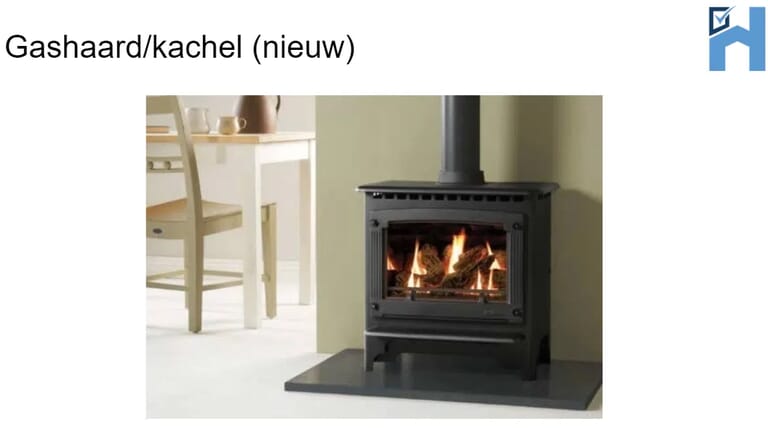
Homekeur-gashaard-1.png

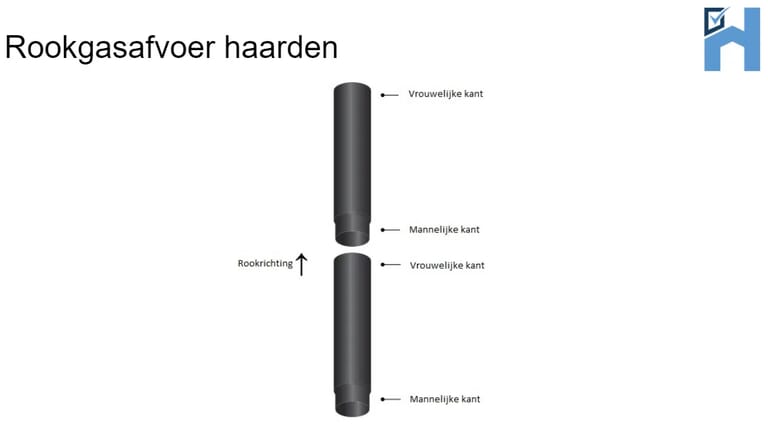
Fireplace with flue gas exhaust

If your home has a fireplace with a flue: it's not easy to check whether a fireplace is fully functional! The flue and ducts also need to be checked. Older fireplaces burn less cleanly and produce significantly more soot than modern ones that do burn cleanly. Soot formation is also caused by the use of damp wood.

  • With intensive use, regular chimney sweeping is recommended.
  • Check annually whether the fire screen and burn plates are still in good condition.
Homekeur-rookgasafvoer-juiste-montage-1.png

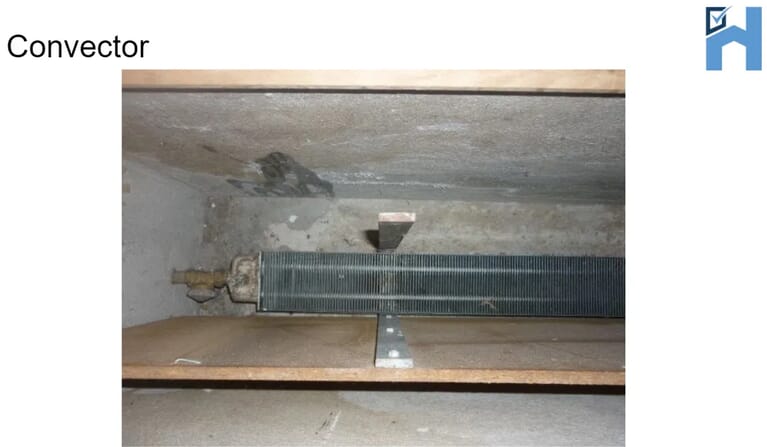
Convectors

  • A convector tray and convector(s) are often poorly maintained and dirty, especially on the inside. To ensure proper functioning, these should be cleaned.
  • An older convector box may contain an asbestos sheet along the convector. If you have any doubts or would like more certainty, you can consider having an asbestos inventory performed. The material can then be sampled and definitively determined.
  • If a leak or other defect has been noticed in the convector, such defects can usually be repaired after which the whole system can function sufficiently and as intended again.
  • If there are any defects in the convector pit grille, you can attempt to repair it. Replacement is often cheaper, faster, and easier.
Homekeur-convector-1.png

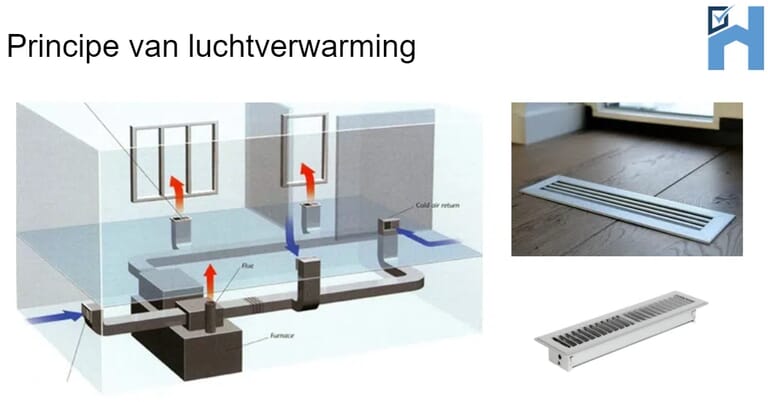
Air heating

In an air heating system, it's important that the system of ducts, filters, and grilles (intake and exhaust valves) are regularly and properly maintained. Annual and regular maintenance should be performed. Inadequate maintenance inherently poses a risk to the user's health, and the system will not function properly and as intended. Overdue maintenance and a complete cleaning of the entire system should be performed. Annual and regular maintenance are essential. The maintenance of pipes throughout a building naturally involves more than just a traditional heating system with pipes. Higher maintenance costs must therefore be taken into account.

Homekeur-luchtverwarming-1.png

Electric floor/wall heating

Electric underfloor heating can be installed either deep in the floor or as close to the surface as possible. If the heating is installed deep in the floor, the overlying cement layer acts as a heat buffer. Electric underfloor heating is often installed directly under a tiled floor or under a thin finishing layer. The effectiveness of electric underfloor heating is unknown. It's important to inquire with the seller about these matters and the functioning of any installations or utilities.

If defects have been detected in the electric underfloor heating thermostat, they may still be repairable. It's cheaper and easier to replace the thermostat entirely.

Block heating

With block heating, the home is heated via a collective system. The home doesn't have its own boiler, but uses utilities managed and maintained by the homeowners' association (VvE). This block heating system supplies multiple homes with heat and/or hot water via a collective boiler. The costs for maintaining this system, and any replacement costs at some point, are budgeted for in the VvE's multi-year maintenance plan .

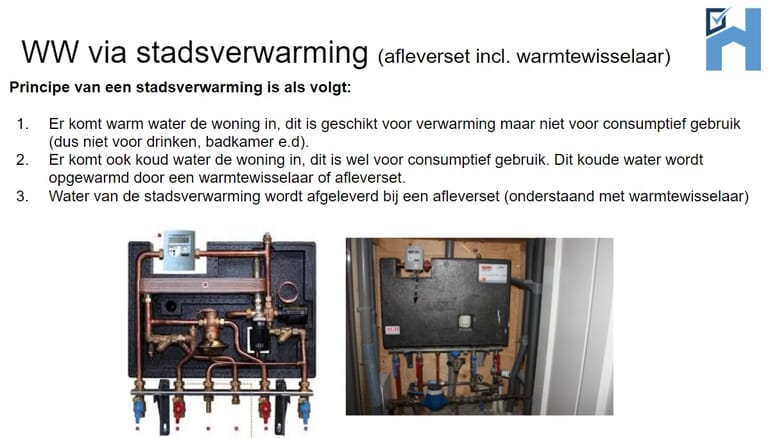
District heating

Your home receives heat through a network of pipes (heating network). Learn more about district heating .

  • If you use district heating, you cannot switch to a different heat supplier. The heating networks are not interconnected, unlike electricity and gas.
  • The delivery unit is installed in or near your meter box. In this case, it features an integrated heat exchanger. This regulates the heat output in your home based on demand.
  • Maintenance is limited and usually consists of periodic checking of the delivery set for leaks and/or replacing a seal.
  • In this case, the delivery set is owned and limited and regular maintenance must be taken into account.
  • Since it has only been possible to purchase your own delivery set for a few years, replacement is still a long way off.
  • The technical lifespan of a delivery set is approximately 15 to 20 years.
Homekeur-stadsverwarming-1.png

Heat pump

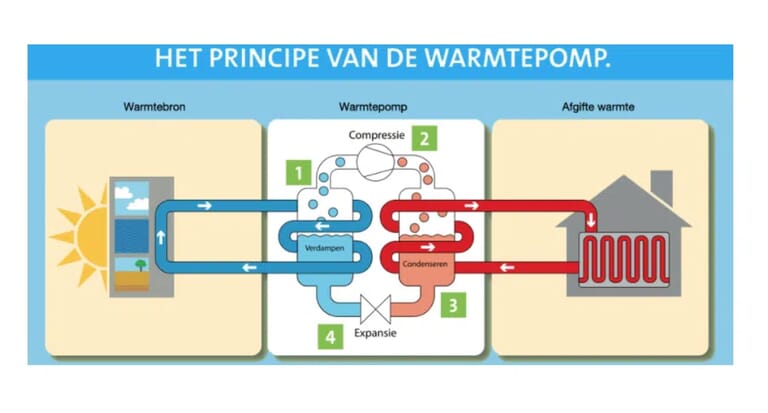
A heat pump provides environmentally friendly heating for your home and hot water for your shower and kitchen. It's a sustainable alternative to a gas-fired boiler: CO2 emissions from heating are reduced by approximately 50 to 60 percent! A heat pump extracts heat from the air, soil, or groundwater and converts it to a usable temperature. It does use electricity.

You can't simply measure the system's parameters, CO2 levels, or whether the combination of the pump and related equipment, electrical components, thermostats, etc., is functioning properly (together) and meets all safety standards. Such system adjustment and tuning is specialized work for a qualified professional. This is checked and adjusted periodically during normal and regular maintenance. Therefore, it is strongly recommended to have the system inspected annually.

Homekeur-principe-van-een-warmtepomp-1.png
  • Fully electric heat pump
    • A fully electric heat pump is designed to avoid peak demand moments and uses an electric after-heater in cases of absolute necessity.
  • Hybrid heat pump
    • A hybrid heat pump uses outside air or ventilation air as a heat source. The gas boiler kicks in during peak demand (when a lot of hot water is needed and the outside temperature is too low for efficient heating with the heat pump).
  • Heat pumps: what do you need to consider?

It's common knowledge that a heat pump requires very little maintenance. However, this doesn't mean a heat pump is maintenance-free; quite the opposite. Maintenance performed on a heat pump is always preventative. Regular maintenance ensures the heat pump's lifespan is maximized, as is the system's energy efficiency. A heat pump contains a compressor, but no moving parts or burners. Maintenance involves a complete inspection of the unit and an assessment of its efficiency.

  • The average lifespan of a heat pump is usually theoretically set at 15 to 20 years. In practice, however, heat pumps often last longer than 30 years.
  • There are also some measures you can take to extend the lifespan of your heat pump. Consult your installer or maintenance technician for more information.


Pellet stove

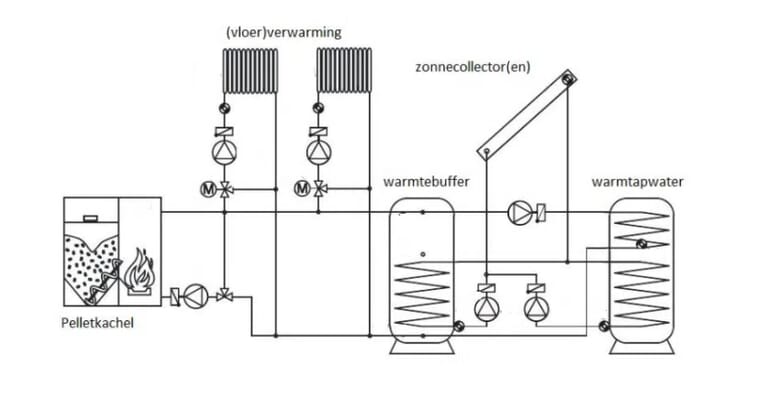
A pellet stove burns wood pellets: compressed wood pellets. A pellet stove sometimes heats just the living room, sometimes the entire house. Using wood pellets as fuel is climate-friendly. It results in lower CO2 emissions than a high-efficiency gas boiler. The system cannot be measured for values, CO2, or whether the combination of the stove and related equipment, electrical systems, thermostats, etc., function properly (together) and meet all safety standards. Such system adjustment and tuning is specialized work for a professional. This is checked and adjusted periodically during normal and regular maintenance. It is therefore strongly recommended to have the system inspected annually.

Homekeur-principe-van-een-pelletkachel-1.png
  • A building inspection is not a technical inspection of installations. We assume that annual maintenance is always performed, and that the installations are therefore in good technical condition. Of course, installations are visually inspected, and visible defects are automatically reported.

Would you like to make an appointment for a building inspection?

The cost of a building inspection (up to 250 m²) is only €489 including VAT. We'll conduct a comprehensive building inspection and you'll receive a building report. Do you have any questions? We're happy to help and can schedule an appointment with an expert inspector right away if you wish!

Recent articles

Een vrouw wijst naar een tablet die een man vasthoudt en een andere man kijkt mee
blog
13 February 2026
Hidden defects in a home
Hidden defects are not uncommon, especially in existing homes. They are often not immediately visible, but can have significant consequences for comfort, safety, and costs. This article explains how hidden defects are assessed and the role of investigation and inspection.
blazen plooien bitumen dak
video
13 February 2026
Common roof detail mistakes: what an inspection reveals
During roof inspections, problems often turn out to be not in the roofing itself, but in the details. In this practical case study, we demonstrate which installation errors are frequently encountered and why these, in particular, pose an increased risk of leaks and damage.
WhatsApp Image 2026-02-12 at 08.51.37
video
12 February 2026
Three Roof Eave Mistakes That Cause Leaks (And Are Often Overlooked)
Roof problems rarely arise suddenly. They usually start with a minor issue. In this inspection, we see how a torn lead flashing, improper installation, and a loose joint can all pose a serious risk. What should you look for—and how can you prevent them?