
Foundation Risk Investigation Phase 0
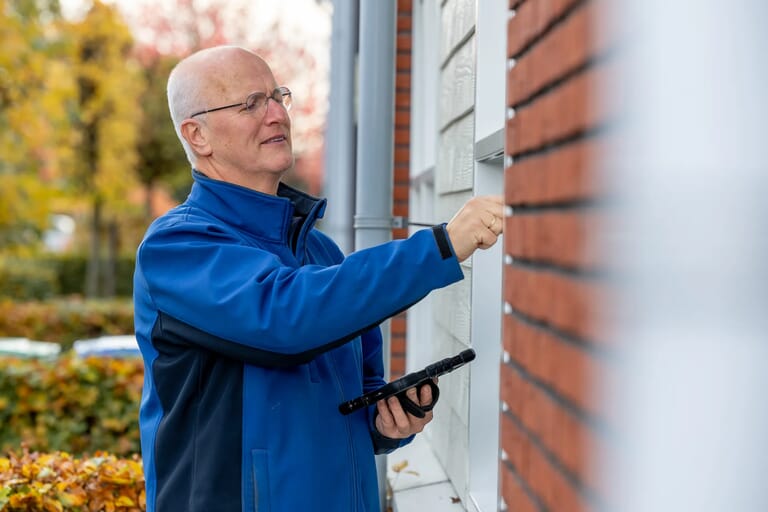
Initial insight into potential foundation problems
Are you unsure about a home's foundation? Then you primarily want to know where you stand. Cracks in walls, sticking doors, or a sagging floor can raise questions. Is the home settling normally, or are these signs of potential foundation problems? With a professional Phase 0 foundation risk assessment, you will quickly gain more clarity.
Buying or owning a home without insight into the foundation can cause uncertainty. That is why more and more homebuyers and homeowners are opting for a QuickScan foundation assessment. This assessment provides an initial estimate of the potential foundation risk, without having to immediately carry out an extensive technical investigation.
This is how the foundation risk assessment works
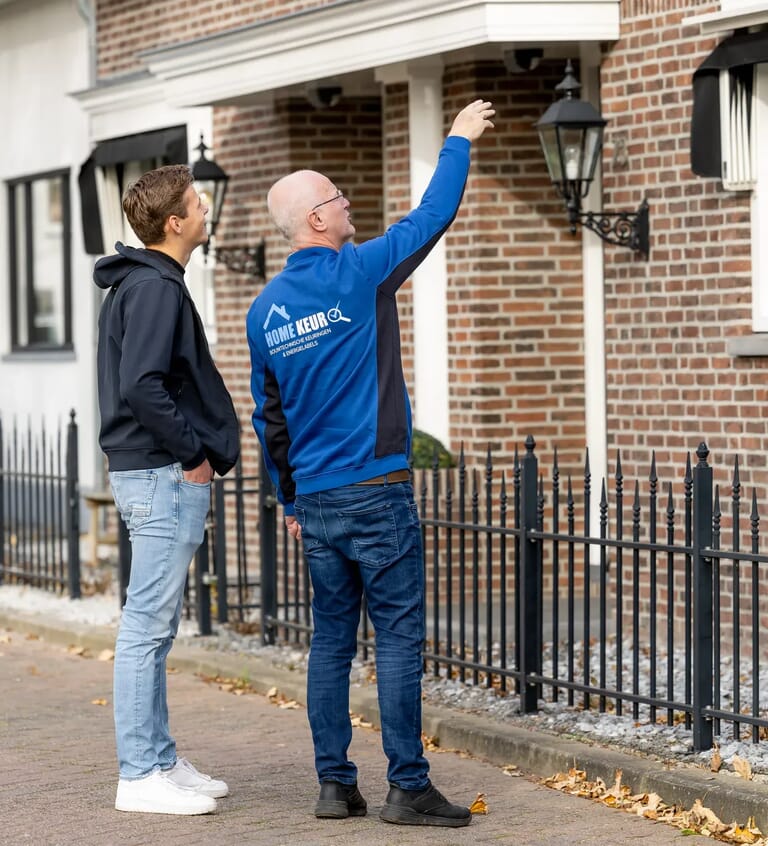
A first step towards clarity regarding the foundation
A Phase 0 foundation survey is often carried out when there are doubts about the condition of a home. Perhaps you see cracks appearing, notice that floors are uneven, or simply want certainty before buying a home. In such situations, an initial risk assessment is often a sensible choice.
During a Phase 0 foundation risk survey, visible signs of potential foundation problems are examined, as well as factors that could influence the foundation. Consider the year the home was built, the surrounding area, soil conditions, and known risks in the neighborhood.
This provides an initial picture of the potential risk without immediately conducting an extensive technical foundation survey.
Recent reviews
Our clients especially value our clarity, speed, and expertise. This is what they say about our work:
What is the difference between a foundation risk assessment and a foundation investigation?
Many people search for 'foundation investigation' when they actually mean an initial risk assessment. However, there is an important difference.
A Phase 0 foundation investigation is a KCAF QuickScan that examines visible characteristics and risk factors. It is intended as an initial assessment of the potential foundation risk of a home. The goal of a Phase 0 foundation investigation is not to technically expose the entire foundation, but rather to provide insight into potential risks in an accessible and efficient manner. This helps you determine whether follow-up steps are necessary.
A technical foundation investigation in Phase 1 or 2 goes much further. In this case, the foundation is actually examined using technical measurements, inspections, and sometimes destructive testing. Such an extensive investigation is usually only necessary when the QuickScan indicates that there may be increased risks.
A QuickScan of the foundation is therefore primarily intended to provide you with quick insight and direction.
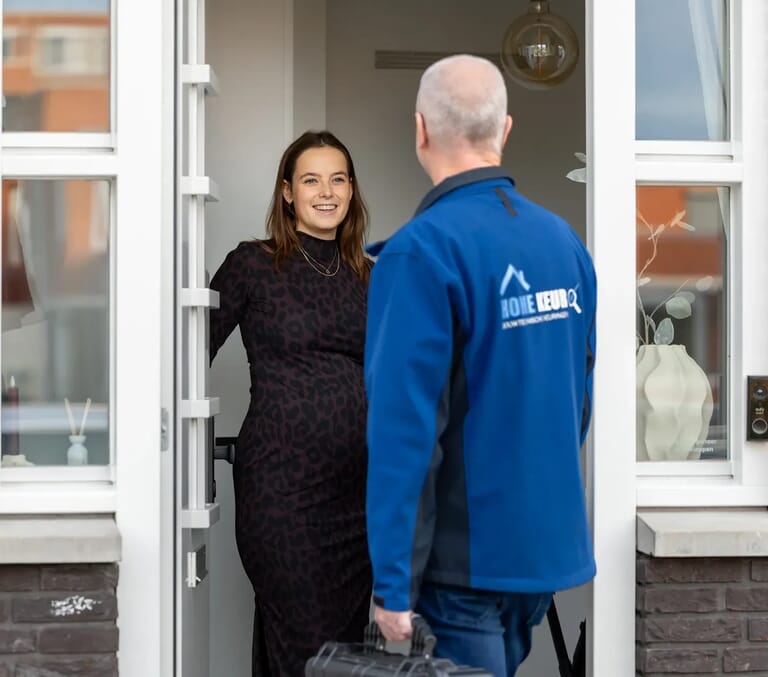
What is included in a foundation risk report?
The Foundation Risk Assessment (Phase 0) is a non-destructive inspection. This means that no digging, drilling, or breaking is involved.
The on-site inspection takes an average of 30 - 45 minutes.
After the assessment, you will receive two documents: the foundation risk report and an explanation of the report. With one of the following conclusions:
- No action needed – there are no signs of foundation problems
- Monitoring recommended – slight signs, long-term inspection advisable
- Further investigation needed (Phase 1 / Phase 2) – there is an increased foundation risk
What does a Phase 0 foundation investigation cost?
The price of a foundation risk assessment is €249 including VAT. A foundation risk assessment can only be performed in conjunction with a building inspection. For homes up to 250 m², a building inspection costs €489 including VAT. If the home is larger, you pay €0.65 per additional m². Together, this amounts to a total price starting from €738 including VAT.
Frequently asked questions about foundation risk research
Are you concerned about cracks in your home or do you notice tilting? Many homeowners do not know exactly what these signs mean and when it is wise to have an inspection of the home's foundation carried out. Below, we answer the most frequently asked questions about a foundation risk assessment and potential foundation problems.
What is a Phase 0 foundation investigation?
A Phase 0 foundation survey is an initial assessment of the potential foundation risk of a home. This involves examining visible signs, the surroundings, and characteristics of the property. The survey is intended to provide quick insight without immediately conducting an extensive technical investigation.
What is a QuickScan?
A Foundation QuickScan is a rapid initial assessment of a home's potential foundation risk. During this inspection, a specialist looks for visible signs and risk factors without performing destructive testing.
Is a Phase 0 investigation the same as a foundation investigation?
No. A Phase 0 foundation risk assessment is a QuickScan and not a technical foundation investigation. In Phases 1 and 2, the foundation is actually technically examined with additional inspections and measurements.
When is a Phase 0 foundation investigation advisable?
A Phase 0 foundation survey is advisable if you have doubts about cracks, subsidence, or other possible signs of foundation problems. A QuickScan of the foundation is also often chosen when purchasing older homes.
How do you recognize foundation problems?
Timely identification of foundation problems can prevent a great deal of uncertainty and high repair costs. However, foundation problems are often difficult to recognize because the foundation is largely located underground.
Common signs include:
- cracks in walls or facades
- sticking windows and doors
- sloping floors
- subsidence around the house
- peeling plaster
However, these signs do not automatically mean that there is foundation damage. Some cracks, for example, are caused by the movement of materials or the age of a home. Therefore, it is important not to jump to conclusions immediately, but to have a specialist take a look.
Which cracks in a house indicate foundation problems?
Not every crack in a home means there are foundation problems. Many cracks are caused by material shrinkage or minor movements within the home.
Nevertheless, there are situations where cracks in a home deserve extra attention. For example, when:
- cracks run horizontally in the facade
- cracks run in a staggered pattern through the masonry
- cracks enlarge over time
- cracks occur in multiple places in the home
If you see these types of cracks, a Phase 0 foundation inspection of the home can help determine whether there may be foundation damage.
Is tilting of a house dangerous?
Tilting of a home is not always immediately dangerous. Many homes sink slightly over the years due to subsidence or changes in the subsoil.
However, tilting can sometimes indicate a problem with the foundation. For example, when:
- the home appears to be visibly tilted
- floors are no longer level
- doors or windows are becoming increasingly difficult to close
In such a situation, a foundation inspection can help assess whether there is an increased foundation risk.
What are possible causes of cracks in a home?
Cracks in a home can have various causes. Not every crack means there is a foundation risk.
Common causes include, for example:
- movement of materials due to temperature differences
- shrinkage of concrete or plaster
- minor movements of the subsoil
- subsidence of the foundation
Because the cause is not always immediately visible, a foundation inspection can help determine whether there may be foundation problems.
What is included in a foundation risk report?
A foundation risk report states which points of attention and indicators have been found and how the foundation risk is assessed. It also indicates whether additional foundation research is recommended.
Can I request a foundation risk report?
Yes, in some situations you can request an existing foundation risk report. For example, via the owner, real estate agent, or involved party when a Phase 0 foundation investigation has been carried out previously.
Is the Phase 0 foundation investigation the same as a QuickScan?
The Phase 0 foundation investigation also includes the QuickScan in accordance with the KCAF guidelines, but goes a step further by investigating additional aspects. This creates a more complete and reliable picture of the property.
As an appraiser, may I use this research in my report?
Yes, the Phase 0 investigation complies with the KCAF guidelines and includes the so-called QuickScan. This report can be used by the appraiser in the valuation report when foundation research is deemed necessary.
How much does a foundation survey cost?
The price of a foundation risk assessment is €249 incl. VAT if carried out in combination with a structural inspection. If booked as a separate inspection, the cost is €349.
For homes up to 250 m², a structural inspection costs €489 including VAT. Is the home larger? Then you pay €0.65 per extra m². For a combination inspection, this amounts to a total price starting from €738 including VAT.
How much does foundation repair cost?
The costs for foundation repair can vary widely. This depends on, among other things:
- the type of foundation
- the severity of the problem
- the size of the home
In some cases, it involves a few thousand euros, but for major repair work, this can run into tens of thousands of euros.
Therefore, many homeowners first choose to have a foundation risk assessment carried out. This provides insight into the potential risk and advice on whether more extensive foundation research is necessary.
What happens if the KCAF QuickScan indicates an increased risk?
If the Phase 0 foundation risk assessment indicates that there may be increased risks, additional technical foundation research may be recommended. This allows the foundation to be examined more extensively.