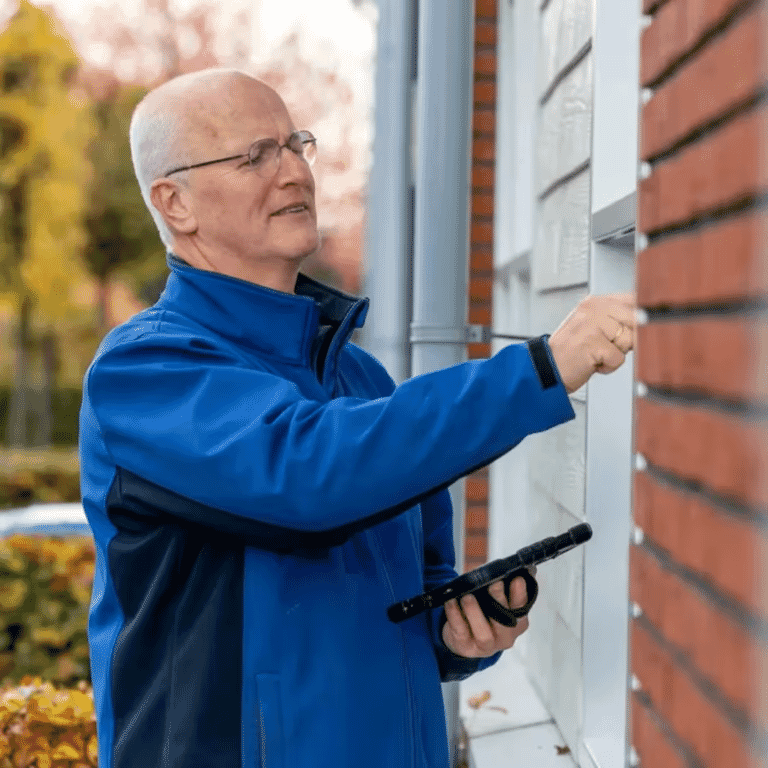
Foundation risk research
Foundation problems are difficult to recognize
Do you see cracks in your home, are your doors sticking, or does the floor seem to be uneven? Then you might quickly wonder if there's something wrong with the foundation. These signs can have several causes. With a foundation risk assessment, we can map this out for you. This gives you clarity and lets you know what to expect.
We always conduct this assessment in conjunction with a building inspection. This can be especially valuable when buying a home. Especially for homes built before 1970, it's wise to have the foundation risk assessed so you can avoid unexpected repair costs of tens of thousands of euros.
This is how the foundation risk assessment works
You mainly want clarity
Most people don't understand foundations. Understandably, since it's something you normally never think about. Yet, such a situation can suddenly create a lot of uncertainty. If you have doubts about a home's foundation, you want one thing above all: to know what you're getting into.
You want to avoid high costs later on. At the same time, you don't want to immediately commission an extensive and expensive foundation inspection if it might not be necessary at all. That's why we offer a foundation risk inspection. This inspection is performed in conjunction with a building inspection, so you gain insight into both the condition of the home and the potential foundation risk in a single inspection.
Recent reviews
Our clients especially value our clarity, speed, and expertise. This is what they say about our work:
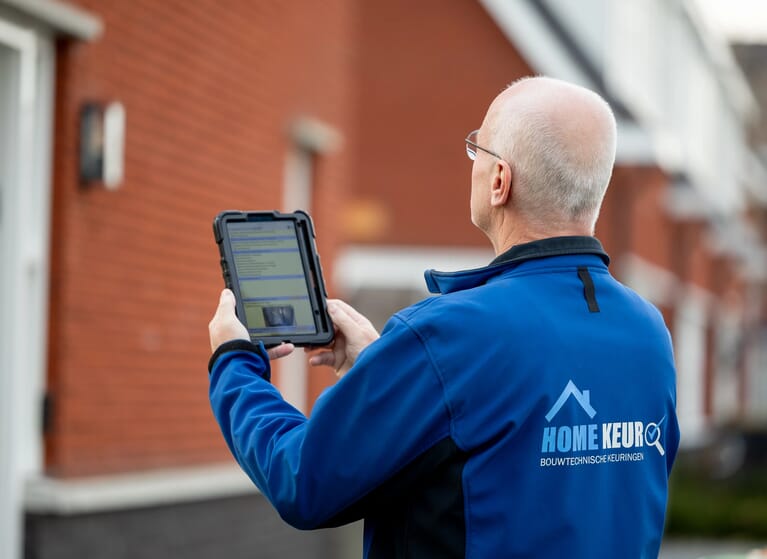
The solution: a foundation risk assessment
The Foundation Risk Assessment (Phase 0) is a non-destructive assessment. This means no digging, drilling, or excavation work is performed.
The on-site inspection typically takes 20 to 30 minutes.
After the assessment, you will receive a report with a NAFO certificate with one of the following conclusions:
- No action required – there are no signs of foundation problems.
- Monitoring recommended – minor signs, inspection in the future is advisable.
- Further investigation required (Phase 1 / Phase 2) – there is an increased foundation risk.
The price of a foundation risk report
The price of a foundation risk assessment is €249 including VAT. A foundation risk assessment can only be performed in conjunction with a building inspection. For homes up to 250 m², a building inspection costs €489 including VAT. If the home is larger, you pay €0.65 per additional m². Together, this amounts to a total price starting from €738 including VAT.
Frequently asked questions about foundation risk research
Are you unsure about cracks in your home or have you noticed any misalignment? Many homeowners aren't sure what these signs mean and when it's wise to have a foundation inspection performed. Below, we answer the most frequently asked questions about foundation risk assessments and potential foundation problems.
Can a foundation risk assessment be combined with a building inspection?
Yes. The Foundation Risk Assessment (Phase 0) is always performed in conjunction with a building inspection. During the same inspection, both the structural condition of the home and the potential foundation risk are assessed.
What is the difference between a foundation risk assessment and a foundation survey?
A foundation risk assessment is an initial risk assessment of the foundation. A full foundation assessment is more comprehensive and is performed when there are clear indications of foundation problems.
When is it wise to have a home foundation survey carried out?
Investigating a house's foundation can be a good idea if you notice cracks in the house, if there appears to be a misalignment, or if you suspect the house is subsiding.
Is a leaning house dangerous?
A leaning house doesn't always have to be immediately dangerous. Many houses sink slightly over the years due to subsidence or changes in the subsurface.
However, leaning can sometimes indicate a problem with the foundation. For example, when:
- the house appears visibly leaning
- floors are no longer level
- doors or windows are becoming increasingly difficult to close
In such a situation, a foundation inspection can help assess whether there is an increased foundation risk.
Which cracks in a house indicate foundation problems?
An inspection isn't legally required, but it is highly recommended. With an NHG mortgage, it may be required if the property has defects. It prevents surprises and provides clarity about the property's condition.
How much does foundation repair cost?
The cost of foundation repair can vary considerably. This depends on several factors, including:
- the type of foundation
- the severity of the problem
- the size of the home
In some cases, the cost is several thousand euros, but for more extensive repairs, it can rise to tens of thousands of euros.
Therefore, many homeowners first choose to have a foundation risk assessment performed. This will provide insight into the potential risk and advice on whether a more extensive foundation assessment is necessary.
How do you recognize that your house is subsiding?
A subsiding home often shows several signs. Common examples include:
- cracks in the home, for example in walls or window frames
- doors or windows that suddenly stick
- floors that appear to be crooked
- a visible tilt of the home
Do you see one or more of these signs? Then an investigation of the home's foundation can help assess whether there is an increased foundation risk.
What are possible causes of cracks in a house?
A building inspection provides clarity about the technical condition of a home. Whether you're buying, selling, or renovating, you want to know exactly what you're getting into. With a Homekeur inspection, you'll know exactly what's going on, what it will cost to repair defects, and how to be well-prepared to get started.
When is foundation research necessary?
A full foundation inspection is usually performed when there are clear indications of foundation problems, such as severe cracks or significant subsidence. In many situations, a foundation risk assessment is performed first. This is an initial foundation inspection that assesses whether a more extensive foundation investigation is necessary. This provides insight into the risk before a comprehensive technical investigation is initiated.