

Make an appointment Call now

What is district heating?

Half a million Dutch households rely on district and block heating systems to stay warm without using gas, accessing hot water through an intricate network of pipes. As these systems become more common, understanding their operation and addressing common issues, like rattling pipes, becomes crucial for maintaining comfort and efficiency in modern homes.

About half a million Dutch households receive their heat via district heating or block heating. These are ways to heat your home or get hot water without using gas. If you have district heating, you don't have your own central heating boiler. You get hot water and heat in your home through a network of water pipes. The hot water from district heating is generated by residual heat from, for example, power plants.

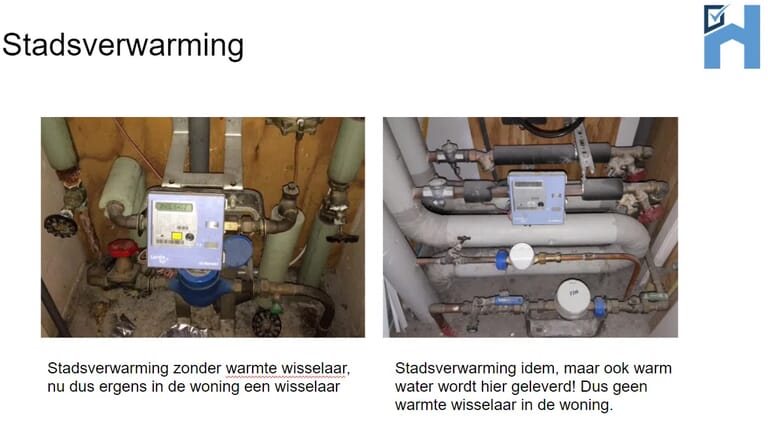
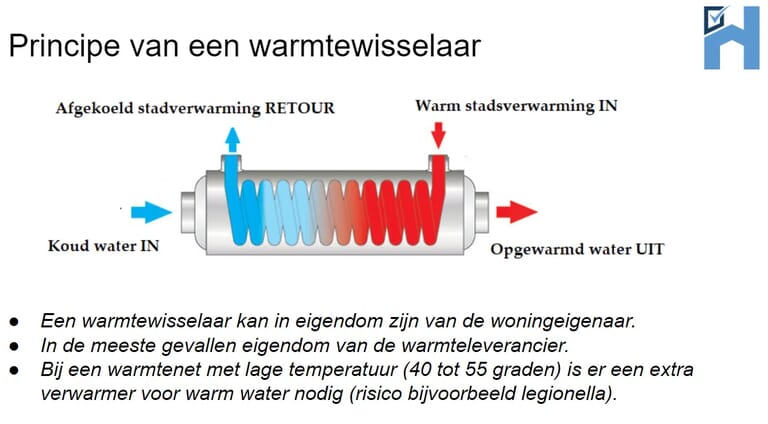
  • Hot water is supplied to the home, which is suitable for heating but not for consumer use (i.e. not for drinking, bathroom use, etc.).
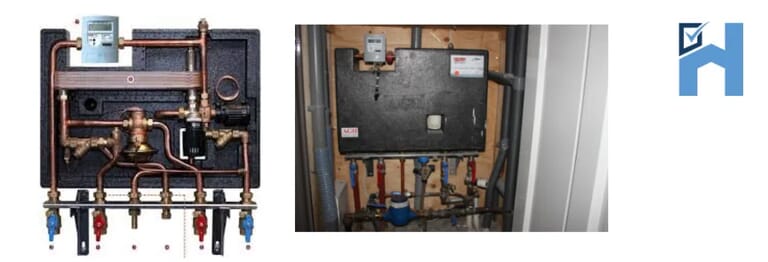
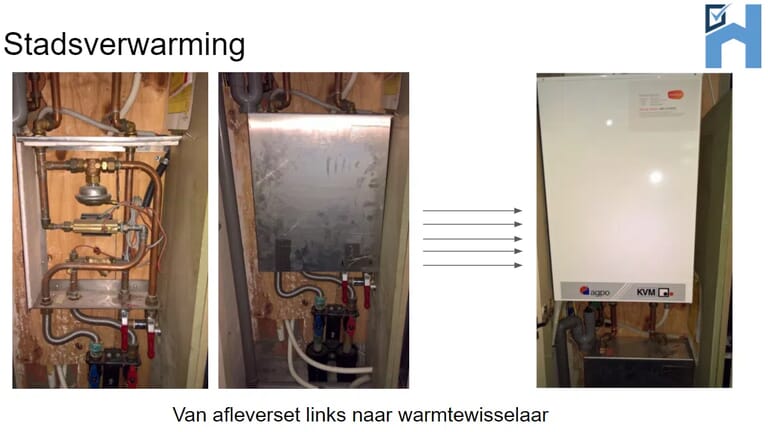
  • Cold water also enters the home, but this is for domestic use. This cold water is heated by a heat exchanger or delivery unit.
  • Water from the district heating is delivered to a delivery set (below with heat exchanger)
  • Read a related article about rattling pipes

Visualization of devices and functioning

stadverwarming-afleverset.png
warmste-wisselaar-stadverwarming.png
warmtewisselaar.png
principe-warmte-wisselaar.png

Would you like to make an appointment for a building inspection?

The cost of a building inspection (up to 250 m²) is only €489 including VAT. We'll conduct a comprehensive building inspection and you'll receive a building report. Do you have any questions? We're happy to help and can schedule an appointment with an expert inspector right away if you wish!

Recent articles

Man sluit zijn autodeur
blog
20 March 2026
Important news for appraisers!
As of April 1, 2026, the new Residential Property Valuation Report model will be introduced. In this updated report, the assessment of foundations will play a significantly larger role.
funderingsproblemen
blog
05 March 2026
Homekeur introduces the Foundation Risk Assessment (Phase 0)
Foundation problems can turn a dream home into a financial nightmare. Because the condition of the foundation is often difficult to assess from the outside, Homekeur introduces the Foundation Risk Assessment (Phase 0). This quick, non-destructive scan provides immediate clarity about the stability of your home, without the need to dig a hole in the ground.
Een vrouw wijst naar een tablet die een man vasthoudt en een andere man kijkt mee
blog
13 February 2026
Hidden defects in a home
Hidden defects are not uncommon, especially in existing homes. They are often not immediately visible, but can have significant consequences for comfort, safety, and costs. This article explains how hidden defects are assessed and the role of investigation and inspection.