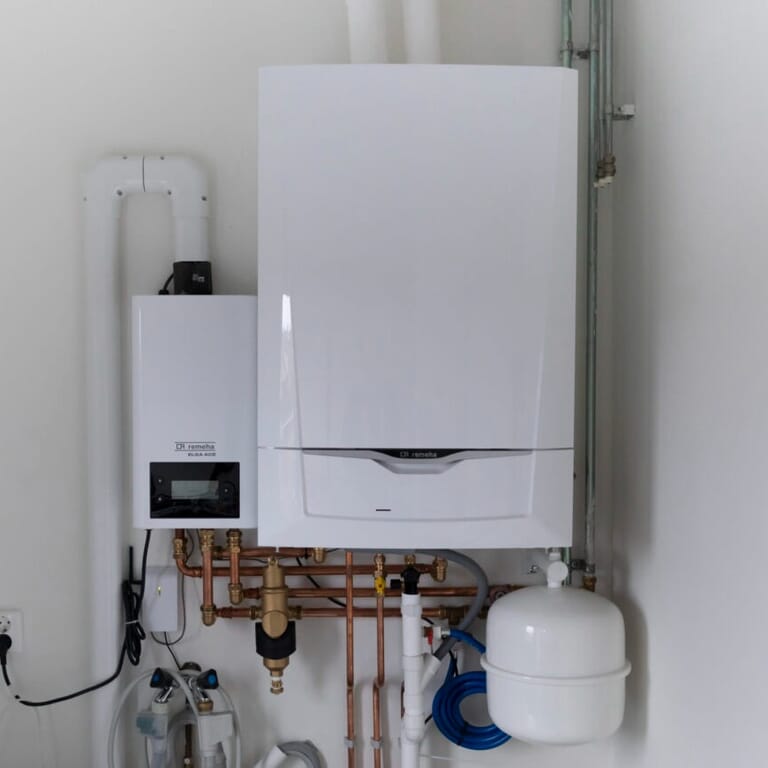
The hybrid heat pump is back on the political agenda. On October 7, 2026, the Cabinet announced that, starting in 2029, a smart, hybrid heat pump must become the new standard when replacing a central heating boiler. This applies to homes that are not, or will not be, connected to a district heating network. Although the plans still need to be further developed, they could have major consequences for homeowners and homebuyers.
But what does this mean for your home, what costs can you expect, and what should you take into account when purchasing a home? Homekeur explains.
What are the new rules for hybrid heat pumps?
The original plans to make a hybrid heat pump mandatory when replacing a central heating boiler starting in 2026 were scrapped in 2024. In the meantime, the Cabinet has once again decided to proceed with this obligation, with 2029 as the intended effective date.
According to the plans, a smart, hybrid heat pump will become the minimum standard from 2029 when replacing a central heating boiler in homes that are not, or will not be, connected to a district heating network.
An important difference compared to previous plans is that the new heat pumps must also be capable of smart operation. This means that they can adjust their energy consumption to, for example, the load on the electricity grid or fluctuating electricity prices.
Please note: the obligation has not yet been definitively established by law. The Cabinet is still working out the precise conditions and implementation. Therefore, in 2026, you may still choose a regular gas boiler when replacing your central heating boiler.
Why is the heating system important when purchasing a home?
When you buy a home, the condition of the heating installation is an important point of attention. A central heating boiler typically has a technical lifespan of approximately 12 to 15 years, depending on usage and maintenance.
For example, if you purchase a home with a boiler from 2012, there is a chance that it will need to be replaced within a few years. If the new regulations are actually implemented in 2029, this could mean that you will need to consider purchasing a hybrid heat pump when replacing it.
As a result, future maintenance and replacement costs may turn out to be higher than if only a new boiler were installed.
It is therefore wise, when purchasing, not only to look at the current operation of the heating system but also at the future possibilities for making the home more sustainable.
Is your home suitable for a hybrid heat pump?
Not every home is suitable for a hybrid heat pump without modifications. Suitability depends on, among other things, the insulation, the existing heating system, and the available space.
Important points to consider are:
- Insulation: The better a home is insulated, the more efficiently a heat pump generally functions.
- Radiators and underfloor heating: Existing radiators must be able to emit sufficient heat at lower water temperatures.
- Space for installation: Many systems require an outdoor unit, for which sufficient space and a suitable installation location must be available.
- Electrical installation: Depending on the chosen system, modifications to the electrical installation may be necessary.
- Noise: The outdoor unit must comply with applicable noise requirements and be placed in a suitable location.
An energy label provides insight into the energy efficiency of the home and possible improvement measures. However, the energy label alone does not determine whether a home is suitable for a heat pump. An additional assessment by an installer is necessary for this.
What will a hybrid heat pump cost in 2026?
Purchasing a hybrid heat pump involves an investment. For a standard hybrid air-to-water heat pump, you can tentatively expect to pay approximately €4,000 to €7,000 including installation, before deduction of subsidies.
The actual costs depend on the type of installation, the required capacity, and any modifications to the home.
If the existing central heating boiler also needs to be replaced, the total costs may be higher. Additionally, supplementary work may be required, such as modifying radiators, pipework, or the electrical installation.
Homeowners can receive a subsidy under certain conditions via the ISDE scheme. In 2026, the subsidy for a first air-to-water heat pump amounts to, among other things, €1,025 as a starting sum, supplemented by €225 per kW and a potential €200 energy label bonus.
The exact subsidy depends on the chosen device and the applicable conditions. Therefore, always check the current possibilities with the Netherlands Enterprise Agency (RVO) in advance.
How much can you save with a hybrid heat pump?
A hybrid heat pump uses electricity to heat a large part of the home. The central heating boiler remains available for, for example, cold days and hot water supply.
According to the government, a hybrid heat pump can reduce gas consumption for heating by approximately 65% on average.
On the other hand, electricity consumption increases. The actual financial savings therefore depend on various factors, including the insulation of the home, energy prices, heating habits, and the efficiency of the installation.
The payback period varies depending on the situation. It is therefore advisable to have a calculation made in advance based on actual energy consumption and the characteristics of the home.
What happens from 2029?
From 2029, the government wants the choice of a smart, hybrid heat pump or a more sustainable alternative to be made in principle when replacing a central heating boiler. The policy focuses on homes that are not, or will not be, connected to a district heating network.
The precise exceptions and conditions have yet to be determined. It is therefore not yet possible to indicate for every home whether the obligation will actually apply.
It is advisable for homeowners to follow developments and to already take into account possible sustainability upgrades to the heating system during future renovations.
What does Homekeur check during a structural inspection?
During a structural inspection, Homekeur inspectors pay attention to the visible condition of the heating system.
This includes checking the age and type of central heating boiler, visible leaks, the general state of maintenance, and the fastening of the pipework.
The visible execution of the flue gas exhaust and air supply is also assessed. Defects in these components can pose safety risks, including the risk of carbon monoxide poisoning.
When a hybrid heat pump is present, visible components such as the outdoor unit, fixings, and accessible piping may also be assessed.
The structural inspection involves a visual, non-destructive inspection. No specialist measurements are performed to determine the efficiency, capacity, or full technical safety of the installation. Additional inspection by a certified installer may be necessary for this.
The visible defects and relevant points of attention are included in the structural report, supplemented where necessary with an indicative cost estimate.
Certainty when purchasing a home
The announced heat pump obligation from 2029 makes it more important to take into account the condition and future-proofing of the heating system when purchasing a home.
With a structural inspection from Homekeur, you gain insight into visible structural defects and potential maintenance costs. If you combine this with an energy label, you also gain more insight into the energy efficiency of the home.
Would you like to know what to consider when purchasing a home? Contact Homekeur or schedule a building inspection directly.