
Make an appointment Call now

Drying or hardening shrinkage

Crack formation in buildings poses a significant challenge, often stemming from stable or unstable causes such as shrinkage, thermal changes, or foundational issues. Understanding the root cause is crucial for effective repair, ensuring that aesthetic fixes are only applied once stability is achieved, thereby preventing further damage and costly structural interventions.

When determining the probable cause of crack formation, we may be dealing with a stable crack ; damage that has not developed further (caused by shrinkage and creep) or an unstable crack ; damage that is developing further (e.g., due to foundation subsidence). In these cases, the cause must first be eliminated before a proper repair can be carried out.

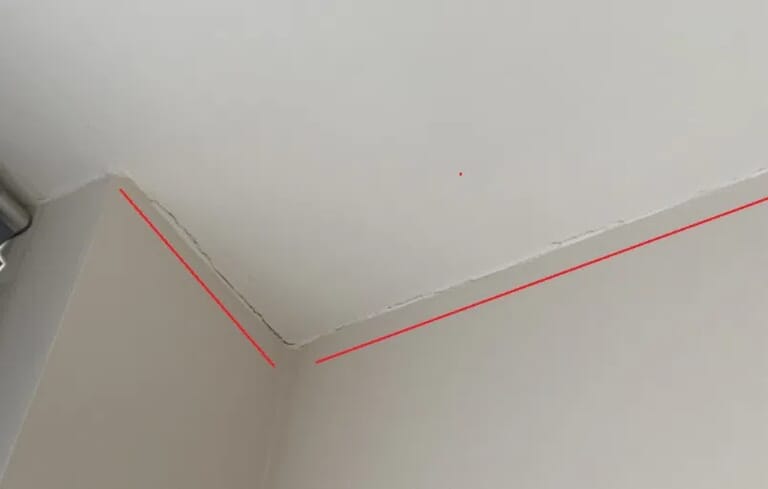
Crack recognition

  • hairline cracks
  • micro cracks in joints
  • often cracks in interior walls

Characteristic is that these cracks appear relatively soon after construction and that they are located in walls with a fairly constant temperature (often internal walls).

The process of drying or hardening: drying shrinkage or hardening shrinkage occurs in new masonry due to the drying of manufacturing and construction moisture. This shrinkage occurs primarily in the first few years after construction.

Homekeur-droging-of-verhardingskrimp.png

Unlike the change in length under the influence of temperature and moisture, hardening shrinkage will continue for a certain period of time, but this will stop at some point.

Because indoor temperatures are less extreme, cracks in interior walls are often caused by moisture expansion and, in particular, by the use of materials that are subject to hardening shrinkage. Some of these materials include: mortar joints; sand-lime brick; and concrete.

Common problems due to drying or hardening shrinkage

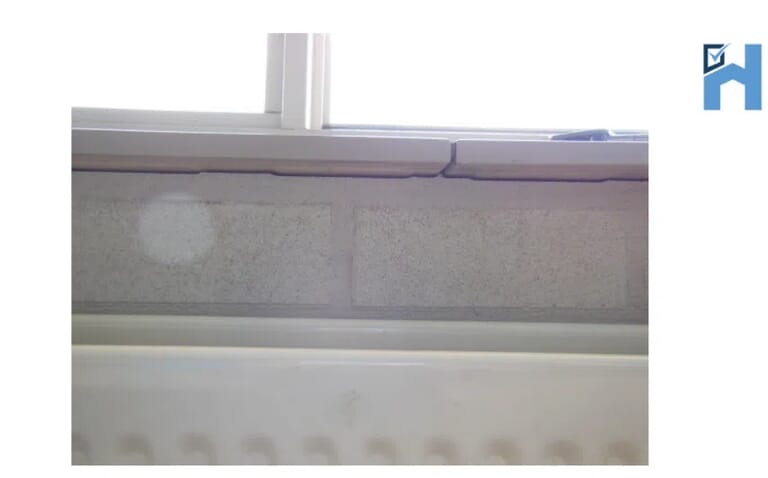
  • An opening in old brickwork that has been closed with concrete blocks
  • The phasing in the construction process
  • The monolithic connection of walls and floors above and below ground
verhardingskrimp.png

Recovery from drying or hardening shrinkage

After the hardening process has taken place, the situation is stable. The cracks caused by the hardening process will not develop further. Therefore, the repair can be limited to aesthetically filling/finishing the cracks. Structural interventions are not necessary in this case.

Would you like to make an appointment for a building inspection?

The cost of a building inspection (up to 250 m²) is only €489 including VAT. We'll conduct a comprehensive building inspection and you'll receive a building report. Do you have any questions? We're happy to help and can schedule an appointment with an expert inspector right away if you wish!

Recent articles

Een vrouw wijst naar een tablet die een man vasthoudt en een andere man kijkt mee
blog
13 February 2026
Hidden defects in a home
Hidden defects are not uncommon, especially in existing homes. They are often not immediately visible, but can have significant consequences for comfort, safety, and costs. This article explains how hidden defects are assessed and the role of investigation and inspection.
blazen plooien bitumen dak
video
13 February 2026
Common roof detail mistakes: what an inspection reveals
During roof inspections, problems often turn out to be not in the roofing itself, but in the details. In this practical case study, we demonstrate which installation errors are frequently encountered and why these, in particular, pose an increased risk of leaks and damage.
WhatsApp Image 2026-02-12 at 08.51.37
video
12 February 2026
Three Roof Eave Mistakes That Cause Leaks (And Are Often Overlooked)
Roof problems rarely arise suddenly. They usually start with a minor issue. In this inspection, we see how a torn lead flashing, improper installation, and a loose joint can all pose a serious risk. What should you look for—and how can you prevent them?