
Make an appointment Call now

Rust and crack formation on facades

Crack formation in structures can signal either stable or unstable damage, with the latter posing a risk of further development and potential structural failure. Understanding and addressing the root causes, such as rusted anchors and moisture infiltration, is crucial for effective repairs and to prevent further deterioration, ensuring the safety and longevity of buildings.

When determining the probable cause of crack formation, we may be dealing with a stable crack ; damage that has not developed further (caused by shrinkage and creep) or an unstable crack ; damage that is developing further (e.g., due to foundation subsidence). In these cases, the cause must first be eliminated before a proper repair can be carried out.

Homekeur-ijzer-in-gevel-veroorzaakt-scheurvorming.png

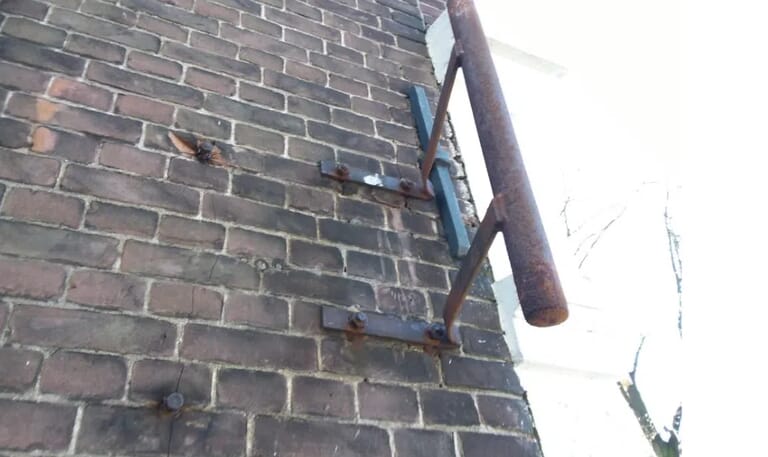
Rusting of ironwork incorporated into the masonry

Rust formation occurs mainly in the following types of ironwork:

  • Balkan anchors, blind anchors, sheet anchors and ornamental anchors
  • Cavity wall ties
  • Fencing (balcony railings, access gates, etc.)
  • U- and I-shaped beams (as lintel or part of floor structures)

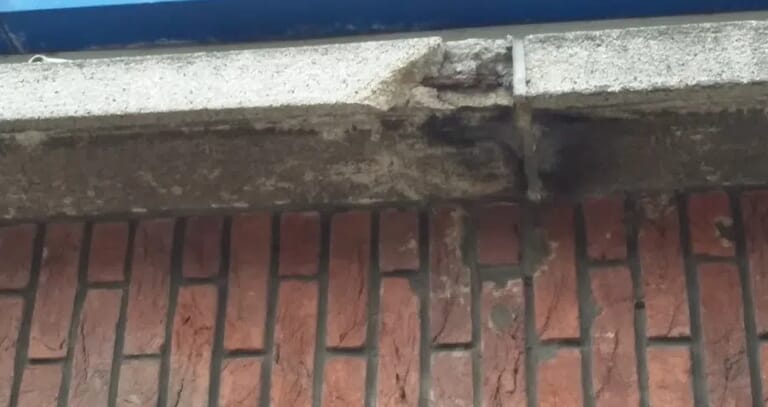
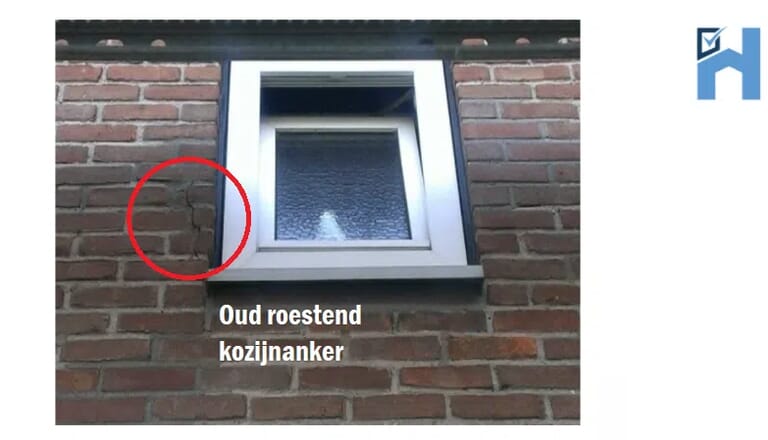
Anchors are often affected by the oxidation process . The corrosion products expand significantly; rusting iron can result in a six- to eight-fold increase in the volume of iron material! If this expansion is prevented, the surrounding masonry exerts forces on the masonry that are so great that it cracks or shatters in places.

Homekeur-roest-in-beton-gevel-element.png

Damp conditions in and around walls often cause rust. The damage is often extensive with anchors that don't penetrate the walls, but are incorporated into them to absorb and transfer forces from vaults, for example. If the anchors in the walls are exposed to damp conditions, oxidation occurs, posing a risk of collapse in the long term, while significant damage to the masonry can occur in the short term.

Anchors must be removed, replaced with new ones, or derusted, for example, by sandblasting. Furthermore, the anchors must be protected, for example, by hot-dip galvanizing, after which they can be reinstalled and reworked.

roestend-kozijnanker.png

In addition, measures can be taken to improve the conditions in which anchors are located, such as preventing or reducing any moisture ingress into the wall (for example, repairing a leaking gutter).

Would you like to make an appointment for a building inspection?

The cost of a building inspection (up to 250 m²) is only €489 including VAT. We'll conduct a comprehensive building inspection and you'll receive a building report. Do you have any questions? We're happy to help and can schedule an appointment with an expert inspector right away if you wish!

Recent articles

Een vrouw wijst naar een tablet die een man vasthoudt en een andere man kijkt mee
blog
13 February 2026
Hidden defects in a home
Hidden defects are not uncommon, especially in existing homes. They are often not immediately visible, but can have significant consequences for comfort, safety, and costs. This article explains how hidden defects are assessed and the role of investigation and inspection.
blazen plooien bitumen dak
video
13 February 2026
Common roof detail mistakes: what an inspection reveals
During roof inspections, problems often turn out to be not in the roofing itself, but in the details. In this practical case study, we demonstrate which installation errors are frequently encountered and why these, in particular, pose an increased risk of leaks and damage.
WhatsApp Image 2026-02-12 at 08.51.37
video
12 February 2026
Three Roof Eave Mistakes That Cause Leaks (And Are Often Overlooked)
Roof problems rarely arise suddenly. They usually start with a minor issue. In this inspection, we see how a torn lead flashing, improper installation, and a loose joint can all pose a serious risk. What should you look for—and how can you prevent them?