
Make an appointment Call now

Cavity wall ties and crack formation

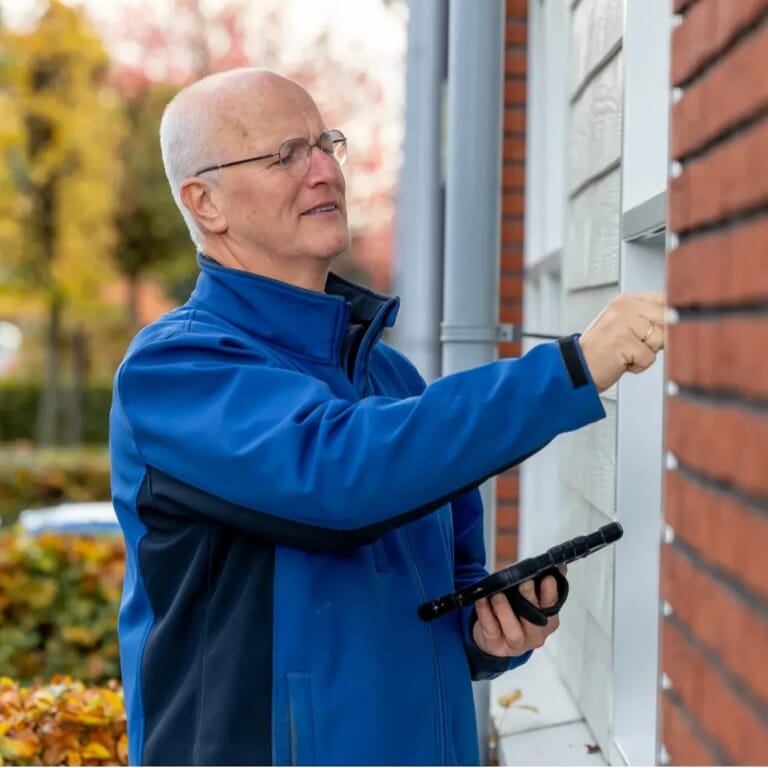
Crack formation in masonry can be a perplexing issue, often stemming from underlying problems such as foundation subsidence, inadequate cavity wall ties, or moisture infiltration. Understanding the root causes of these cracks is crucial for implementing effective repairs, ensuring structural integrity, and preventing further damage—making it essential for homeowners and professionals alike to delve into the nuances of this topic.

Cavity wall ties and crack formation

When determining the probable cause of crack formation, we may be dealing with a stable crack ; damage that has not developed further (caused by shrinkage and creep) or an unstable crack ; damage that is developing further (e.g., due to foundation subsidence). In these cases, the cause must first be eliminated before a proper repair can be carried out.

Insufficient or rusting cavity wall ties

Bending masonry can be caused by a lateral force on the masonry or by a bending force.

  • Lateral forces are wind loads or a floor that can push a wall outwards.
  • A bending force or "moment" usually occurs because a vertical load isn't applied exactly perpendicularly. For example, a floor or roof will deflect, thus exerting a bending force on the supporting wall.
roestende-spouwanker.png

Crack recognition

  • Expansive brickwork (look along the facade!)
  • Loosening of (parts of) masonry (e.g. parapet)
  • Failure of mortar joints
  • Broken sound when the masonry is tapped with a hammer.

Design and/or execution errors

Cavity ties secure cavity walls together, providing significantly greater stiffness than two separate cavity walls.

As mentioned above, a wall must be sufficiently stiff to withstand buckling loads. If there are no, too few, or poor-quality cavity wall ties (e.g., no stainless steel), the outer and inner leaves of the cavity wall will no longer be properly connected, compromising the wall's stiffness. If the wall is then subjected to excessive buckling loads, damage will occur.

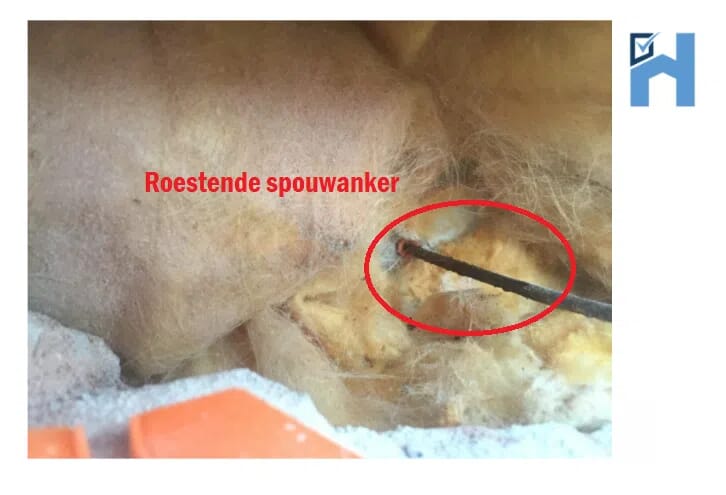
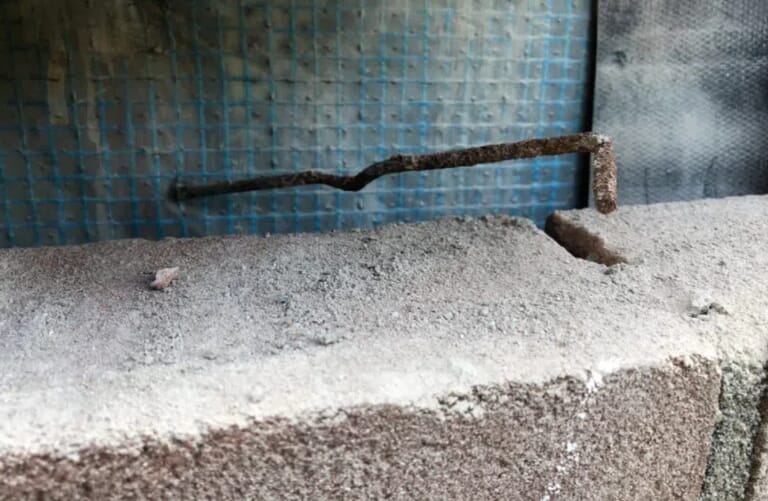
When a cavity wall tie rusts, it loses its strength and function. Rust can occur due to poor-quality materials (not stainless steel) combined with moisture in the cavity.

Homekeur-spouwanker-roest.png

⁠⁠⁠⁠⁠⁠⁠Various causes of moisture in walls

  • Construction moisture
  • Heavy rain load
  • Leaking pipes, gutters and rainwater drains
  • Rising damp
  • Moisture penetration
  • Water vapor production and thus condensation

Repair of insufficient or rusty anchors: After the cause has been addressed, repair and installation of new anchors is possible.

Would you like to make an appointment for a building inspection?

The cost of a building inspection (up to 250 m²) is only €489 including VAT. We'll conduct a comprehensive building inspection and you'll receive a building report. Do you have any questions? We're happy to help and can schedule an appointment with an expert inspector right away if you wish!

Recent articles

Een vrouw wijst naar een tablet die een man vasthoudt en een andere man kijkt mee
blog
13 February 2026
Hidden defects in a home
Hidden defects are not uncommon, especially in existing homes. They are often not immediately visible, but can have significant consequences for comfort, safety, and costs. This article explains how hidden defects are assessed and the role of investigation and inspection.
blazen plooien bitumen dak
video
13 February 2026
Common roof detail mistakes: what an inspection reveals
During roof inspections, problems often turn out to be not in the roofing itself, but in the details. In this practical case study, we demonstrate which installation errors are frequently encountered and why these, in particular, pose an increased risk of leaks and damage.
WhatsApp Image 2026-02-12 at 08.51.37
video
12 February 2026
Three Roof Eave Mistakes That Cause Leaks (And Are Often Overlooked)
Roof problems rarely arise suddenly. They usually start with a minor issue. In this inspection, we see how a torn lead flashing, improper installation, and a loose joint can all pose a serious risk. What should you look for—and how can you prevent them?