
Make an appointment Call now

Water pipes, water system in the home

Maximizing water efficiency at home is not only crucial for reducing utility bills but also for ensuring safety and longevity of your plumbing and heating systems. Discover essential maintenance tips and potential hazards to avoid, from preventing carbon monoxide risks with proper flue installation to addressing the rattling pipes and lead contamination, all aimed at transforming your home into a safer and more water-efficient haven.

If your home is supplied with hot water by a combination boiler: A combination boiler requires annual preventative maintenance. The boiler must be cleaned both internally and externally. The burner must be cleaned, and the safety and control equipment must be checked. Ask your installation company about subscription options for this annual maintenance.

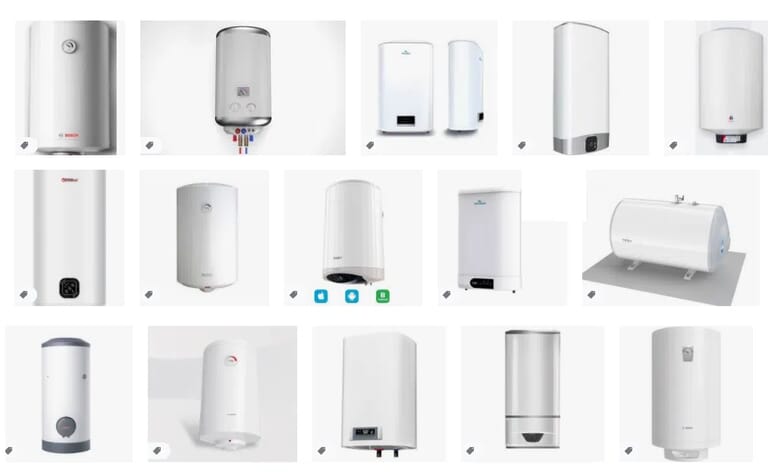
Your home or kitchen may have an (additional) boiler. This boiler then supplies the kitchen with hot water. Such a boiler is virtually maintenance-free; often, all that's required is descaling the system.

Homekeur-1001-boilers-3.png

If the home is supplied with hot water by an electric boiler: an electric boiler is virtually maintenance-free; often not much more can be done than descaling the system.

The home can also be supplied with hot water via a gas boiler. A gas boiler requires annual preventative maintenance. The appliance should be cleaned both internally and externally. The burner should be cleaned, and the safety and control equipment should be checked.

If your home is supplied with hot water by an (open) gas water heater without a flue to the outside: Preventative maintenance must be performed annually on a gas water heater, including cleaning the appliance both internally and externally. The burner must be cleaned, and the safety and control equipment must be checked.

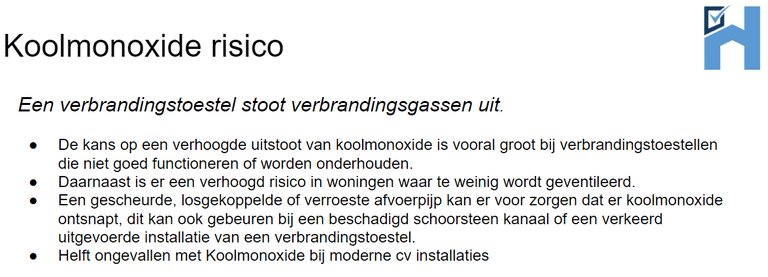
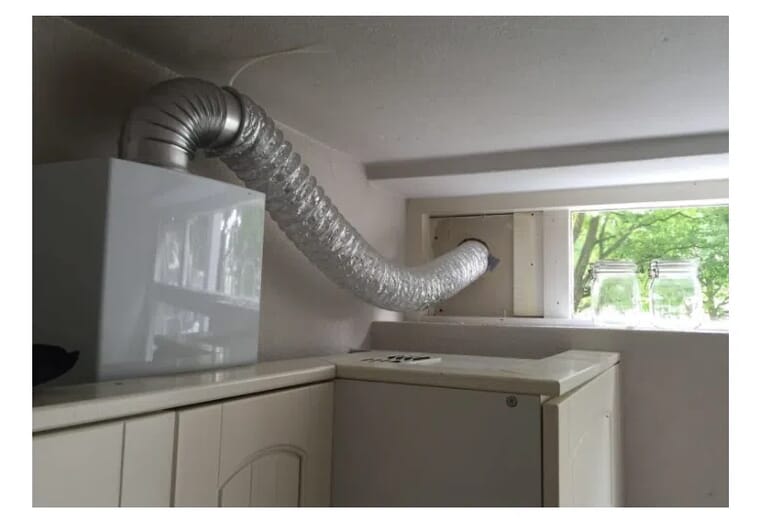
  • All flue gases emitted by the geyser enter directly into the kitchen.
  • The step between such a flue gas discharge and the formation of carbon monoxide is not big!
  • Carbon monoxide is odorless and deadly! Therefore, it's recommended to equip such a water heater with a proper flue, or remove the entire appliance and provide hot water in another way.
  • Ask an installation company about possible subscription options for this annual maintenance.
koolmonoxide-risico

If your home is supplied with hot water by a gas water heater: preventative maintenance must be performed annually on a gas water heater, including cleaning the appliance both internally and externally. The burner must be cleaned, and the safety and control equipment must be checked.

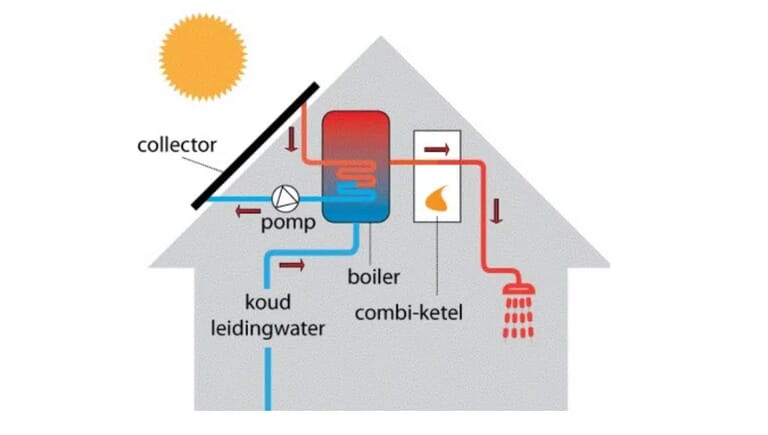
If your home's hot water is supplied by a solar water heater: most solar water heaters are equipped with a drain-back system, and this type requires maintenance every five years. Maintenance costs are low, around €50 per case. If you opt for a pressurized system, more maintenance is required, costing approximately €150 per five-year service.

A heat pump boiler is a special heat pump that uses energy from the outside air or extracted ventilation air to heat tap water. These boilers are equipped with an integrated or separate buffer tank . A heat pump boiler requires annual preventative maintenance. The unit must be cleaned internally and externally, and its efficiency, safety, and control equipment must be checked.

Homekeur-principe-zonneboiler-3.png

A home can also be supplied with hot water through a collective system (block heating) via the homeowners' association (VvE) or through district heating . The district heating system heats the cold water in the heat exchanger for consumption.

Finally, the home may also have a Quooker or similar appliance. This appliance heats cold water and can provide hot water locally, or a (small) electric instantaneous water heater: this appliance heats cold water and can provide hot water locally.

What if there are defects in the flue gas exhaust of the geyser?

  • Flue gases emitted by the geyser now (partly) enter the room directly.
  • The step between such a flue gas discharge and the occurrence of carbon monoxide or fire is not that big!
  • Carbon monoxide is odorless and deadly! Therefore, it's recommended to fit the water heater with a proper flue, or remove the entire appliance and provide hot water in another way.
  • Since repairs are necessary, we recommend replacing the gas water heater with a new hot water heater with a proper drain to minimize risks.
  • Have the flue gas exhaust of this water heater checked periodically, as even a minor defect in the flue gas exhaust can create an unsafe situation.
Homekeur-rookgasafvoer-van-geiser-niet-goed-2.png

Other defects and/or comments regarding the water system in the home

If the piping is not properly secured, or if multiple brackets used to secure the piping to a solid surface are incomplete or not functioning properly, the piping must be properly installed. Loose pipes can leak at the fittings and connections at any time.

If the pipes rattle during use: Rattling can be audible, especially if a water supply (hot or cold water) is quickly shut off. This will be particularly noticeable in the home when, for example, the washing machine is being used. The main cause of this rattling is inadequately braced pipes. If possible, these braces can be installed or improved where necessary. Read an article here about rattling pipes and why they occur.

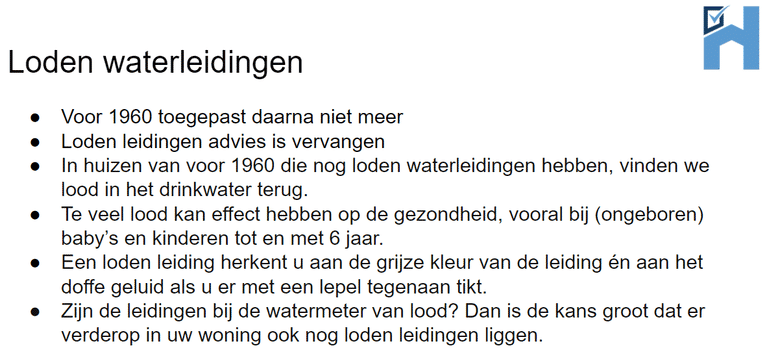
In most cases , lead pipes are present in homes built before 1960. A lead water pipe is recognizable by its gray color. Sometimes these are concealed in plaster walls or behind paneling. Lead particles can enter your drinking water through pipes. Too much lead can be harmful to your health. Therefore, it's important to replace lead pipes, no matter how hidden they may be.

loden-waterleiding-1
  • The homeowner is responsible for the water pipes in the house.
  • Lead pipes do not necessarily need to be removed from plasterwork, as long as the pipes are no longer in use.

The shut-off valve near the water meter or inlet must function properly. If there are any defects, you can try to repair the valve using something like penetrating oil (WD40). Be careful when forcing it! Older or poorly functioning valves like these can easily break.

If the water meter mounting is loose: the various connections need to be tightened. The meter may need to be completely reinstalled. These costs are partly borne by the water supplier (for the meter) and partly (after the meter) by you as the homeowner.

If the water meter is installed in a well outside the home: This isn't a problem in itself, but it does pose a risk in winter and during prolonged periods of frost. Rising groundwater or excessive rain can also flood the well, which is inherently detrimental to the meter and all its moving parts. Check regularly for defects; if necessary, insulation can be applied to the well to protect it from frost.

Would you like to make an appointment for a building inspection?

The cost of a building inspection (up to 250 m²) is only €489 including VAT. We'll conduct a comprehensive building inspection and you'll receive a building report. Do you have any questions? We're happy to help and can schedule an appointment with an expert inspector right away if you wish!

Recent articles

Een vrouw wijst naar een tablet die een man vasthoudt en een andere man kijkt mee
blog
13 February 2026
Hidden defects in a home
Hidden defects are not uncommon, especially in existing homes. They are often not immediately visible, but can have significant consequences for comfort, safety, and costs. This article explains how hidden defects are assessed and the role of investigation and inspection.
blazen plooien bitumen dak
video
13 February 2026
Common roof detail mistakes: what an inspection reveals
During roof inspections, problems often turn out to be not in the roofing itself, but in the details. In this practical case study, we demonstrate which installation errors are frequently encountered and why these, in particular, pose an increased risk of leaks and damage.
WhatsApp Image 2026-02-12 at 08.51.37
video
12 February 2026
Three Roof Eave Mistakes That Cause Leaks (And Are Often Overlooked)
Roof problems rarely arise suddenly. They usually start with a minor issue. In this inspection, we see how a torn lead flashing, improper installation, and a loose joint can all pose a serious risk. What should you look for—and how can you prevent them?