
Make an appointment Call now

Sewerage in crawl space and other drains

Navigating the complexities of an aging sewer system can be daunting, especially with the potential for rust, leaks, and outdated materials like asbestos posing significant challenges. Our blog delves into essential considerations for assessing and maintaining your home's sewer infrastructure, offering insights into when replacement is necessary and how modern materials like PVC can enhance longevity and efficiency. Dive deeper to ensure your home's plumbing is up-to-date and functioning seamlessly.

If your sewer system is made of PVC/PE, both are materials also used in new-build homes.

If a stoneware or similar stone sewer has been found: stoneware or similar sewers were often used in the past to construct sewer systems. There's nothing wrong with such a material, but nowadays, synthetic sewers are often chosen. If the sewer is functioning, there's no reason to replace it.

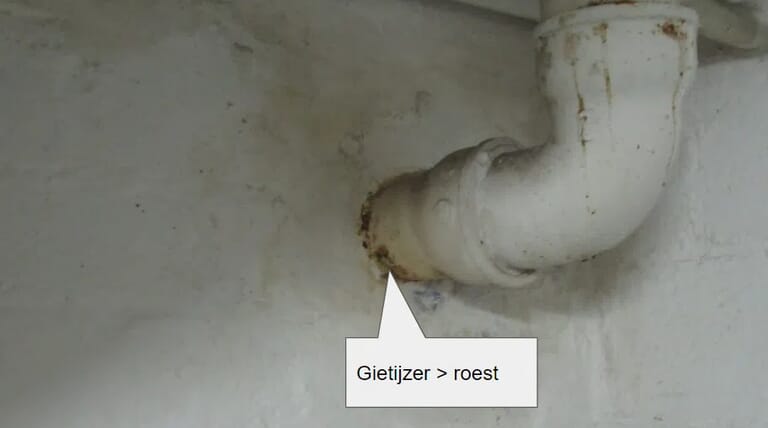
If a cast iron sewer is present: cast iron (metal) sewers were often used in the past for sewer systems. There's nothing wrong with this material, but nowadays, plastic sewers are the most popular choice. If the sewer is functioning, there's no reason to replace it. However, almost all cast iron sewers are now reaching the end of their lifespan. Cast iron has been discontinued since the 1970s. If you have a cast iron sewer with problems, the cast iron will need to be replaced (in the near future). Even if you don't have any sewer problems, you can consider having the sewer replaced preventatively with a modern material like PVC.

Homekeur-riolering-gietijzer-1.png
  • Although cast iron is a strong material, it has a number of drawbacks when used for sewer systems. The biggest problem with cast iron sewers is that it rusts. The material is constantly exposed to water and oxygen (the two factors that quickly cause rust formation in cast iron).
  • Rust formation creates an uneven surface in the cast iron drain. Toilet paper easily sticks to this, causing blockages.
  • In addition, the connections between cast iron sewer pipes deteriorate over time, and leaks can develop. Furthermore, cast iron wears out faster than modern materials after years of use.

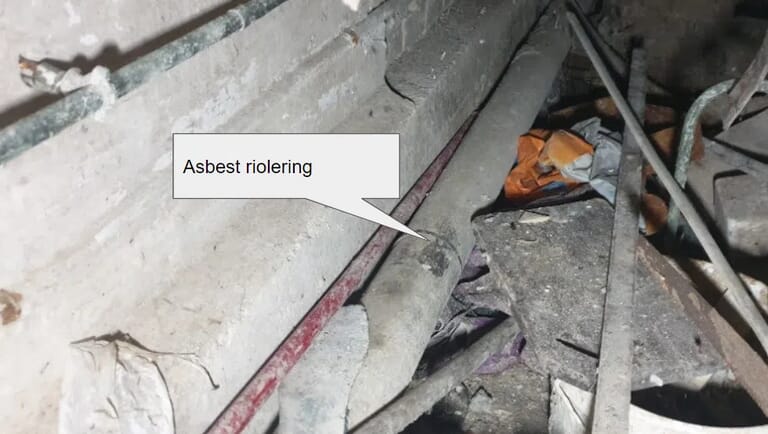
A common application of asbestos is in sewers . These are usually no longer actively used. Remnants or the entire defunct sewer system are often not removed and left behind in the crawl space. If the asbestos sewer is still in use, you should keep in mind that it will need to be completely replaced within at least five years. Asbestos is dangerous and must be remediated (removed) at some point. Removing asbestos is expensive. To be sure, an asbestos inventory can be performed!

Homekeur-riolering-asbest-1.png

In very rare cases, a sewer (or part of it) may still be made of lead . This is so old that it must be taken into account that the sewer will need to be replaced immediately or in the not too distant future.

Defects, points of attention and/or comments regarding the sewerage and drains

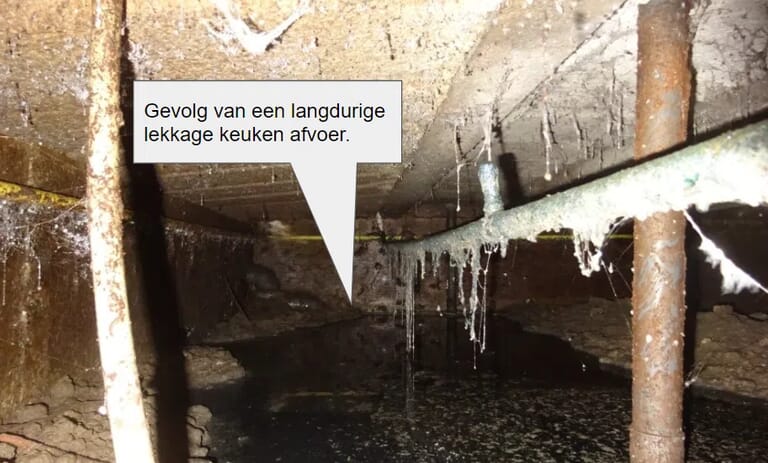
  • The slope may be inadequate, or a leak, break, or defect may be detected in the crawl space sewer line. Such defects should be repaired. Repairs are usually easy. In the worst-case scenario, part of the sewer line may need to be replaced, and even that is easily accomplished.
  • If there's insufficient slope in the sewer system (or a subsidence), this prevents unimpeded drainage and flow of wastewater, and contaminants remain in the sewer. This contaminant accumulates further, leading to problems or blockages in the drainage system. The slope must be improved!
  • If the sewer suspension is inadequate, it can become saturated , which should be repaired or replaced. Inadequate support on the foundation or underside of the floor can also cause subsidence between suspension points.
Homekeur-gevolg-lekkage-keuken-afvoer-1.png
  • If the suspension on the foundation or underside of the floor is inadequate, or if defects have been noted, or the distance between the suspension points is too great, subsidence of the sewer system could occur or is already present. This will, in turn, cause problems with the functioning of the sewer system. The suspension must be improved.
  • If the sewer is loose at the bottom of the crawl space, this is unusual! While the sewer may still function properly, a change in the soil structure, for example, will cause the slope to malfunction. It's better to install the sewer with a slope at the foundation or underside of the floor. In that case, the sewer will need to be replaced from the penetrations through the floor.
  • A sewer system is connected to the sewer system outside the house at the boundary of the house. If the sewer system outside the house has sunk deeper over the years, the connection will be pulled along with the house and will be under high tension, or it will already be disconnected from the outside connection. Such an inside/outside connection is best fitted with a sliding coupling . This allows the sewer system outside the house to sink further without immediately causing problems in the crawl space of the house.
  • The sewer system must be completely replaced if it contains asbestos; in that case, it usually cannot be maintained. The costs of remediation can be enormous! First, an asbestos inventory is necessary. Without an inventory report, it's impossible to estimate the cost of this remediation. Removing the asbestos yourself can potentially save money. Therefore, the current sewer system must be removed (remediated) and a new PVC sewer system installed.

Drain

The drains and/or water drainage system in the home must, of course, have a proper slope. If there is sagging (deflection), water cannot drain away, and contamination remains in the pipes at the lowest points. This causes blockages and poorly functioning drains. This sagging must be corrected to ensure a normal and properly functioning slope.

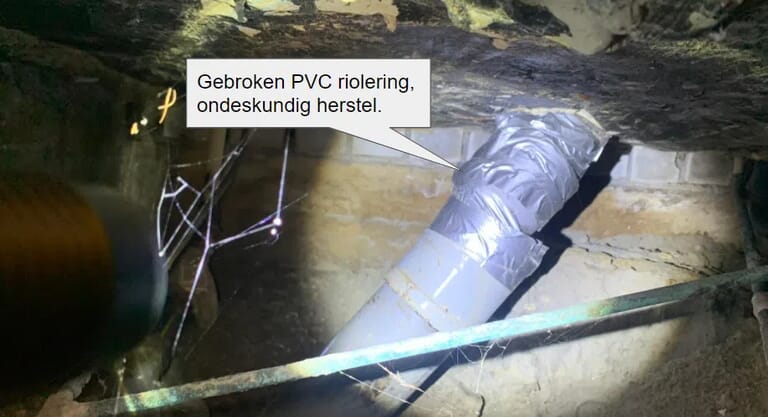
Even if a leak, break, or defect is detected in the drainage system, these defects should be repaired immediately. Repairs are usually easy. In the worst-case scenario, part of the drainage system may need to be replaced, and even that is easily accomplished.

Homekeur-pvc-riolering-gebroken-1.png

It's possible that water from the house is discharged into the rainwater drain . This can work perfectly well, but it's not intended; a drain should be connected to the sewer system . Or, water from the house is discharged into a well in the garden, which is often connected to the sewer system. This can work perfectly well, but it's also not intended; a drain should be connected directly to the sewer system. The current situation can cause some odor nuisance near the well, as it's considered an "open sewer."

Lead is often used in older homes for water drainage systems. If it functions properly, it can remain that way; replacement isn't necessary. Problems can arise if parts need to be replaced or repaired, and/or PVC drains need to be connected to them. There are no real good solutions for this!

Would you like to make an appointment for a building inspection?

The cost of a building inspection (up to 250 m²) is only €489 including VAT. We'll conduct a comprehensive building inspection and you'll receive a building report. Do you have any questions? We're happy to help and can schedule an appointment with an expert inspector right away if you wish!

Recent articles

Een vrouw wijst naar een tablet die een man vasthoudt en een andere man kijkt mee
blog
13 February 2026
Hidden defects in a home
Hidden defects are not uncommon, especially in existing homes. They are often not immediately visible, but can have significant consequences for comfort, safety, and costs. This article explains how hidden defects are assessed and the role of investigation and inspection.
blazen plooien bitumen dak
video
13 February 2026
Common roof detail mistakes: what an inspection reveals
During roof inspections, problems often turn out to be not in the roofing itself, but in the details. In this practical case study, we demonstrate which installation errors are frequently encountered and why these, in particular, pose an increased risk of leaks and damage.
WhatsApp Image 2026-02-12 at 08.51.37
video
12 February 2026
Three Roof Eave Mistakes That Cause Leaks (And Are Often Overlooked)
Roof problems rarely arise suddenly. They usually start with a minor issue. In this inspection, we see how a torn lead flashing, improper installation, and a loose joint can all pose a serious risk. What should you look for—and how can you prevent them?