
Make an appointment Call now

Drainage and rainwater drains

Rainwater drainage systems are crucial for protecting your home's foundation and facade from water damage, yet many homeowners overlook their maintenance and functionality. Discover how assessing and optimizing your rainwater drainage can prevent costly damage, and learn why a building inspection might be your best investment in safeguarding your property.

Rainwater refers to all forms of water that come from the sky, such as rain, snow, and hail. The purpose of rainwater drainage is to transport rainwater from the roof and gutters to the sewer system. Rainwater drainage isn't always connected to the sewer system; it ends above ground or in a gravel pit along the facade.

  • Please note: you can only visually inspect the above-ground rainwater drainage system (and not its functionality). Asking current residents whether it functions properly and adequately (even during heavy rainfall) can provide clarity. The same applies to underground rainwater drainage systems that are connected to a sewer system or similar.
  • Common problems with rainwater drains
  • Benefits of disconnecting rainwater drains

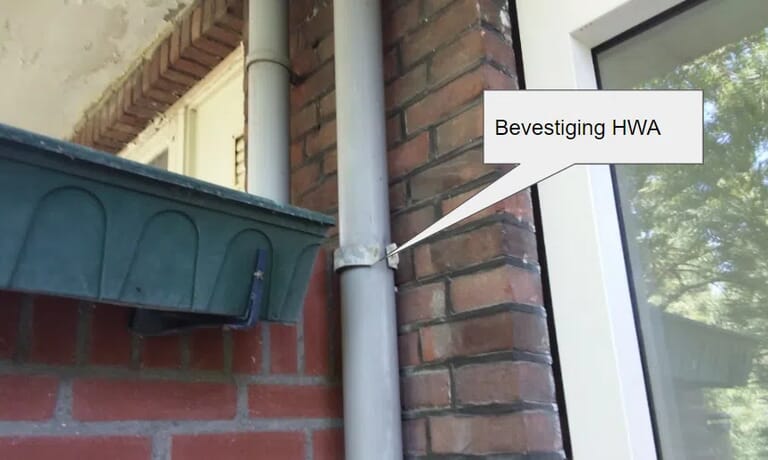
If any defects are found in the fastening of the rainwater drains, these defects can usually be easily repaired. The necessary parts can be purchased at any hardware store.

Homekeur-HWA-bevestiging.png

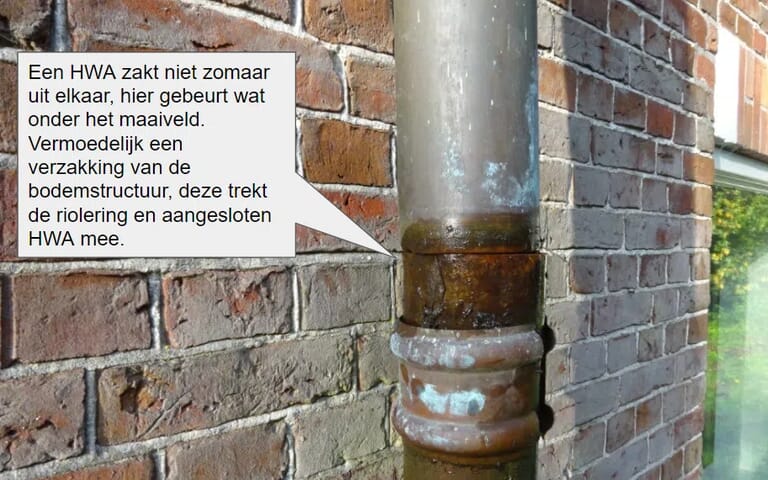
If the rainwater drains have subsided or come apart, repairs will be necessary, particularly at the connections. Parts can be replaced or extended, and repairs are easily possible. Note: because these drains have now subsided, you should consider a possible cause: this is often due to subsidence or irregularities in the soil structure, which pull the drains or sewers downwards.

If the rainwater drainage system overflows and/or there is insufficient drainage or drainage capacity, this could be due to a blockage, break, or other (invisible) defect in the rainwater drainage system, either above or below ground level. Defects can usually be easily located and repaired.

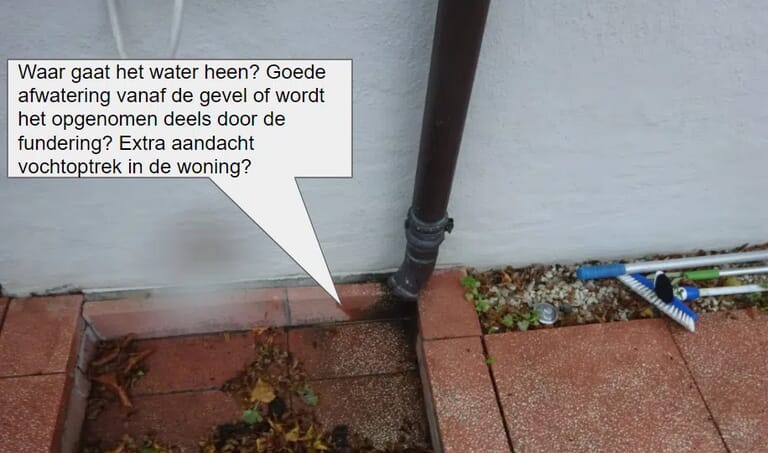
The rainwater drain may not be connected to a sewer system but may end above ground . Ensure that rainwater can drain away unhindered to minimize the burden on the facade. If this drainage system functions properly and drains away from the facade, it can be maintained this way!

Homekeur-HWA-niet-aangesloten-op-riolering.png
  • If the drainage from the facade is not functioning optimally, creating a gravel pit or connecting it to a sewer can be a very simple preventive measure to improve drainage.
  • If the water drainage capacity is not properly managed, the facade and foundation will be subjected to prolonged water loads. This will lead to flooding of the foundation or masonry, for example.
  • Moisture in walls or foundations can lead to (invisible) defects in floor joists, basement walls, weakening of the foundation and soil structure.

If the rainwater drain ends in a (gravel) drain: this is an excellent solution, provided the drain has sufficient storage capacity. Water that continuously loads the facade will eventually cause damage or a moisture problem on the other side of the wall. Therefore, ensure that rainwater is collected unhindered in the drain to relieve the facade as much as possible.

  • If the water drainage capacity proves insufficient, the facade and foundation will be subjected to prolonged water loads. This will lead to flooding of the foundation or masonry, for example.
  • Moisture in walls or foundations can lead to (invisible) defects in floor joists, basement walls, weakening of the foundation and soil structure.
  • At some point, a better solution will be to connect this drainage to a sewer system. This will usually have to be proven in practice!
Homekeur-HWA-zakt-uit-elkaar.png

Read our blog post "Checking your home's sewer system" here. While underground sewers can't be inspected during a building inspection, it's still wise to reserve a building inspection when buying a home. On our website, you'll find all sorts of information and helpful tips that may be helpful during negotiations or when buying a home. A building inspection reservation also gives you more certainty when submitting your offer.

Would you like to make an appointment for a building inspection?

The cost of a building inspection (up to 250 m²) is only €489 including VAT. We'll conduct a comprehensive building inspection and you'll receive a building report. Do you have any questions? We're happy to help and can schedule an appointment with an expert inspector right away if you wish!

Recent articles

Een vrouw wijst naar een tablet die een man vasthoudt en een andere man kijkt mee
blog
13 February 2026
Hidden defects in a home
Hidden defects are not uncommon, especially in existing homes. They are often not immediately visible, but can have significant consequences for comfort, safety, and costs. This article explains how hidden defects are assessed and the role of investigation and inspection.
blazen plooien bitumen dak
video
13 February 2026
Common roof detail mistakes: what an inspection reveals
During roof inspections, problems often turn out to be not in the roofing itself, but in the details. In this practical case study, we demonstrate which installation errors are frequently encountered and why these, in particular, pose an increased risk of leaks and damage.
WhatsApp Image 2026-02-12 at 08.51.37
video
12 February 2026
Three Roof Eave Mistakes That Cause Leaks (And Are Often Overlooked)
Roof problems rarely arise suddenly. They usually start with a minor issue. In this inspection, we see how a torn lead flashing, improper installation, and a loose joint can all pose a serious risk. What should you look for—and how can you prevent them?