
Make an appointment Call now

Viewing a house: 10 smart points to consider

Embarking on the journey to find your dream home requires more than just an emotional connection; it demands a strategic approach to avoid expensive pitfalls. Before you step into that potential new abode, arm yourself with these essential tips to ensure your investment is sound, your future neighbors are pleasant, and your maintenance costs won't break the bank.

After hours of searching online, you've found your dream home and are scheduling a viewing. Be well-prepared when you go viewing a house. The real estate agent who shows you around will try to appeal to your instincts. However, it's best to keep a cool head and calculate your investment.

Points of interest when viewing

We would like to give you 10 points that you should pay attention to during a viewing.

1. Pay attention to the surroundings

Observe the traffic conditions at different times. Also, try to get a feel for your immediate neighbors. You might have to deal with them if you're planning to install a fence or have a roof renovated.

2. Check the cadastral dimensions

Is there an easement or right of way?

3. Ask about the maintenance of the house

If recent work has been done, ask about the companies that carried it out regarding warranty claims or any follow-up work.

4. Look for cracks and damp spots

Some cracks indicate subsidence or even earthquake damage. This can result in high costs. Damp problems can also arise from poor or outdated plumbing, which is also a costly issue.

5. Type of heating in the home

If you have central heating, pay attention to the age of the boiler. If you have underfloor heating, ask the owner how old the pump is. These are expensive to replace.

6. Does the house have an energy label?

What insulation measures have been taken? If you want to insulate yourself, inquire about possible subsidies from your municipality.

7. Are the kitchen and bathroom dated?

Before you buy, request quotes from specialists. This way, you can factor these costs into your mortgage application.

8. Is the paintwork good?

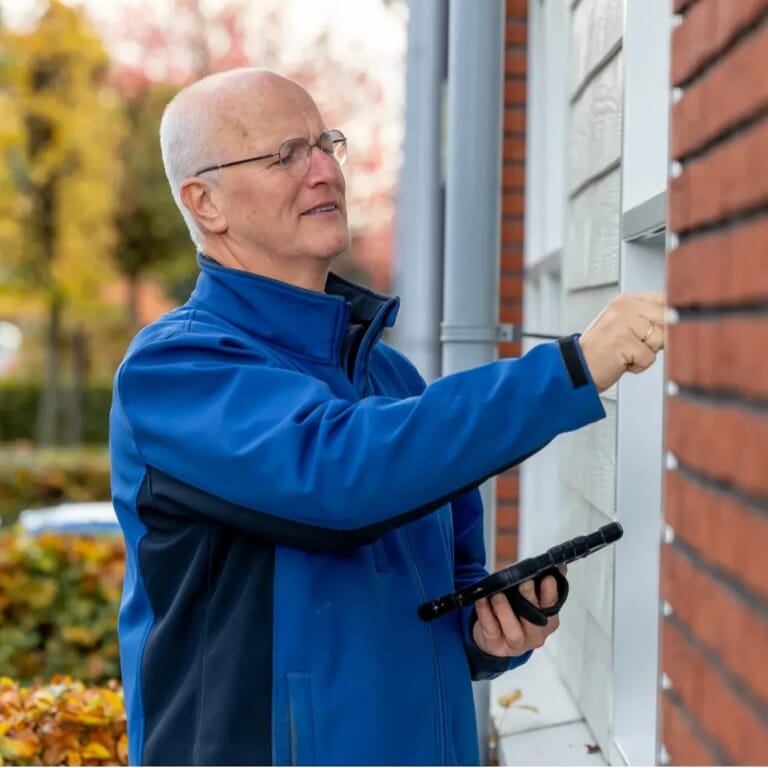
A good coat of paint is especially important on the exterior of the house to prevent damage to doors and window frames. Also check the caulk around the frames.

9. Does your furniture fit in the house?

Some homes have a narrow doorway or a difficult bend in the staircase that makes it difficult to get large pieces of furniture inside.

10. Is it favorably positioned in relation to the sun?

Especially if you have a garden, it's important to know when you can enjoy the sun there. There are many improvements you can make to a house, but its location is a factor to consider. Also, check if solar panels can be installed on the roof.

Would you like to make an appointment for a building inspection?

The cost of a building inspection (up to 250 m²) is only €489 including VAT. We'll conduct a comprehensive building inspection and you'll receive a building report. Do you have any questions? We're happy to help and can schedule an appointment with an expert inspector right away if you wish!

Recent articles

Man sluit zijn autodeur
blog
20 March 2026
Important news for appraisers!
As of April 1, 2026, the new Residential Property Valuation Report model will be introduced. In this updated report, the assessment of foundations will play a significantly larger role.
funderingsproblemen
blog
05 March 2026
Homekeur introduces the Foundation Risk Assessment (Phase 0)
Foundation problems can turn a dream home into a financial nightmare. Because the condition of the foundation is often difficult to assess from the outside, Homekeur introduces the Foundation Risk Assessment (Phase 0). This quick, non-destructive scan provides immediate clarity about the stability of your home, without the need to dig a hole in the ground.
Een vrouw wijst naar een tablet die een man vasthoudt en een andere man kijkt mee
blog
13 February 2026
Hidden defects in a home
Hidden defects are not uncommon, especially in existing homes. They are often not immediately visible, but can have significant consequences for comfort, safety, and costs. This article explains how hidden defects are assessed and the role of investigation and inspection.