
Make an appointment Call now

House foundations are deteriorating due to climate change

As climate change intensifies, the stability of home foundations in the Netherlands faces unprecedented threats from shifting weather patterns, impacting not just the environment but also the financial security of homeowners. Understanding and identifying these hidden foundation issues through thorough building inspections can prevent unexpected, costly repairs, ensuring peace of mind for current and prospective homeowners.

The climate is changing, and we're starting to notice this in the Netherlands, too. The weather is becoming increasingly extreme. What's less well-known is that these climate changes also affect our homes. The stability of a house's foundation can be compromised by weather changes. We're experiencing more frequent heavy rainfall and periods of drought.

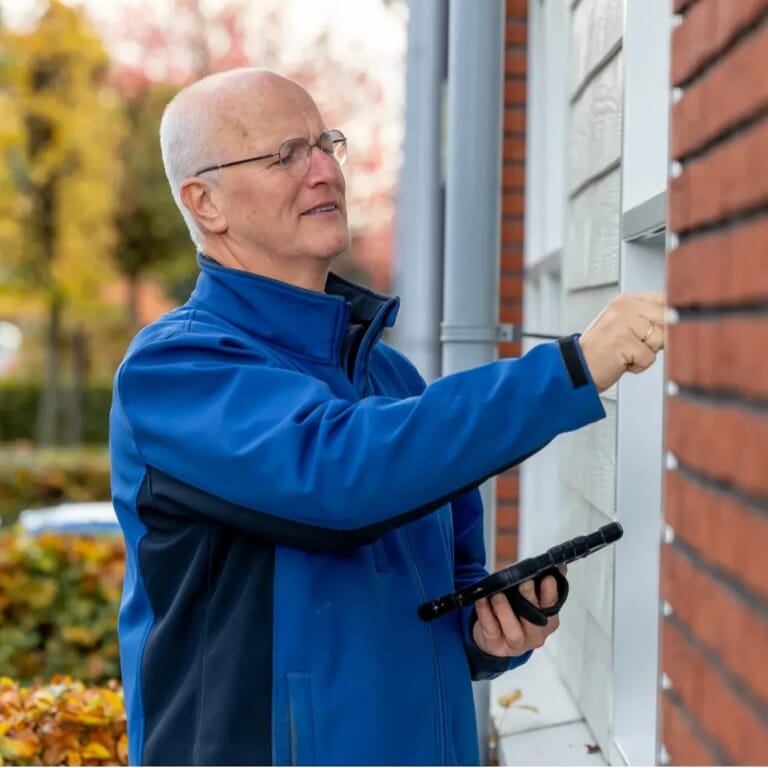
These conditions can cause a home's foundation to deteriorate. A building inspection always examines the condition of the foundation. If foundation problems are visible in the home or on the facade, these often lead to high costs.

Problems with the foundation of the house

Foundation problems are usually not immediately apparent during a property inspection, unless they are already severe. If you buy a house with foundation problems without realizing it, you'll face unexpected costs that are often very high. You can prevent this by having a building inspection performed. We'll give you an overview of the most common foundation problems caused by climate change.

1. Soil shrinkage due to drought

We are experiencing increasingly frequent periods of drought. Heat waves are also occurring more frequently in our country and lasting longer on average. This climate change is causing sandy soil to shift and clay soil to shrink (settle). Ultimately, this leads to foundation subsidence. This can become visible as cracks in floors and walls. The risk is particularly high for homes built on unpiled ground.

2. Excessive saturation due to rainfall

Climate change also means we're experiencing more frequent, prolonged, heavy rainfall. A few years ago, for example, this caused the flooding in Limburg. This heavy rainfall can saturate the soil and make it unstable. The foundation can subside or become damaged. Many older homes are built on wooden foundation piles. Fluctuations in the groundwater level can cause wooden foundation piles to rot. This poses a significant long-term threat to the stability of the home.

Inspecting the foundation during an inspection

Foundation problems aren't always immediately apparent. They can be invisible until the damage becomes severe. A look inside the crawl space can provide a lot of information. Cracks in the facade often indicate advanced foundation problems. Therefore, having a structural inspection performed is crucial to gain certainty about the condition of the foundation. If you have this inspection performed by Homekeur, we'll provide a comprehensive inspection. We'll check for subsidence, cracks, and other signs of damage. The condition of floors and load-bearing walls will be checked for cracks caused by foundation problems. This allows us to accurately assess the condition of the foundation and provide you with clarity.

Would you like to make an appointment for a building inspection?

The cost of a building inspection (up to 250 m²) is only €489 including VAT. We'll conduct a comprehensive building inspection and you'll receive a building report. Do you have any questions? We're happy to help and can schedule an appointment with an expert inspector right away if you wish!

Recent articles

Een vrouw wijst naar een tablet die een man vasthoudt en een andere man kijkt mee
blog
13 February 2026
Hidden defects in a home
Hidden defects are not uncommon, especially in existing homes. They are often not immediately visible, but can have significant consequences for comfort, safety, and costs. This article explains how hidden defects are assessed and the role of investigation and inspection.
blazen plooien bitumen dak
video
13 February 2026
Common roof detail mistakes: what an inspection reveals
During roof inspections, problems often turn out to be not in the roofing itself, but in the details. In this practical case study, we demonstrate which installation errors are frequently encountered and why these, in particular, pose an increased risk of leaks and damage.
WhatsApp Image 2026-02-12 at 08.51.37
video
12 February 2026
Three Roof Eave Mistakes That Cause Leaks (And Are Often Overlooked)
Roof problems rarely arise suddenly. They usually start with a minor issue. In this inspection, we see how a torn lead flashing, improper installation, and a loose joint can all pose a serious risk. What should you look for—and how can you prevent them?