Other comments on crawl space
A crawl space must be inspected for other defects and for the presence of materials or other abnormalities.
Cluttered wiring? Numerous electrical and other cables are lying loose on the floor, posing a risk in the event of flooding. We recommend tying up various cables and securing them to the underside of the floor or to other piping.
Multiple pipes are loose or lying across the floor: this can cause buckling or backflow when using hot or cold water in your home. We recommend installing the pipes under the floor or attached to the foundation.
Is your pipework rusting? One risk of rusting pipes is the inherent risk of leaks. A leak isn't always easy to detect! In any case, it's a reason to be alert. It's best to have these rusting pipes inspected again with a plumber. They may remain functional for a while, but at some point, it's best to replace them with new plastic pipes.
Asbestos material or waste may be present in the crawl space!
- We would like to point out that if complete certainty is required, an asbestos inventory should always be carried out (by an expert and certified agency).
- Contact the Homekeur BV head office for more information or to schedule an appointment! Call 085-0653675.
- Asbestos has been used in many ways and has many applications.
Has the ground in the crawl space subsided? This is caused by settlement or changes in the soil structure. In such cases, the subsidence is significant, and we recommend applying a layer of sand. A risk of such low soil structures is that subsidence can also occur in the garden or along the facade, for example. The sand along the facade, in particular, washes away into the crawl space, and vermin can easily migrate under the foundation. Sewers and drains present in the sand layer can break as a result, and/or a leak can occur.

Contamination present in the crawl space: it's best to remove this contamination. Old wood will rot, and mold can develop or fungus can take root. Contamination also hinders unobstructed ventilation, which is detrimental to the indoor climate.
- Any organic debris must be carefully removed from the crawl space. Moisture causes (old) wood to rot, creating the ideal breeding ground for cellar fungus or dry rot. The consequences of cellar fungus or dry rot are enormous, and the costs of treatment can be substantial. Prevention is better than cure!
Fungi in basement or crawl space
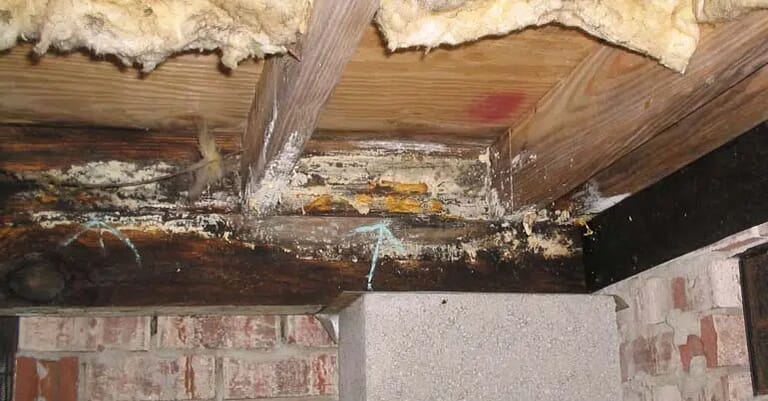
Cellar fungus present: unfortunately, you only recognize cellar fungus in your home when it's visibly present. By "visible," we mean that we can see the fruiting bodies. They are brown in color. The fruiting bodies are about 3 mm thick and irregularly shaped. Moisture problems are usually the cause of cellar fungus in the home, such as leaks, condensation, or rising damp (in the walls). The problem often originates in a basement or crawl space, and the infestation can then easily spread to rooms above. It's difficult to accurately estimate the extent of a fungus's spread; this will become apparent during the treatment process. The costs can be modest or disproportionate.
- Removing and/or combating fungus is a complex and complex undertaking. Effective control requires excavating approximately 20 cm of soil from the crawl space, depending on the extent of the infestation. If the foundation is brick, the joints should be cleaned, and then the brickwork burned down using a large blowtorch, for example. The soil that is now visible (after excavation) can also be thoroughly burned down. Afterward, holes can be drilled in the brickwork and possibly beams to combat the fungus with chemicals.
- Cellar fungus is a type of mold, and mold in the home can cause unpleasant respiratory problems. Respiratory infections, asthma, and allergic reactions can result from (long-term) exposure if one comes into contact with cellar fungus and/or inhales its spores.
- If the fungus has grown above the floors (which is often the case), the plaster from the walls should be removed.
- Because active infestation has been noted, there are risks and we recommend further investigation.
- Recognize a fungus or woodworm and prevent worse
Dry rot present: Dry rot is the only fungus that doesn't grow naturally. Dry rot requires a constant temperature and high relative humidity, and in many cases, the crawl space is the perfect location for germination. If not treated promptly, dry rot can theoretically damage the entire structure of a house. The fungus grows in the cavity wall, behind wallpaper, and plaster, destroying the house. This estimate includes a direct cost for treating dry rot. It's difficult to accurately estimate the extent of the fungus's spread; this will become apparent during the treatment process. The costs can be modest or disproportionate.
- Removing and/or combating fungus is a complex and complex undertaking. Effective control requires excavating approximately 20 cm of soil from the crawl space, depending on the extent of the infestation. If the foundation is brick, the joints should be cleaned, and then the brickwork burned down using a large blowtorch, for example. The soil that is now visible (after excavation) can also be thoroughly burned down. Afterward, holes can be drilled in the brickwork and possibly beams to combat the fungus with chemicals.
- If the fungus has grown above the floors (which is often the case), the plaster from the walls should be removed.
- Dry rot can also have negative consequences for health.
- Because active damage was noted during the building inspection, there are risks and we recommend a follow-up investigation.
Would you like to make an appointment for a building inspection?
The cost of a building inspection (up to 250 m²) is only €489 including VAT. We'll conduct a comprehensive building inspection and you'll receive a building report. Do you have any questions? We're happy to help and can schedule an appointment with an expert inspector right away if you wish!
Recent articles