


Ceilings in the home
Many types of ceilings can be present in a home, depending on the year of construction. Below, we outline the specifics, considerations, and possible variations.
Stucco ceilings
The ceiling finish may show signs of damage or cracking, which can be either retained or repaired. Older ceilings, in particular, are difficult to maintain or repair due to their adhesion to the substrate.
If the ceiling finish shows cracks, loose plaster/filler or other defects: in such cases, an older ceiling finish may be difficult to maintain or repair due to its adhesion to the substrate or other defects at the base, or the defects may be such that (partial) replacement is recommended.
- Replacing a ceiling finish is not easy, especially adding to an existing finish is a job for a professional.
- After applying a primer, new plaster/spack can be applied.
Spray-applied spack on concrete
If the ceilings (partially or multiple times) have a textured layer, this spray-on application is called "spack." Repair any damage with a suitable wall filler or spack spray for a beautiful result.
- Looking to repair the area? Regular wall filler gives a smooth finish and is therefore often even more noticeable.
- Trying to recreate a structure yourself with a sponge often does not give the desired result.
- There are special products available for repairing a plaster ceiling. You can find a plaster repair tube from Albastine or a similar product at any hardware store.
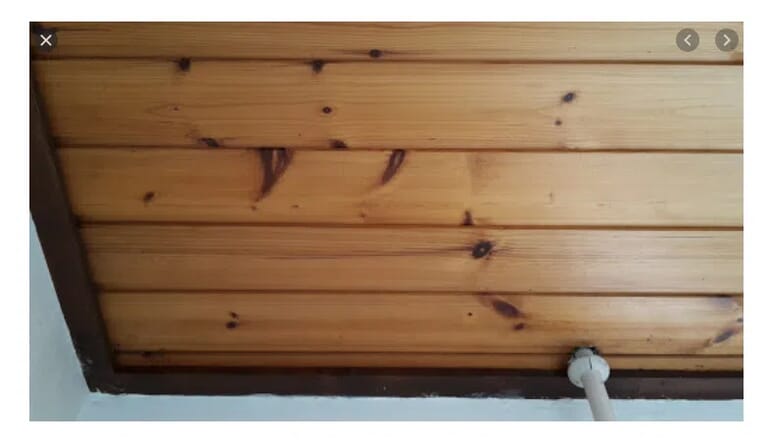
Wooden plank ceilings
Ceilings (partially or multiple) in the home may be fitted with wooden slats, but it will be unclear how and where these are mounted. If such ceilings are removed, be aware of the potential for unidentified materials to be revealed.
- Wooden plank ceilings pose an increased risk of fire penetration in the event of a fire; due to the gaps between the planks, the fire resistance is very minimal.
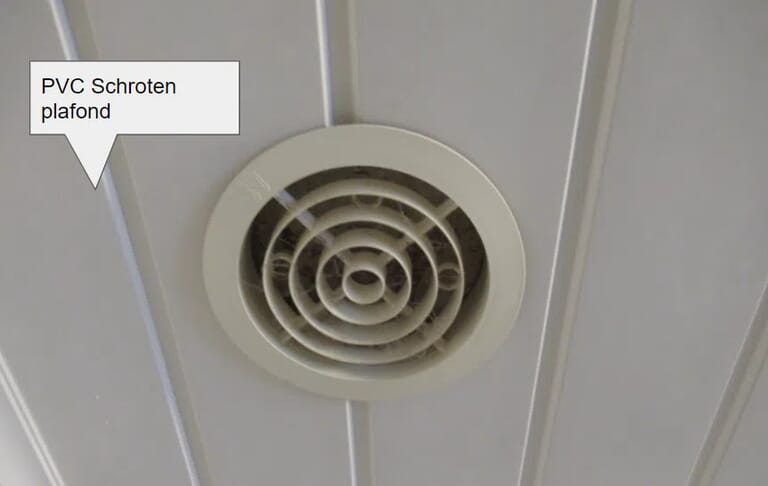
Older PVC cladding or tempex
Ceilings (partially or multiple) in the home may be covered with PVC cladding or Styrofoam panels, but it's unclear what these are mounted on. If the ceiling finish is removed, be aware of the possibility of uncovered materials. In such cases, we recommend removing the ceiling finish and renovating or replacing the exposed ceiling.
- These ceiling finishes are generally (very) flammable and can produce a significant amount of smoke in the event of a fire. Furthermore, the materials melt quickly, and the burning droplets can cause serious burns. Cladding can become loose in the event of a fire, creating obstacles when evacuating the room/home.
Softboard ceilings
Ceilings (partially or multiple) in the home may be covered with softboard. This is a fire-hazardous material and is no longer permitted for use as ceilings. If renovations are planned, we recommend removing the softboard and replacing it with, for example, a plasterboard ceiling.
- The use of softboard in new ceilings is no longer permitted due to the fire hazard.
- In existing buildings, softboard may simply remain in place.
- If you are going to renovate/remodel your home on a large scale, it must formally comply with the new requirements and softboard will no longer be permitted.
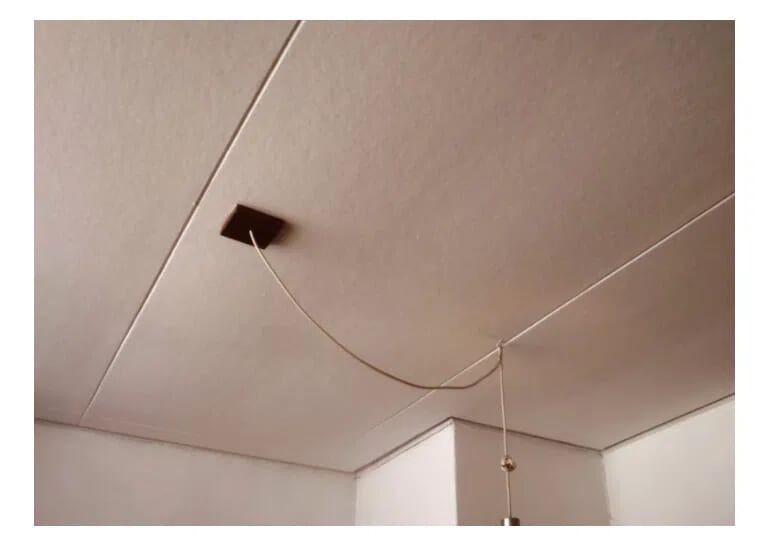
Stretch ceiling
This is a stretch ceiling that is installed under the existing ceiling. It's usually installed with a clamp system that wraps around the wall or attaches to the existing ceiling. This clamp system stretches the ceiling from wall to wall. Any existing (old) ceiling or other elements behind the stretch ceiling are now hidden. The entire structure creates a sleek appearance.
System ceiling
Ceilings (partially or multiple) in the home may be fitted with a suspended ceiling, but it's unclear how and where these are mounted. If such ceilings are removed, be aware of the potential for unfamiliar materials to be exposed.
- System ceilings in homes are unusual; they're often used to conceal underlying structures. System ceilings are typically only used in offices.
Points of attention with ceilings
- The ceiling cladding (or plasterboard) may not be properly installed. This can be easily remedied by improving the fastening to the battens, for example, with drywall screws. Because there is a risk of consequential damage to the ceilings or an increase in the amount of loose material, we recommend repairing these defects as soon as possible.
- If mold is present on the ceiling : this is certainly due to insufficient ventilation in the home, but incorrect construction of a roof package can also be a cause.
- Initially, you'll see very little mold, but within a short time, small spots will develop into large, often black, mold patches on walls or ceilings. The mold grows in damp places. This could be in a damp bathroom, a living room or bedroom with high humidity, or on damp walls and ceilings.
- To prevent mold on walls or ceilings, adequate ventilation in your home is essential. Ventilation removes moist air so walls and ceilings can dry. In most homes, it's not always possible to remove sufficient moisture through ventilation alone. This won't eliminate the mold in your home; in fact, it will only cause the mold to grow larger.
-
- Once moisture problems have been successfully resolved and the humidity has been reduced, you can remove mold from a wall or ceiling.
- Mold in your home is a threat to your health. These mold spots are not only dirty but can also cause respiratory problems. A damp house with mold on the walls and ceilings creates a poor indoor climate.
- If leaks are visually visible on the ceiling, it must first be determined whether the leak is active . If active, the underlying problem will naturally need to be resolved first. The downside of this is that the ceiling must be opened, resulting in significant additional costs and work. To prevent further deterioration of the ceiling, immediate action is recommended. If the leaks are determined to be non-active after inspection with a moisture meter, aesthetic repairs can be carried out to conceal the leaks. First, use a primer or insulating primer as an undercoat. Regular latex will make the leak visible again almost immediately.
- In addition to the findings, the building report also recommends improvement tips to possibly improve the indoor climate in the home.
Would you like to make an appointment for a building inspection?
The cost of a building inspection (up to 250 m²) is only €489 including VAT. We'll conduct a comprehensive building inspection and you'll receive a building report. Do you have any questions? We're happy to help and can schedule an appointment with an expert inspector right away if you wish!
Recent articles