
Make an appointment Call now

Advertising obligation for energy labels

Starting January 1, 2022, it became mandatory to include a valid energy label in real estate advertisements, with enforcement now actively carried out by the Human Environment and Transport Inspectorate (ILT). This requirement serves not only to avoid fines but also to provide valuable insights into a property's energy efficiency, thereby enhancing its marketability and ensuring compliance in the ever-tightening housing market.

As of January 1, 2022, it is mandatory to include a valid energy label in advertisements offering a home for sale or rent.

As of January 1, 2022, enforcement will also be carried out by the Human Environment and Transport Inspectorate (ILT). Due to the introduction of the NTA 8800 on January 1, 2021, it was decided to temporarily suspend enforcement because every home had to be inspected and there was a looming shortage of advisors in a "tight" housing market. This shortage has now been resolved. For example, you can apply for an energy label through Homekeur, and after a swift inspection, the report will follow quickly.

Mandatory energy label

An energy label is mandatory when selling or renting a home. When a property is advertised on a website like Funda, an energy label is mandatory starting January 1, 2022. Violating this advertising requirement results in a fine.

Building inspection

In addition to the mandatory energy label, there's now also talk of a mandatory building inspection . A building inspection provides insight into the structural condition of the home.

How does an energy label recording work?

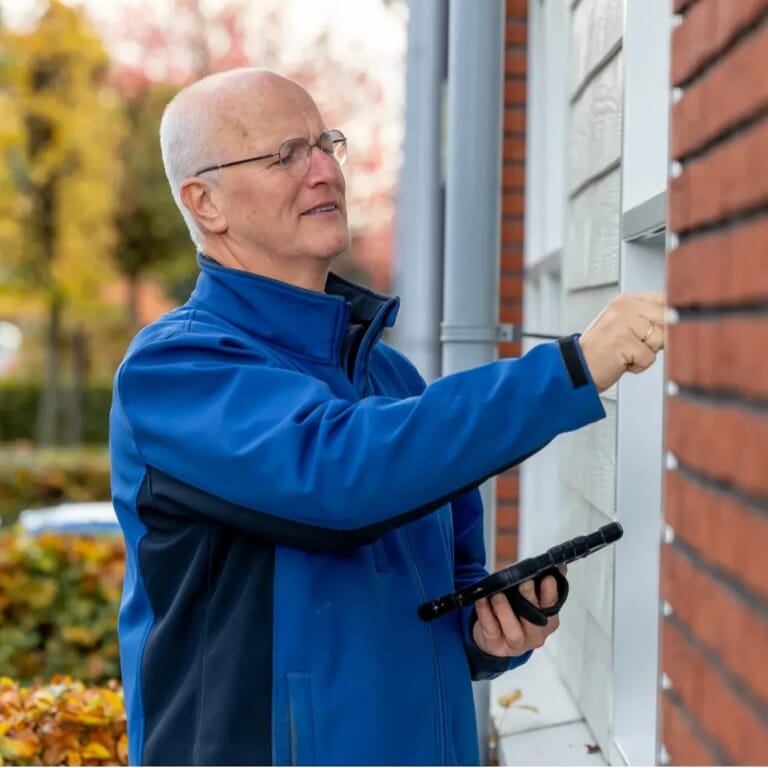
An experienced inspector will visit your property to prepare an energy label. Our planning department will schedule an appointment with you for this. The inspection and data recording will take one hour; however, depending on the size of the property, this may require slightly more or less time. There will be no charge for any additional or less time spent. During the inspection, the advisors will review the measures taken to make the house more sustainable.

A number of characteristics determine the energy label:

  • The type of property (corner house, terraced house, apartment, etc.)
  • Year of construction of the house
  • Type of glazing (single, double, etc.)
  • Facade insulation
  • Type of heating available
  • Solar boiler / solar panels
  • Floor insulation
  • Available type of hot water supply
  • Roof insulation
  • Existing ventilation system

Avoid unnecessary costs!

Prevent unnecessary costs due to the lack of an energy label. At Homekeur, you can schedule an appointment at short notice. Are you planning to move? Then you can start applying for an energy label!

Easily request an energy label for your home

The cost of an energy label (up to 190 m²) is only €349 including VAT. A certified energy advisor will visit you, inspect the property, and officially register the energy label in EP-online. If the property is larger than 190 m², we charge €0.65 per additional square meter. Do you have any questions? We're happy to help and, if desired, can schedule an appointment with a certified advisor right away!

Recent articles

Een vrouw wijst naar een tablet die een man vasthoudt en een andere man kijkt mee
blog
13 February 2026
Hidden defects in a home
Hidden defects are not uncommon, especially in existing homes. They are often not immediately visible, but can have significant consequences for comfort, safety, and costs. This article explains how hidden defects are assessed and the role of investigation and inspection.
blazen plooien bitumen dak
video
13 February 2026
Common roof detail mistakes: what an inspection reveals
During roof inspections, problems often turn out to be not in the roofing itself, but in the details. In this practical case study, we demonstrate which installation errors are frequently encountered and why these, in particular, pose an increased risk of leaks and damage.
WhatsApp Image 2026-02-12 at 08.51.37
video
12 February 2026
Three Roof Eave Mistakes That Cause Leaks (And Are Often Overlooked)
Roof problems rarely arise suddenly. They usually start with a minor issue. In this inspection, we see how a torn lead flashing, improper installation, and a loose joint can all pose a serious risk. What should you look for—and how can you prevent them?