
Make an appointment Call now

Thatched roof: lifespan and inspection

Maintaining a thatched roof is crucial for preserving its longevity and beauty, yet the type and frequency of maintenance required can vary significantly based on factors like age and environmental conditions. With the right care and professional intervention, not only can you extend the lifespan of your thatched roof, but you can also ensure it continues to enhance your home's aesthetics and energy efficiency. Discover how to make informed decisions about thatched roof maintenance and choose the best options to protect your investment for years to come.

Every thatched roof requires regular maintenance. The frequency and type of maintenance your roof needs depends on its age, location, pitch, and the quality of the thatch used. The industry offers a variety of maintenance contracts. With the right maintenance contract, you're guaranteed a beautiful and healthy thatched roof.

rieten-kap.png
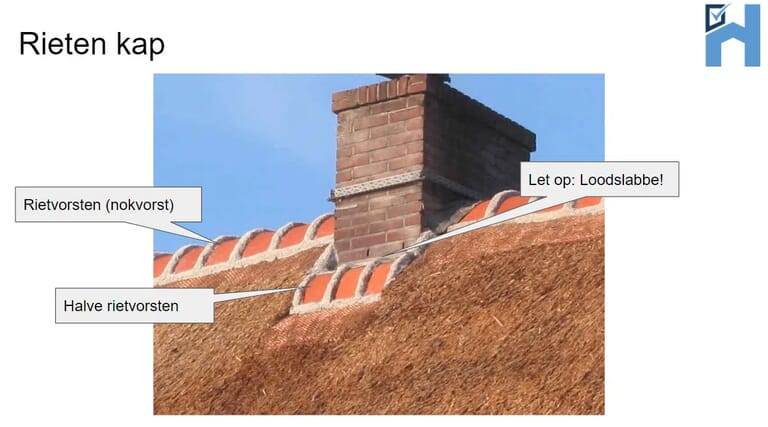
  • The lifespan of the thatch depends heavily on its maintenance. A contaminated thatched roof (debris, algae, and moss) needs to be cleaned and decontaminated. An experienced thatcher can be of excellent assistance with this. They can also patch up any weak spots, extending the thatch's lifespan.
  • A thatched roof can also be renovated if necessary, extending its lifespan by 10 to 15 years. Once its lifespan is truly over, replacement is the only option.
rieten-kap-constructie.png

Thatched roof construction

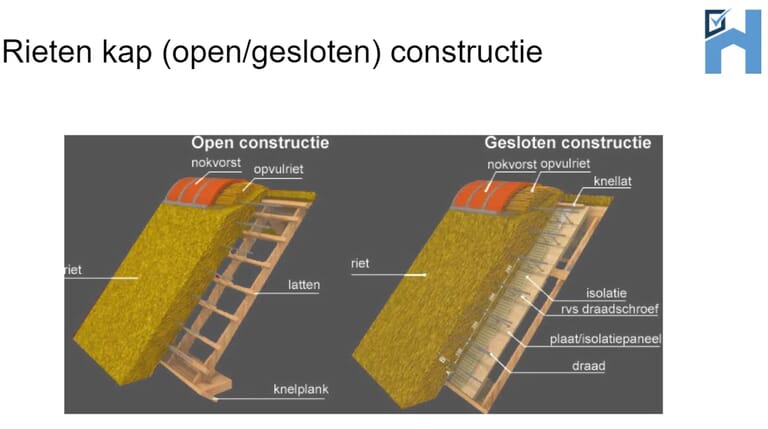
The thatched roof can be a so-called closed construction (this also refers to a screw roof ). The advantages of a closed construction are that the thatch contributes to the insulation value and it can comply with the latest building regulations. Fire safety is excellent (just like a tiled roof), and the interior is neatly finished.

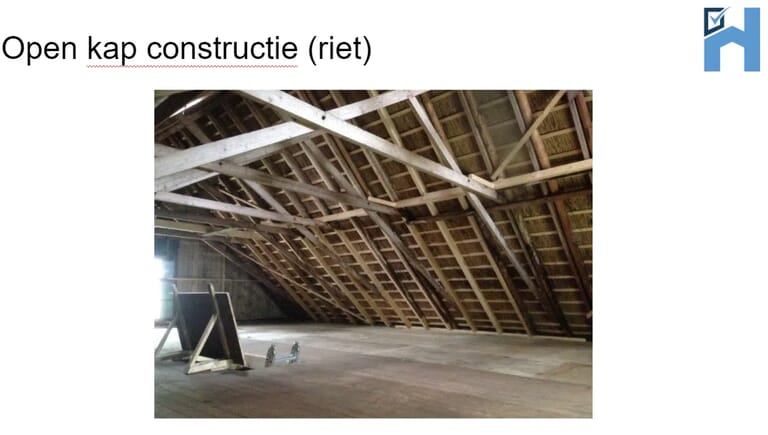
A thatched roof can also be a traditional open construction . The advantages of this proven method include its lightweight construction, optimal ventilation without condensation, and the thatch being visible from the inside. However, there are also disadvantages to this open construction, such as the significant energy loss, difficulty in insulating, fire hazard, and virtually impossible to remove dust from.

open-kap-constructie-riet.png

Other comments

  • Is the thatched roof dirty, or is there a lot of moss? This will accelerate the deterioration of the thatch's quality.
  • In the long term, if poor maintenance is not carried out, you will be faced with maintenance costs for filling or renovating the thatched roof.
  • Are there any (local) defects in the thatched roof? These defects must be repaired and/or filled.

Would you like to make an appointment for a building inspection?

The cost of a building inspection (up to 250 m²) is only €489 including VAT. We'll conduct a comprehensive building inspection and you'll receive a building report. Do you have any questions? We're happy to help and can schedule an appointment with an expert inspector right away if you wish!

Recent articles

Een vrouw wijst naar een tablet die een man vasthoudt en een andere man kijkt mee
blog
13 February 2026
Hidden defects in a home
Hidden defects are not uncommon, especially in existing homes. They are often not immediately visible, but can have significant consequences for comfort, safety, and costs. This article explains how hidden defects are assessed and the role of investigation and inspection.
blazen plooien bitumen dak
video
13 February 2026
Common roof detail mistakes: what an inspection reveals
During roof inspections, problems often turn out to be not in the roofing itself, but in the details. In this practical case study, we demonstrate which installation errors are frequently encountered and why these, in particular, pose an increased risk of leaks and damage.
WhatsApp Image 2026-02-12 at 08.51.37
video
12 February 2026
Three Roof Eave Mistakes That Cause Leaks (And Are Often Overlooked)
Roof problems rarely arise suddenly. They usually start with a minor issue. In this inspection, we see how a torn lead flashing, improper installation, and a loose joint can all pose a serious risk. What should you look for—and how can you prevent them?