
Make an appointment Call now

How many years does a thatched roof last?

Considering a charming home with a thatched roof but worried about its longevity and maintenance costs? Discover how the choice of materials, regular upkeep, and environmental factors influence the lifespan of these picturesque roofs, and learn why professional inspections are crucial before making a purchase.

Thatched roofs are a beautiful sight on old farmhouses! There's simply no other type of roof with such a texture. A thatched roof uses natural reeds and grass, which, when properly cut, dried, and installed, form a waterproof roof. Traditionally, locally available materials were used. If local farmers grew wheat, wheat reeds or straw were used. Think rye, barley, and oat straw.

If you're planning to buy a house with a thatched roof, you'll naturally want to know its condition and how long it can last. Replacing a thatched roof is expensive.

Thatched roof lifespan

The lifespan of a thatched roof generally depends on the material used and how well it is maintained. It's estimated that a thatched roof should last between 15 and 40 years. Water reed is considered the longest-lasting, with a lifespan of around 25-40 years, and up to 60 years. Wheat reed is estimated to last between 25 and 35 years, while long straw needs to be reattached after 15-25 years.

As you can see, the lifespan varies considerably. This is due to the level of maintenance. The drier the roof, the longer it will last. But the lifespan also depends on factors such as slope, substructure, location, craftsmanship, and maintenance.

Maintenance and inspection

Thatched roofs require regular maintenance to prevent deterioration. The roof structure will deteriorate over time, but minor repairs and maintenance will help keep the roof in good condition until it's time to completely reroof.

It is highly recommended to carry out inspections, especially before and after the winter season. The ridge of a thatched roof is most vulnerable to inclement weather and requires more maintenance than the roof itself. Ridges are strong and durable, but should be replaced on average every 10-15 years.

Most sustainable reed lasts 60 years

Water reed is naturally waterproof. This is not a waterlogged plant, damp and swollen by water. In fact, the inside of a natural water reed is hollow. Water is kept out by the tight overlapping of cells on the outer layers of the plant. The most durable reed material is water reed (Phragmites Australis), which can last 60 years.

Ireland's Shannon River and its tributaries once produced an abundance of water reed. Turkey also appears to have very good quality water reed. Reed from Poland, Hungary, and selected reed fields in France is also frequently used for roofs. In the Netherlands, 35% of the reed is domestically sourced.

Inspection of a house with a thatched roof

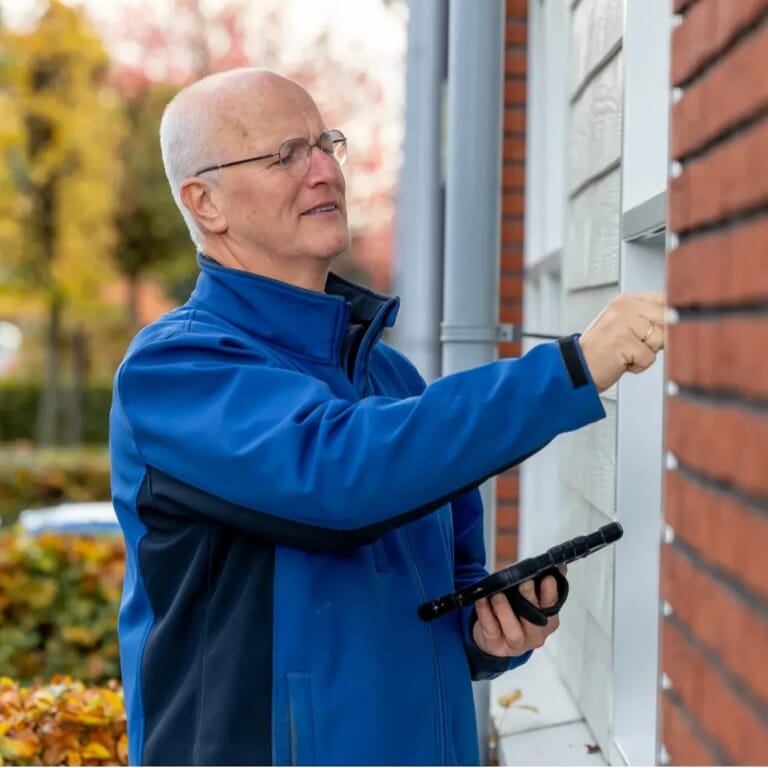
Would you like to have a thatched roof inspection carried out on a house you're considering purchasing? Our inspectors are happy to visit you for a structural inspection . Request one online now!

Would you like to make an appointment for a building inspection?

The cost of a building inspection (up to 250 m²) is only €489 including VAT. We'll conduct a comprehensive building inspection and you'll receive a building report. Do you have any questions? We're happy to help and can schedule an appointment with an expert inspector right away if you wish!

Recent articles

Een vrouw wijst naar een tablet die een man vasthoudt en een andere man kijkt mee
blog
13 February 2026
Hidden defects in a home
Hidden defects are not uncommon, especially in existing homes. They are often not immediately visible, but can have significant consequences for comfort, safety, and costs. This article explains how hidden defects are assessed and the role of investigation and inspection.
blazen plooien bitumen dak
video
13 February 2026
Common roof detail mistakes: what an inspection reveals
During roof inspections, problems often turn out to be not in the roofing itself, but in the details. In this practical case study, we demonstrate which installation errors are frequently encountered and why these, in particular, pose an increased risk of leaks and damage.
WhatsApp Image 2026-02-12 at 08.51.37
video
12 February 2026
Three Roof Eave Mistakes That Cause Leaks (And Are Often Overlooked)
Roof problems rarely arise suddenly. They usually start with a minor issue. In this inspection, we see how a torn lead flashing, improper installation, and a loose joint can all pose a serious risk. What should you look for—and how can you prevent them?