Make an appointment Call now

Solar Energy: Inspection and Risks

As more homeowners turn to solar energy for its sustainability and environmental benefits, the installation process becomes a critical focus, with improper setups posing significant risks such as water damage and fire hazards. Understanding these potential pitfalls and ensuring the expertise of your installer can safeguard your investment and enhance the efficiency and safety of your solar energy system. Dive deeper to learn how to protect your home and harness the full potential of solar power.

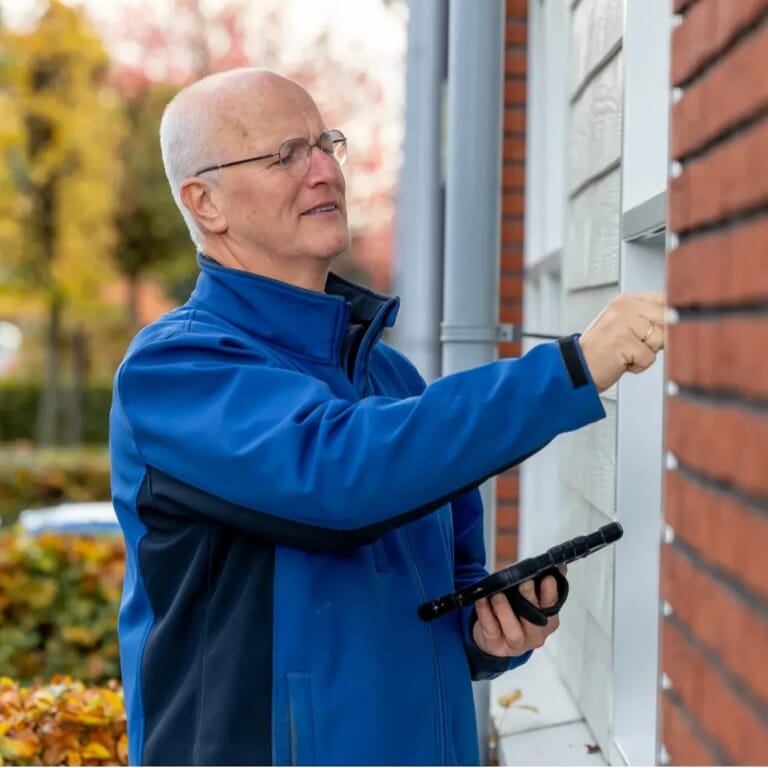
If the home is equipped with solar energy in some form: The systems can only be visually inspected for aesthetic defects and installation. The functioning and energy production of the appliances cannot be examined, and you, as the new owner, will have to experience them in practice.

  • Solar energy is energy from the sun in the form of heat and light. This sustainable energy is available to humanity indefinitely, and its use does not harm the environment or the possibilities for future generations.
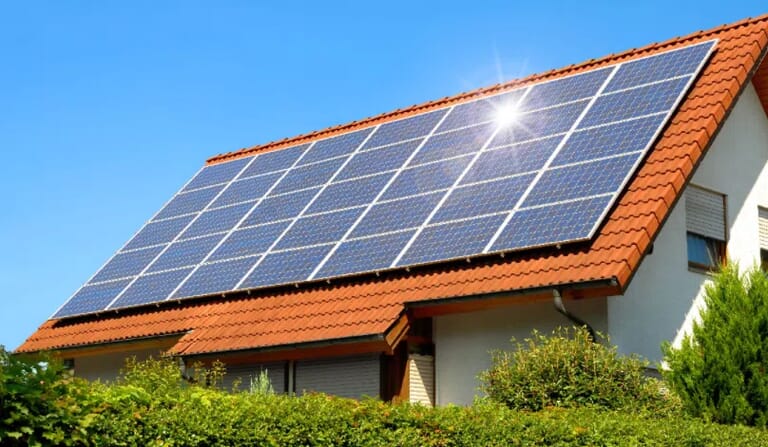
  • Solar panels on your house: always interesting!
Homekeur-zonnepanelen-1.png

Comments and possible defects

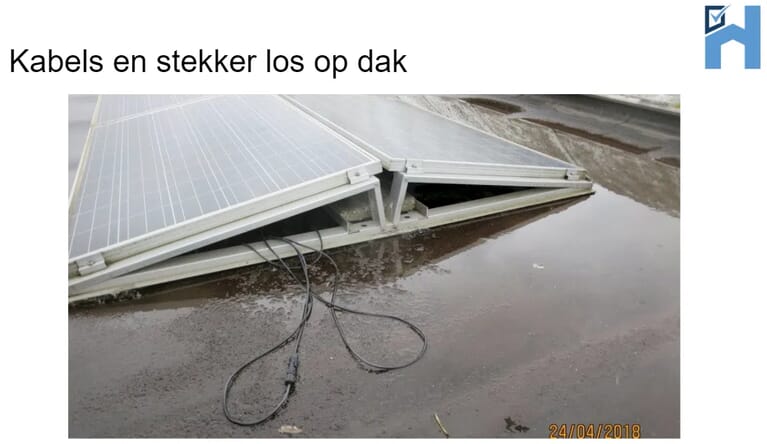
  • If any defects are noted in the installation of the solar panels on the roof, the installation needs to be improved. We recommend contacting the supplier.
  • If any defects are found at the (roof) penetrations, this poses an increased risk of water ingress (and thus leakage) with potential consequential damage to the home. These defects should be repaired promptly.
  • The frame on which the panels are mounted is (partly) held in place by ballast tiles . These tiles belong in a frame and should not come into contact with or rest on the bitumen roof covering . If this is not the case, we recommend removing the tiles from the roof covering where necessary, or installing rubber tile supports underneath the tiles.
kabels-los-op-dak.png

Risks of solar panels: Fire

  • Installation work is often disastrous! This is the biggest cause of fires.
  • The fire hazard stems from the smallest and cheapest component of the system: the connectors that connect the panels and the extension cables on the roof. These are called MC4 connectors.
  • The MC4 connector is actually a perfectly good connector designed for the application it is used for: connecting solar panels to each other.
  • The problem is that not every installer installs the plugs correctly.
  • The conclusion is that solar panels pose less of a fire hazard than is generally stated. Of course, as with other devices, there is minimal risk.
  • The real problem lies in the inexperience and ignorance of the installer.
  • Roof-mounted systems pose a greater risk due to heat and lack of ventilation beneath the panels = urban legend!
  • During a building inspection , these risks will of course be checked.

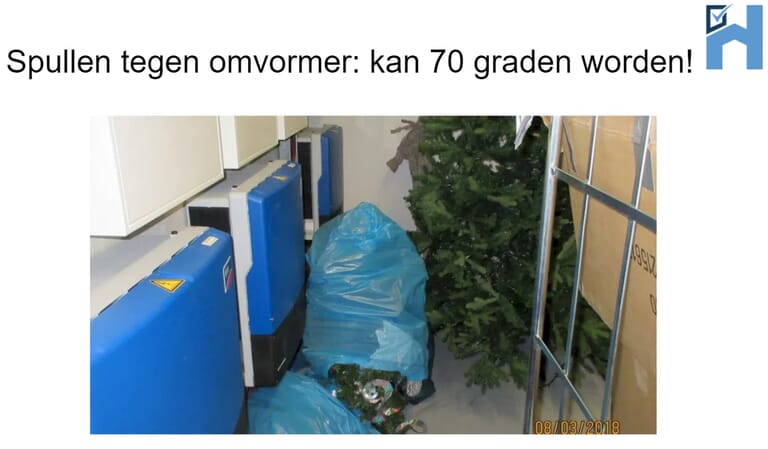
Many people, including unfortunately inexperienced installers, underestimate the voltage and power of solar panels. The average PV system on a Dutch house consists of 12 panels, which together generate a voltage of almost 400 volts and a power of 4000 watts. With this voltage and power, every connection needs to be perfect, not just perfect.

omvormer.png

Would you like to make an appointment for a building inspection?

The cost of a building inspection (up to 250 m²) is only €489 including VAT. We'll conduct a comprehensive building inspection and you'll receive a building report. Do you have any questions? We're happy to help and can schedule an appointment with an expert inspector right away if you wish!

Recent articles

Een vrouw wijst naar een tablet die een man vasthoudt en een andere man kijkt mee
blog
13 February 2026
Hidden defects in a home
Hidden defects are not uncommon, especially in existing homes. They are often not immediately visible, but can have significant consequences for comfort, safety, and costs. This article explains how hidden defects are assessed and the role of investigation and inspection.
blazen plooien bitumen dak
video
13 February 2026
Common roof detail mistakes: what an inspection reveals
During roof inspections, problems often turn out to be not in the roofing itself, but in the details. In this practical case study, we demonstrate which installation errors are frequently encountered and why these, in particular, pose an increased risk of leaks and damage.
WhatsApp Image 2026-02-12 at 08.51.37
video
12 February 2026
Three Roof Eave Mistakes That Cause Leaks (And Are Often Overlooked)
Roof problems rarely arise suddenly. They usually start with a minor issue. In this inspection, we see how a torn lead flashing, improper installation, and a loose joint can all pose a serious risk. What should you look for—and how can you prevent them?