
Make an appointment Call now

Place smoke detectors in the right places in your home

Ensuring your home's fire safety goes beyond just installing a smoke detector; it requires a comprehensive approach with various types of detectors and regular inspections to safeguard your loved ones and property. Discover how a professional building inspection from Homekeur can illuminate potential fire risks and equip you with a detailed report to make your home the safest haven possible.

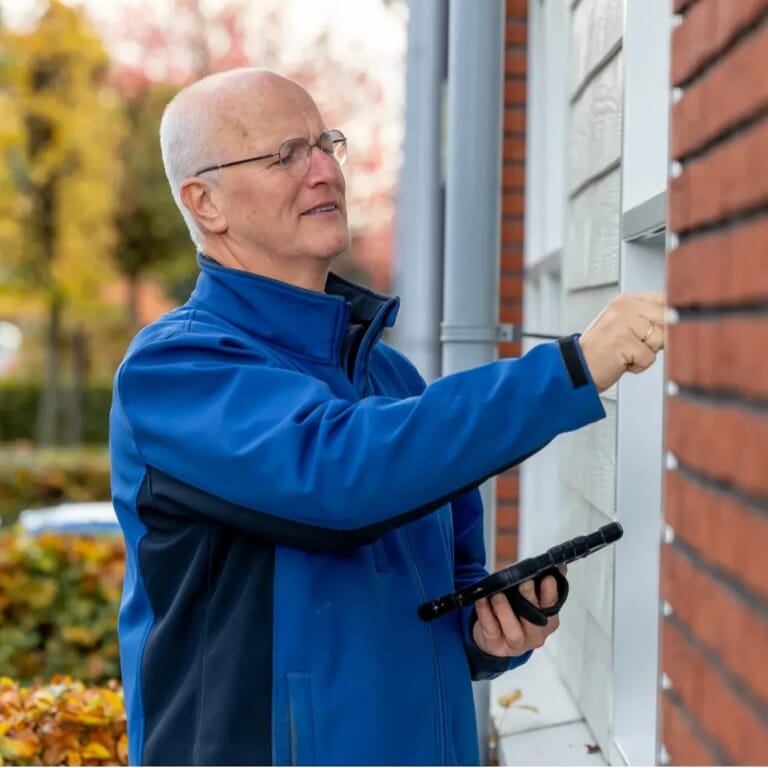
Fire detectors are crucial. For optimal fire safety, a home must have sufficient fire detectors. It's also important to regularly check that the detectors are working. Fire safety in a home is a top priority. When you have a building inspection carried out by Homekeur, your home will also be inspected for fire safety. After the inspection, you will receive a detailed building report , so you know exactly how your home is doing.

Why are smoke detectors so important?

It's often thought that a house fire is always detected quickly enough for you to safely evacuate. Nothing could be further from the truth. If you're in the attic and a fire breaks out on the ground floor, you often won't notice it until the fire is already quite large. If you're asleep when a fire breaks out, you risk waking up too late to safely evacuate. These are just a few examples. Fire alarms reduce fatal house fires by over 70 percent.

Ensuring optimal safety at home

It's important to know that there are different types of detectors that increase safety in a home. These include special gas detectors, CO detectors, heat detectors, and smoke detectors. Gas detectors are designed to detect the presence of various gases, such as LPG, propane, butane, and natural gas. These detectors do not detect carbon monoxide. For this, you need a CO detector. Heat detectors record the ambient temperature. If it suddenly rises rapidly, for example, due to a fire, a warning signal is issued. Smoke detectors do not detect heat, but only smoke. If a large number of smoke particles are detected in the air, an alarm is triggered.

When do you use which detectors?

A smoke detector is the absolute minimum requirement for home safety. It's recommended to install at least one smoke detector on each floor of the house, ideally along the escape route. This usually means in the downstairs hallway and the upstairs landing or landings. If the house is heated by combustion, installing a CO detector is highly recommended. If rooms are heated separately, it's wise to install multiple CO detectors in smart locations. A gas detector is essential if you cook with gas and/or heat your house with gas. Place these detectors in the immediate vicinity of where the gas is used.

Have the safety of a home assessed

When you're looking to buy a home, you want to be sure it's safe. Homekeur is happy to conduct a building inspection for you. We don't just determine whether the home is safe; we inspect the entire house, of course. This way, we assess its current condition and then prepare a comprehensive building report for you. This way, you always know exactly what you're buying. Would you like to schedule an appointment? You can easily do so online. Of course, you can always contact us with any questions, without obligation. We're happy to provide you with information and advice.

Would you like to make an appointment for a building inspection?

The cost of a building inspection (up to 250 m²) is only €489 including VAT. We'll conduct a comprehensive building inspection and you'll receive a building report. Do you have any questions? We're happy to help and can schedule an appointment with an expert inspector right away if you wish!

Recent articles

Een vrouw wijst naar een tablet die een man vasthoudt en een andere man kijkt mee
blog
13 February 2026
Hidden defects in a home
Hidden defects are not uncommon, especially in existing homes. They are often not immediately visible, but can have significant consequences for comfort, safety, and costs. This article explains how hidden defects are assessed and the role of investigation and inspection.
blazen plooien bitumen dak
video
13 February 2026
Common roof detail mistakes: what an inspection reveals
During roof inspections, problems often turn out to be not in the roofing itself, but in the details. In this practical case study, we demonstrate which installation errors are frequently encountered and why these, in particular, pose an increased risk of leaks and damage.
WhatsApp Image 2026-02-12 at 08.51.37
video
12 February 2026
Three Roof Eave Mistakes That Cause Leaks (And Are Often Overlooked)
Roof problems rarely arise suddenly. They usually start with a minor issue. In this inspection, we see how a torn lead flashing, improper installation, and a loose joint can all pose a serious risk. What should you look for—and how can you prevent them?