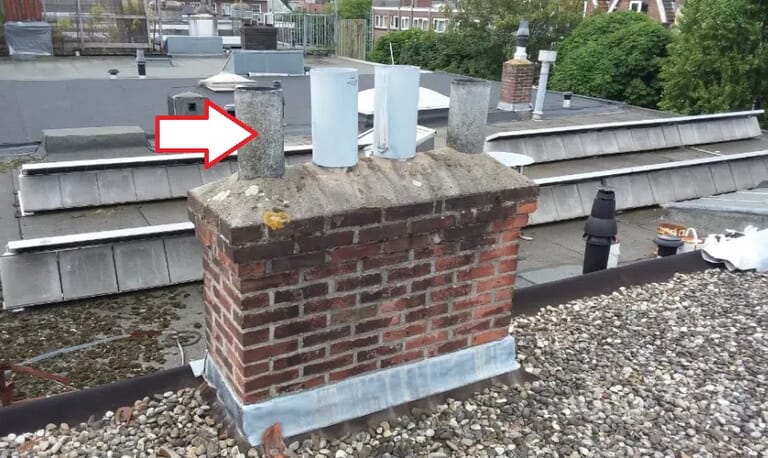

Chimney Problems: Inspection, Maintenance and Repair
A house may have one (or more) chimneys, but due to height or limitations, this aspect is always difficult to assess. Therefore, the chimney is often critically inspected from a distance, but in some cases, it isn't always fully examined from all sides.
Thanks to their lightweight design, prefabricated chimneys can be installed on any roof surface without the need for structural work. In most cases, they are equipped with a double-walled stainless steel flue. It goes without saying that a prefabricated chimney requires less maintenance than a traditional brick chimney.
- It is recommended that chimney flues in use be swept periodically by a certified company
- Why sweeping the chimney is so important.
- Leakage through a lead flashing? Take action!
Points of interest Chimney
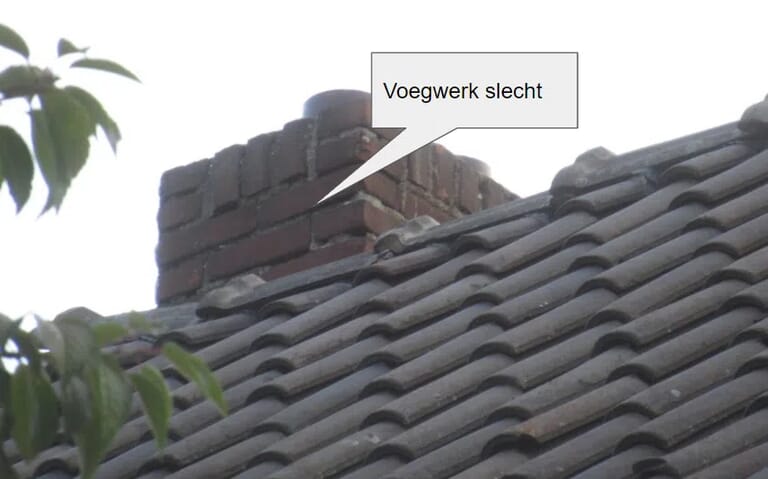
- Pointing
- Pollution, moss and algae growth
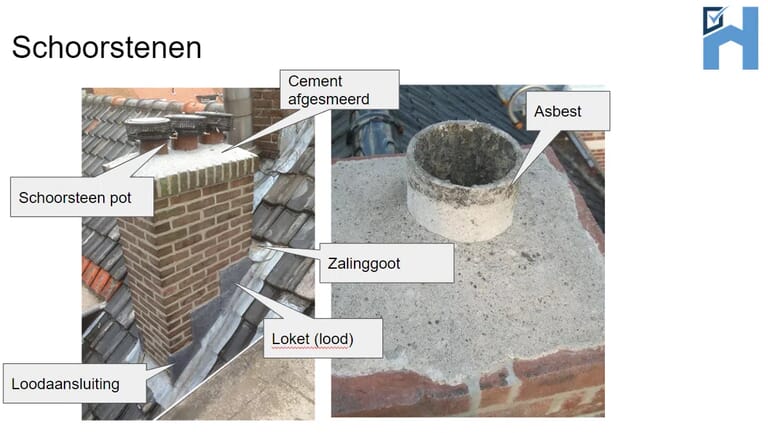
- Asbestos outlet
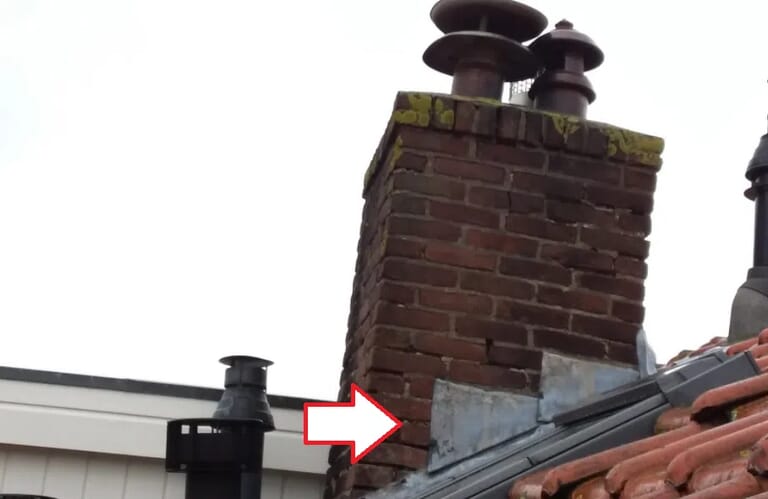
- Lead connection with roof
- Counters in order
- Cement smear layer in good condition, cracked or loose
- Concrete cover slab, top seal or concrete damage due to rusting reinforcement
- Other damage, cracks, etc.
Defects and comments on the chimney
- If the mortar joint is in moderate/poor condition, you should be aware that it will need to be replaced (soon). If the mortar joints have deteriorated, there's a chance your chimney will leak. A leak in the flue can cause water to seep down and damage the entire brickwork. You can also protect the brickwork from moisture by sealing the bricks. Sealing a chimney will prevent water from passing through.
- The chimney may be dirty and/or overgrown with algae or moss. This contamination damages the chimney; the growing debris/growth retains moisture. This moisture can freeze during winter. This frozen mass expands, potentially causing damage to the chimney, such as cracking. Therefore, a thorough cleaning of such a chimney is recommended!
- Is there cracking in the chimney's brickwork? This could be due to poor current or past maintenance. Poor pointing, for example, can cause moisture to remain in the bricks. This moisture freezes and expands, resulting in cracks. It's important to repair the cracks, and if necessary, the pointing should be repaired.
- You may also notice flaking of the chimney bricks, and the patina layer is peeling off. As a result, the quality of the bricks is increasingly deteriorating. This may be due to poor maintenance in the past. The current moisture resistance is obviously not good, and the damage will spread further.
- Are the stones loose or detached? This could be due to poor current or past maintenance. Poor mortar work, for example, can cause moisture to remain in the stones. This moisture freezes and expands, resulting in cracks or loosening of the stones. The loose stones can be replaced, and the mortar can then be repaired where necessary.
Plasterwork chimney
- Loose plaster? The bond with the substrate is no longer good. This can be due to the poor condition of the underlying masonry, or because the plaster and the cover plate are not sufficiently waterproof. Because moisture is 'retained' for long periods of time in the plaster and masonry of the chimney, this damage also occurs due to weather influences. Moisture freezes and expands, resulting in cracking or delamination.
- In the event of damage, it is recommended that you remove all plasterwork and reapply it in its entirety. Also, repair the damage to the top of the chimney immediately and complete the job by waterproofing (impregnating) the entire structure after it has dried.
Chimney covered with bitumen
If the chimney is covered with bitumen, the entire structure cannot be assessed. Because the chimney is virtually impossible to inspect in this state, the brickwork or plaster is considered to be in poor condition. The current situation may be technically maintainable, after all, the entire structure is covered with a bitumen seal!
In this case, we recommend repairing the chimney and returning it to its original condition. This includes removing the bitumen and repairing or replacing any exposed parts, including restoring the flashings and lead connections to the roof to their original state.
- If the materials are still in sufficient condition, you can consider waterproofing the chimney (making it water-repellent, thus extending its lifespan).
- Impregnating a chimney means that the chimney no longer allows water to pass through.
Concrete cover plate on chimney
- If the concrete chimney cover plate is contaminated with algae and/or moss growth, it is better to remove this contamination periodically and maintain the concrete.
- If there is concrete damage to the concrete chimney cover, this damage must be repaired. Thoroughly remove the damage and loose material. If reinforcement is visible, remove rust and pre-treat it with a primer or red lead. The concrete damage can then be repaired with a frost-resistant material.
- It's also possible that the concrete chimney cap's attachment is no longer perfect. This attachment can be improved by slightly lifting the concrete chimney cap and applying an adhesive underneath.
- Please note: not every ready-mixed mortar or cement bag from a hardware store is suitable for this. Inquire about the possibilities.
- Frost-resistant repair mortar is available from various manufacturers; search online for: frost-resistant repair mortar.
- Make sure the concrete is maintained! If it becomes porous, moisture can penetrate. This will cause any existing reinforcement to rust, resulting in concrete damage. Frost can also cause (concrete) damage.
Other chimney defects
- Defects in counters can usually be repaired relatively easily.
- A soffit is a lead construction used for the waterproof connection of a tiled roof with a chimney duct or with rising brickwork.
- The rather long points of the counters can blow away in a storm if the lead is not too heavy. This can be prevented by weighing down the bottom with a double-folded flat piece of lead.
- Is the chimney sealed with cement at the top? This sealing is usually not waterproof, allowing moisture to easily penetrate. Frost or freezing of the absorbed moisture can cause damage, cracking, or (partial) detachment of the cement. It's advisable to apply a waterproof coating to the cement sealing (after repairs) to prevent moisture penetration.
- To minimize the impact of rain and downdrafts on the chimney, the chimney is often fitted with one or more chimney pots at the top. If these pots are damaged or broken, they must be replaced.
Asbestos channel in chimney
During a specific construction period, a home may be at risk of having an asbestos flue or chimney flue. To be certain of the presence of asbestos, it's best to conduct an asbestos inventory! Only then can you be completely certain of the presence of asbestos in your home.
- Asbestos fibres can be life-threatening if released and inhaled.
- However, if you leave undamaged material in place, experts say there is no danger.
- You can contact us for a possible asbestos inventory.
Would you like to make an appointment for a building inspection?
The cost of a building inspection (up to 250 m²) is only €489 including VAT. We'll conduct a comprehensive building inspection and you'll receive a building report. Do you have any questions? We're happy to help and can schedule an appointment with an expert inspector right away if you wish!
Recent articles