

Walls in the home; What do you need to know?
Crack formation in non-load-bearing internal walls
- If it is a non-load-bearing wall , a crack is aesthetically unattractive, but does not constitute a structural defect with regard to the main structure of the house.
- Cracks in non-load-bearing walls are often the result of movement and settlement of materials or an incident. In any case, most damage can be easily repaired.
- With walls on wooden floors there is always a risk of recurrence.
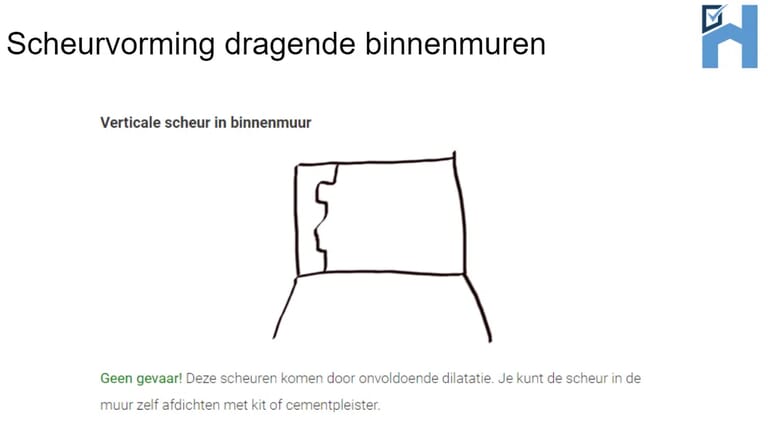
- Non-load-bearing interior walls are often fitted with guide rails at the ends and tops. These different materials and inflexible connections cause hairline cracks in the corners.
- In 99% of cases of cracks forming in non-load-bearing internal walls, there is no problem and only aesthetic repair can be recommended.
Points of attention walls/floors
- Has the structure been changed? Have walls been removed?
- Passages created? Lintel applied?
- Cracks in walls.
- Loose plasterwork?
- Connections along ceilings or other walls.
- Knocking and pushing walls, false walls
- Looking along walls, along ceiling, in all directions
- Alignment of floor areas, attention to a skirting board
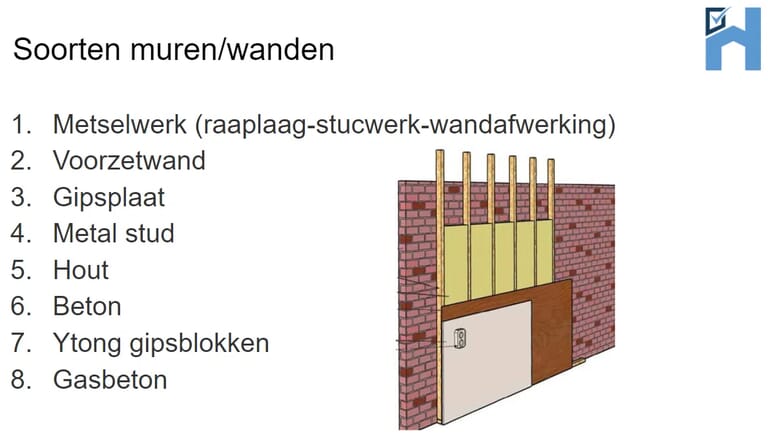
The house may contain various types of walls, such as concrete, masonry, ytong, false walls, plaster, wood, etc.
- With plasterboard and wooden walls: With such walls, a number of disadvantages must always be taken into account, such as the fact that the sound insulation will not be optimal and hanging or mounting items on the walls can only be achieved with special mounting materials.
(older) PVC cladding wall finish
Walls in the home may be covered with PVC cladding, but it's unclear what it's mounted on. If the wall finish is removed, be aware of the potential for unfamiliar materials to be exposed. We recommend removing the wall finish and renovating or replacing the exposed wall.
- These wall finishes are generally (very) flammable and produce a significant amount of smoke in the event of a fire. Furthermore, the materials melt quickly, and the flaming droplets can cause serious burns. These cladding can sag or buckle in the event of a fire, creating obstacles when evacuating the room/home.
Partition walls
The original building walls may have a false wall. It's unknown, and impossible to verify, whether or not there are any defects in the underlying walls; this can't be checked without removing the false wall. Because of these false walls, moisture measurements are usually impossible, and rising damp and other issues can't be assessed at this time. Caution is always advised if false walls are present!
- With such walls, a number of disadvantages must always be taken into account, such as the fact that the sound insulation will not be optimal and that hanging or mounting items on the walls can only be achieved with special mounting materials.
- Points of interest when building a house with false walls.
Defects or comments on walls
- Also try to look behind furniture, sofas, etc.
- If the plasterwork is loose in several places in the house: if this plasterwork is repaired, more plasterwork may become loose.
- The loose plaster can be removed, after which the walls can be primed and new plaster can be applied.
- Removing loose plaster is not always necessary; this maintenance step is only recommended when maintaining walls.
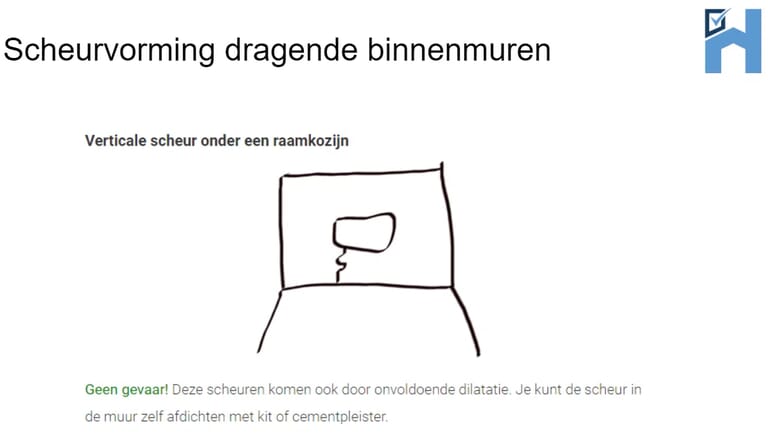
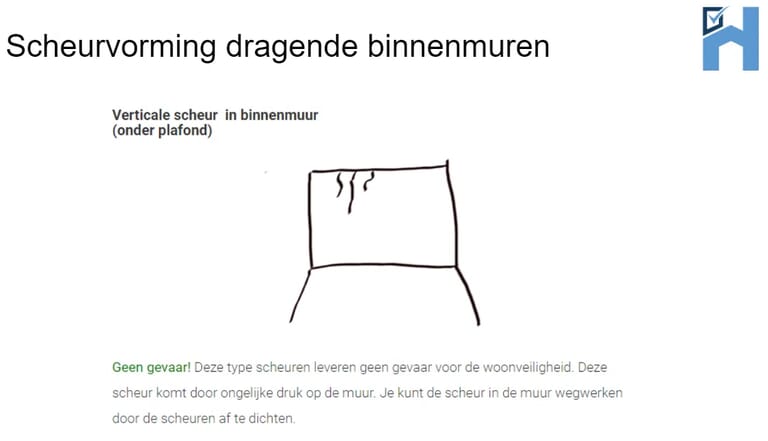
- If limited cracking is present in the interior walls: these are usually not structurally significant but are the result of thermal effects and stresses within the various materials. Aesthetic repairs can be carried out at any time, but are not necessary. If in doubt, always consult an expert to assess the cracking.
- If leaks are visible on the wall: if these leaks are active, the underlying problem must be resolved immediately. If they are no longer active, aesthetic repairs can be carried out to eliminate the leaks. First, use a primer or insulating primer as an undercoat. Regular latex will make the leak visible again almost immediately.
- During the execution of the work, the precise extent of the defect and the possible solution can be determined.
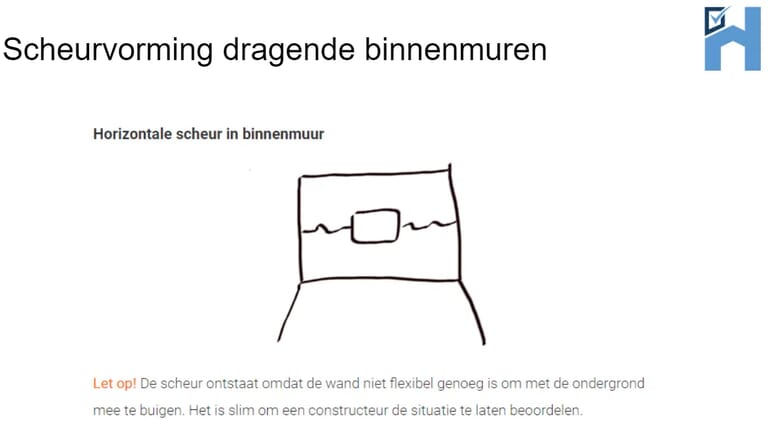
- If serious cracking is present: this could be the result of structural abnormalities in the house, foundation or soil structure beneath the house.
- It is not impossible that after aesthetic restoration the crack formation will become visible again within a foreseeable period of time.
- Assuming the cause of the cracking is improved (or has already stabilized), repairs can be carried out. Because this is severe cracking, any masonry may need to be removed and new masonry (notched) installed. Consult a qualified contractor for advice!
- If you have any doubts about the cause and risks of the existing cracks, we recommend that you have a follow-up examination by an expert.
- Read the information in a related article about causes and recognition of crack formation.
- During a building inspection , an inspector will pay as much attention as possible to such defects and try to determine the cause.
Would you like to make an appointment for a building inspection?
The cost of a building inspection (up to 250 m²) is only €489 including VAT. We'll conduct a comprehensive building inspection and you'll receive a building report. Do you have any questions? We're happy to help and can schedule an appointment with an expert inspector right away if you wish!
Recent articles