Make an appointment Call now

95% of Trespa installations are incorrect: This is how it should be done correctly!

Trespa panels, while renowned for their durability and aesthetic appeal, are often improperly installed, leading to significant structural damage and costly repairs. In this article, you'll learn how to ensure Trespa panels are correctly installed with proper ventilation to prevent issues like wood rot, and discover how a professional inspection from Homekeur can safeguard your investment in a home featuring Trespa cladding.

Trespa panels are a popular material for facade cladding due to their robustness and weather resistance. But did you know that in 99% of cases, Trespa is incorrectly installed? This can cause serious damage to the underlying structure. It's especially important to be vigilant if you're considering buying a home with Trespa installed. Homekeur can help you with this by critically inspecting the Trespa fixings during a building inspection. In this article, you'll discover how to properly install Trespa and how Homekeur can support you.

What is Trespa?

Trespa is a brand of HPL (High Pressure Laminate) panels, made of multiple layers of paper or wood fibers, impregnated with resin and compressed under high pressure. This results in a strong, weather-resistant panel that is resistant to wear and tear. Trespa panels are available in various colors and finishes, such as black, anthracite, and even wood-look, making them suitable for applications such as facade cladding, kitchen backsplashes, and shower panels.

Errors when attaching Trespa

In practice, Trespa panels are often screwed directly to wooden substructures without ventilation. This causes moisture to accumulate between the Trespa panel and the wood, ultimately leading to wood rot. This error can have serious consequences, especially when applied to dormers and gutters. If there is insufficient ventilation, moisture cannot escape, and the wood behind the Trespa panel can quickly deteriorate. The consequences of incorrectly installing Trespa panels can be serious. Expect:

  1. Wood rot : Moisture trapped between the Trespa panel and the wood causes mold growth and ultimately wood rot.
  2. Loose plates : Wood rot causes fasteners to lose their grip, causing the plates to come loose.
  3. High repair costs : Replacing rotten wood and loose Trespa panels can be quite expensive. You can prevent this by installing Trespa correctly.

How do you correctly attach Trespa panels?

To prevent these problems, Trespa should always be installed with ventilation. That's the key to preventing a lot of problems! Here are the steps you should follow:

  1. Create a ventilation space : Ensure there's at least a few millimeters of space between the Trespa panel and the wooden frame. This can be achieved using spacers or special mounting profiles that allow for ventilation. This space allows air to circulate, allowing moisture to evaporate.
  2. Use the correct fasteners : Use special screws and fasteners suitable for Trespa. These can be found at hardware stores such as Praxis, Hornbach, and Karwei. Make sure the screws are stainless steel to prevent corrosion.
  3. Consider expansion : Trespa panels can expand due to temperature fluctuations. Therefore, allow sufficient space between the panels. Trespa panels measuring, for example, 3050 x 1530 mm or 244 x 122 cm often require a slight expansion margin to prevent tension. Trespa can expand a maximum of 2.5 mm per linear meter.

Inspection of a house with Trespa

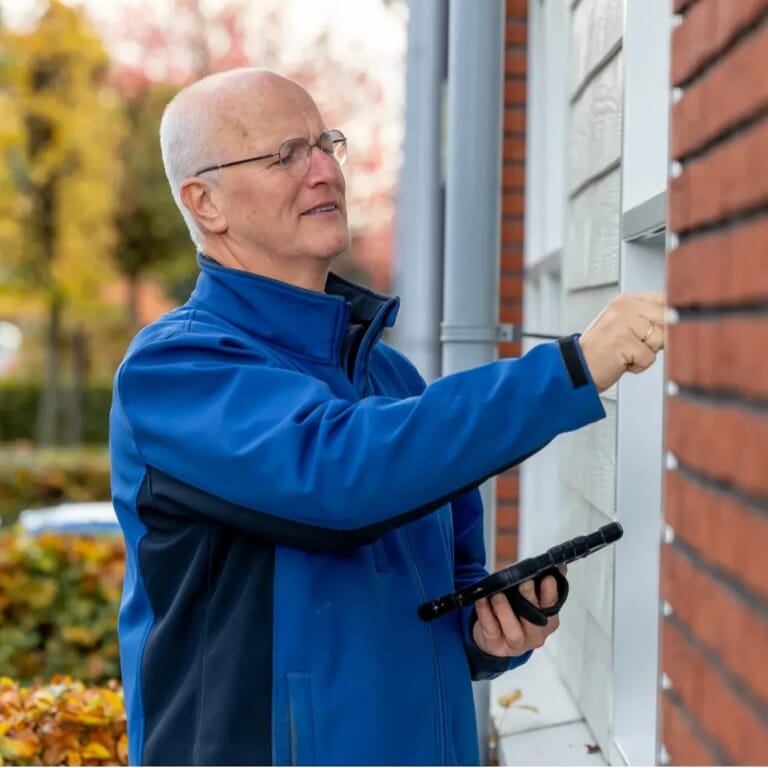
If you're considering buying a home with Trespa, it's wise to be extra vigilant. During a building inspection by Homekeur, important components such as cladding, roof structures, and dormers are carefully inspected. We assess the condition of the Trespa panels and verify that they are properly secured.

An incorrectly installed Trespa panel can lead to hidden defects. Our inspectors will carefully check for sufficient ventilation and for any visible signs of wood rot or other damage behind the Trespa panels. By commissioning a building inspection report from Homekeur, you'll gain clarity about the structural condition of the Trespa and other building materials in your home. This prevents unpleasant surprises after the purchase.

Benefits of a building inspection

A building inspection by Homekeur provides comprehensive insight into the installation quality of Trespa panels. Our inspectors will look for hidden damage such as wood rot and moisture problems and provide independent advice. This helps prevent future costs and provides clarity when purchasing a home. Furthermore, our inspectors carefully check whether the panels are properly installed and whether there is sufficient ventilation. All this ensures that you avoid unexpected repairs and can negotiate a well-founded price.

Where do you buy Trespa panels?

There's nothing wrong with Trespa, as long as it's properly secured. Trespa panels are available at various hardware stores, such as Gamma, Hornbach, and Praxis, which offer a wide range of thicknesses, colors, and sizes. You can have Trespa panels cut to size to fit your specific application. Consider an anthracite Trespa panel in 3 mm or 6 mm, depending on your specific needs. Costs vary, but typically range from €50 to €200 per square meter, depending on the type and thickness of the panel.

Trespa can, if installed correctly!

Trespa panels are an excellent choice for various applications, both indoors and outdoors, provided they are installed correctly. By choosing a ventilated installation, you prevent moisture problems, wood rot, and high repair costs. Are you considering purchasing a home with Trespa installed? Then have a building inspection carried out by Homekeur. This way, you can be sure that the Trespa panels are installed correctly and prevent hidden defects.

Choose safety, durability, and security. Contact Homekeur for a building inspection and avoid unexpected costs due to incorrectly installed Trespa panels.


Would you like to make an appointment for a building inspection?

The cost of a building inspection (up to 250 m²) is only €489 including VAT. We'll conduct a comprehensive building inspection and you'll receive a building report. Do you have any questions? We're happy to help and can schedule an appointment with an expert inspector right away if you wish!

Recent articles

Een vrouw wijst naar een tablet die een man vasthoudt en een andere man kijkt mee
blog
13 February 2026
Hidden defects in a home
Hidden defects are not uncommon, especially in existing homes. They are often not immediately visible, but can have significant consequences for comfort, safety, and costs. This article explains how hidden defects are assessed and the role of investigation and inspection.
blazen plooien bitumen dak
video
13 February 2026
Common roof detail mistakes: what an inspection reveals
During roof inspections, problems often turn out to be not in the roofing itself, but in the details. In this practical case study, we demonstrate which installation errors are frequently encountered and why these, in particular, pose an increased risk of leaks and damage.
WhatsApp Image 2026-02-12 at 08.51.37
video
12 February 2026
Three Roof Eave Mistakes That Cause Leaks (And Are Often Overlooked)
Roof problems rarely arise suddenly. They usually start with a minor issue. In this inspection, we see how a torn lead flashing, improper installation, and a loose joint can all pose a serious risk. What should you look for—and how can you prevent them?