Different types of roof boarding with characteristics
Due to finishing, paneling, insulation, or other limitations, the roof boarding may not always be clearly visible. It may be easier to see the roof boarding from the outside by lifting some of the tiles.
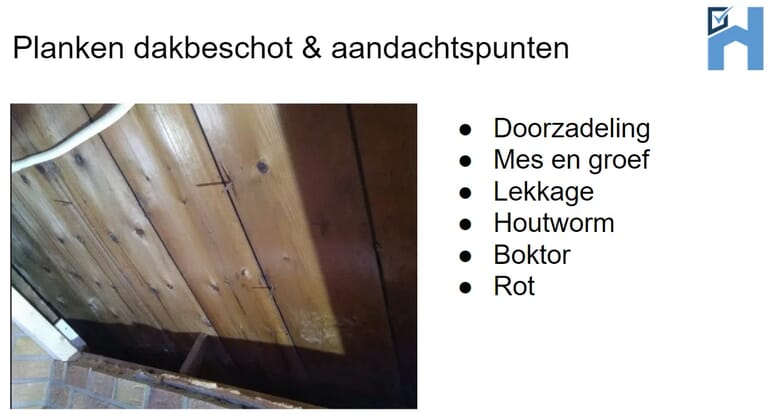
Points of attention when using plank roof sheathing
The plank roof boarding may be partially disconnected. Due to the movement of the materials, the tongue and groove of the wooden planks may have "worked" apart. This isn't a major problem in itself, but combined with other issues, it can cause the roof surface to sag between the joists.
- If applying a finish is being considered, we recommend applying this finish to battens.
- Mount the battens horizontally on the vertical roof sheathing. This prevents the roof sheathing from spreading further and creates some connection between the materials.
When saddling the roof boarding, it may be necessary to make an adjustment or add reinforcement at some point.
Chipboard roof sheathing
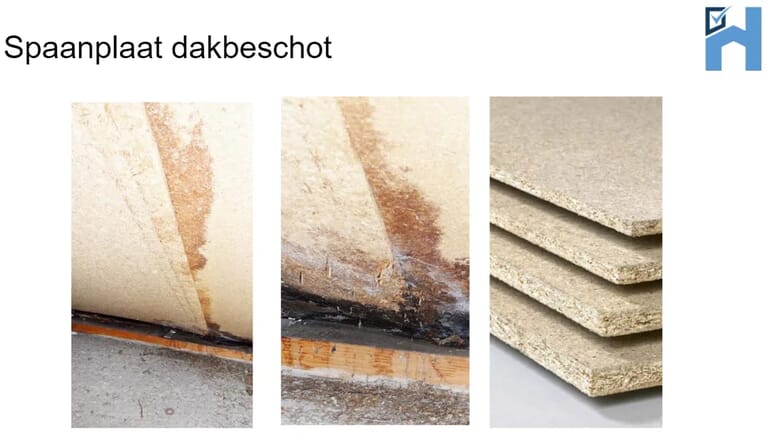
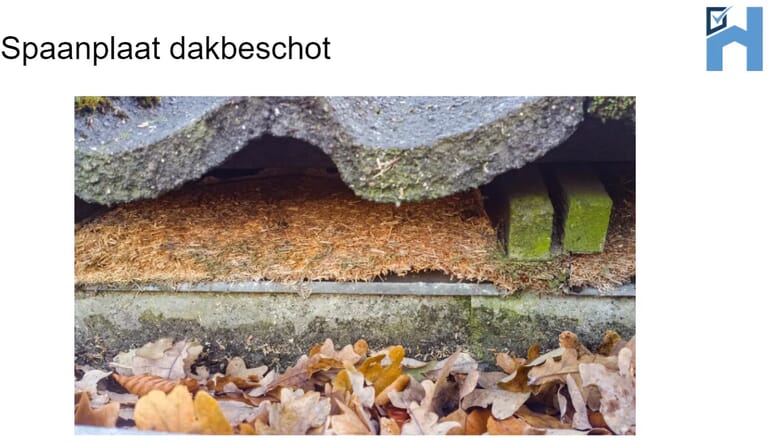
If your home has chipboard roofing, there's nothing wrong with it, provided there are no moisture problems or leaks (or any signs of them). As soon as chipboard comes into contact with moisture, the material weakens. A common problem with this type of roofing is rainwater splashing up from the roof and draining into the gutter. The chipboard acts like a sponge and absorbs that moisture, which could damage the roof boarding.
In the picture above, you can see that moisture is absorbed by the material at the wall plate (i.e., at the slanted point at the bottom near the gutter). With prolonged moisture exposure, the roof boarding can weaken and even sag or break off at the bottom.
- Drainage and splashing rainwater in the gutter must not reach the chipboard roof sheathing. Preventative measures can be taken, such as applying a sheet of waterproofing.
- If parts or pieces of the chipboard roof boarding need to be replaced, this won't be easy in practice. We recommend using whole sheets of sheet material (for example, underlayment).
- If part of the tiled roof has been removed, a foil can be applied directly under the tiles and on the roof boarding (note: use a water-resistant, vapour-permeable foil).
In cases of very severe wood rot or sagging of the roof surface near the gutter and wall plate, we recommend installing a knee wall on the inside of the attic at the intended slope. A frame can be installed and finished across the width of the house on the ground and against the roof boarding. The roof surface will then be supported by this newly constructed knee wall/frame.
Chipboard roof sheathing & points of interest
- Crumbling due to moisture
- Rising damp at wall plate
- Gutter drainage important, splashing from gutter.
- Demolish roof at wall plate
- No longer used 'now'
- Often in combination with concrete fast-deckers
- Alert the outside of the roof for risks
- Repairing damage is difficult.
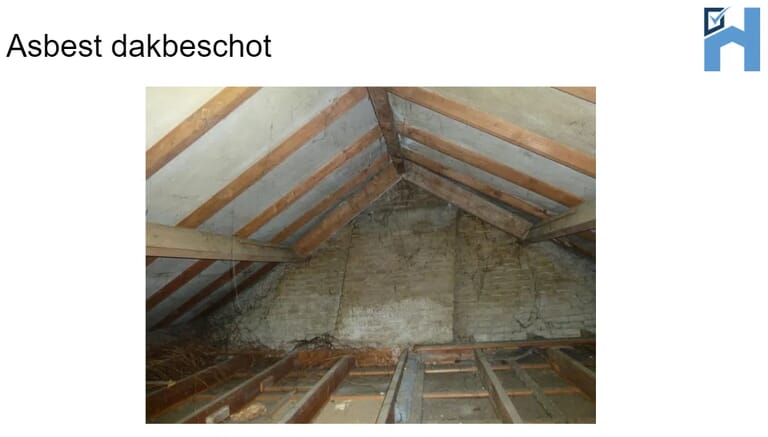
Asbestos roof boarding
Asbestos sheeting may be present (or partially present) as roof sheathing. It is recommended that you engage a certified company to conduct an asbestos inventory. Only then can you be completely certain whether or not asbestos is present in your home. Depending on the type of asbestos, an action plan can be developed to remove it if necessary. Removing such roof sheathing is not mandatory, but optional.
- Asbestos fibers can be life-threatening if released and inhaled. However, experts say there's no danger if you leave undamaged material in place.
- View the possible asbestos materials in or outside the home on Asbestwegwijzer .
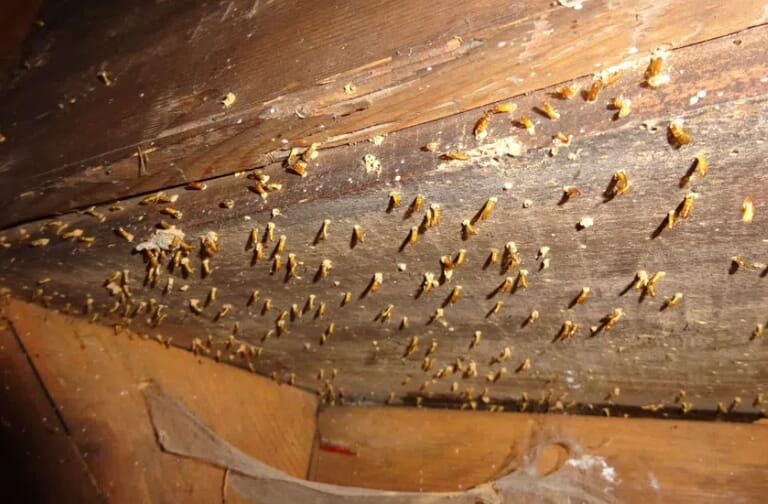
Woodworm in roof sheathing
If traces of active woodworm are found in the roof boarding, this can further damage and weaken it. Treatment is easily possible by doing it yourself or by hiring a qualified specialist. To prevent further spread, we recommend taking the necessary action as soon as possible. Also, get more information about the options for preventative woodworm control and prevention.
- Woodworm is a name for various insect larvae that live in wood.
- If woodworm has been noticed, it cannot be ruled out that this or other wood-destroying insects are also present (to a greater or lesser extent) in other wooden components elsewhere in the house.
- Woodworm eggs can hatch and become active up to seven years after being laid! Therefore, vigilance is always advised.
- If complete certainty is required, it can be considered to involve an expert exterminator for a full inventory.
Woodworm in roof sheathing
The danger of woodworm infestation is that it attacks the wood to the core, so controlling this wood-destroying pest is always essential. If the woodworm is active, we recommend further investigation and control by a specialist company.
- Woodworm can cause significant damage to wooden objects, from your wooden furniture to the wooden floor or even the roof structure of your home.
- Combating longhorn beetles isn't easy, so it's best left to an experienced pest controller. This ensures that the eggs, larvae, and longhorn beetles present are effectively controlled.
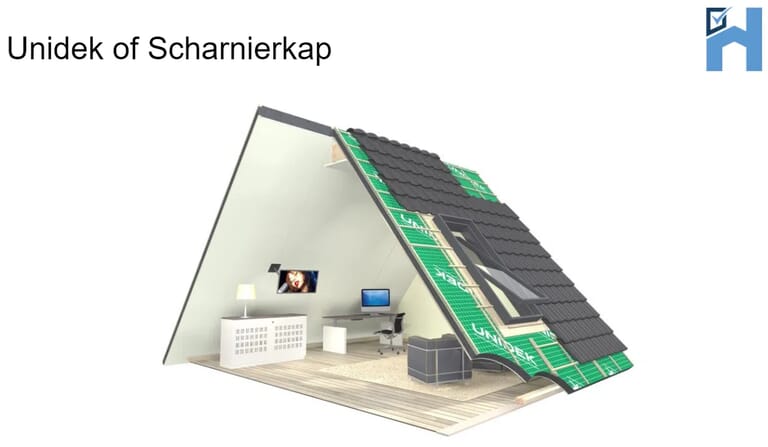
Unidek, roof panels, etc.
Roof elements can be used on almost any type of roof structure, with or without purlins, and always with insulation. The roof panels offer a suitable solution for every construction situation, even for small or large spans. The panels are factory-finished on the inside and are only suitable for interior use and finishing. The panels are assembled and finished with strips.
Would you like to make an appointment for a building inspection?
The cost of a building inspection (up to 250 m²) is only €489 including VAT. We'll conduct a comprehensive building inspection and you'll receive a building report. Do you have any questions? We're happy to help and can schedule an appointment with an expert inspector right away if you wish!
Recent articles