
Make an appointment Call now

Recognizing wood rot and woodworms in window frames of a house

Wooden window frames can add charm and warmth to a home, but they are also vulnerable to wood rot and woodworm, which can lead to costly repairs if left unchecked. Discover how to identify these issues early and take preventive measures to protect your investment, ensuring the longevity and integrity of your home's wooden elements.

Many window frames in a house are still made of wood, just like the roof beams in the attic. Proper and regular maintenance can extend their lifespan, but not everyone does this. Wood rot and woodworm in the window frames of a house can cause serious damage. In some cases, the damage can be repaired, while in cases of more extensive damage, it's important to completely replace the frames. This naturally entails high costs.

A building inspection will give you certainty about the condition of the window frames of the house you're considering. Is there wood rot or woodworm active in the window frames? Homekeur will determine this through a building inspection. We'll tell you more about wood rot and woodworm, how to recognize these problems, and how to solve them.

What is wood rot and how do you recognize it?

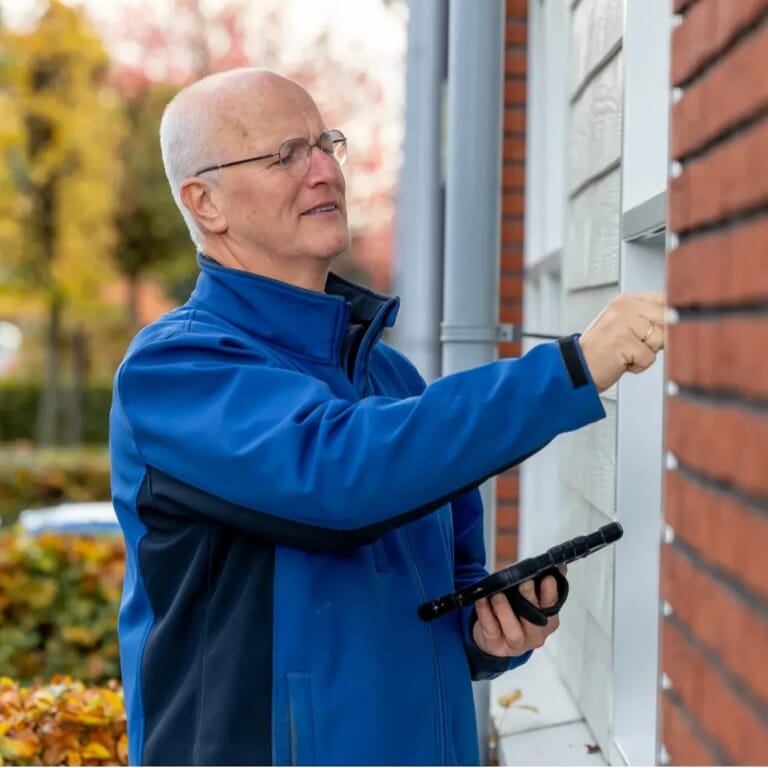
Wood rot is caused by fungi that thrive in damp conditions. These fungi break down the wood, causing it to lose its structure and strength. You can recognize wood rot in window frames in several ways. Use a screwdriver or other sharp object to push into the wood. If the wood feels soft and yields easily, that's a sign of wood rot.

Wood affected by wood rot often shows discoloration. This can range from yellow to brown or even black. In advanced stages, cracks and splits in the wood may become visible. If the paint on the wood is peeling or blistering, this could indicate underlying wood rot. In some cases, you may also smell it. Wood rot often causes a musty odor, similar to mold or damp.

Recent articles

Mensen kijken omhoog naar een huis en een man wijst
blog
31 July 2026
Independent building inspection: why independence makes the difference
When buying a home, you don't want any surprises afterwards. An independent structural inspection gives you an objective picture of the technical condition of the property, including any defects, maintenance points, and expected repair costs. In this blog, you will read why independence is so important and how an expert structural inspection helps you buy or sell a home with confidence.
Een scant met zijn tablet een muur
blog
31 July 2026
Why a good energy label sells your home faster and better
An energy label is much more than a legal requirement when selling a home. It gives potential buyers immediate insight into the energy efficiency of the property and can have a positive impact on marketability and value. In this blog, we explain why an up-to-date energy label is important and how you ensure your home is optimally presented to the market.
Een laptop geopend met de website funda
blog
04 June 2026
7 signs of foundation problems during a viewing
Are you buying a home? Then naturally, you don't want to overlook any hidden defects. Foundation problems are among the most costly defects a home can have, with repair costs that can run into tens of thousands of euros. Fortunately, signs indicating foundation damage or subsidence are often visible during a viewing. In this article, we discuss seven important features to look out for before making an offer.