
Make an appointment Call now

Old or incorrect lead flashings are a source of leaks

Lead flashing around the house must be in good condition and should be inspected annually. Old and incorrect lead flashing quickly causes leaks and can lead to high costs for the homeowner. Sometimes the lead flashing becomes damaged or deteriorates, ultimately leading to leaks.

Unfortunately, it's also common for lead flashings to be installed incorrectly, causing problems. Installing new lead flashings doesn't guarantee that everything is in order. Homekeur is happy to inspect the lead flashings during a building inspection if you'e considering buying a home.

Inspection of the lead flashings during a building inspection

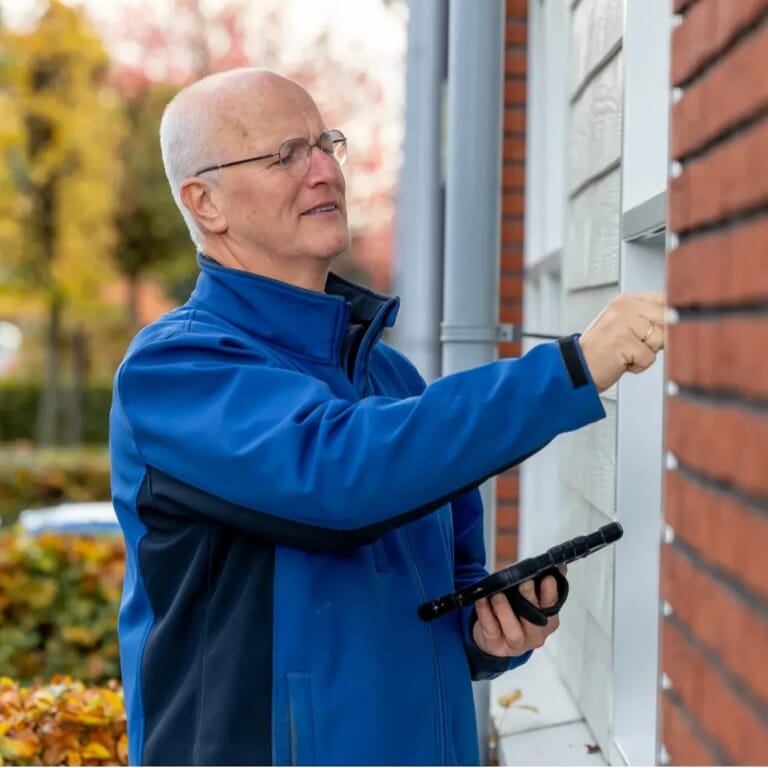
Lead flashing is found in various places, such as around chimneys, but also around ventilation openings, pipes, and other openings. It's a metal flashing designed to protect openings from rain. The thin layer of lead is applied as a barrier, preventing moisture from entering the house through the opening. Proper lead flashing installation involves overlapping it over the mortar joints and then securing it securely. This creates an effective waterproof seal that provides years of reliable protection against leaks. During a building inspection, we assess whether the lead flashing is in good condition and has been installed correctly.

Old lead flashing can cause leaks

Lead flashing consists of a thin layer of lead, which is known as an optimally weather-resistant material. This material was used for sealing as early as Roman times, and it remains so today. This speaks volumes about its basic quality, but unfortunately not about its long-term quality. Over the years, the material deteriorates, and holes or cracks can develop in the lead. When this happens, the lead flashing is no longer able to retain all moisture. The result is a leak.

New lead flashings can also cause leakage

It's not uncommon for homeowners to have their lead flashing replaced before selling their property. Proof that the flashing has been replaced is provided to prospective buyers. Potential buyers are then quickly convinced that the flashing is in perfect condition. Unfortunately, this isn't always the case in practice. Incorrect installation of new flashing can also cause leaks. That's precisely why it's always important to have the flashing properly inspected. Homekeur is happy to perform this inspection for you.

Prevent problems with the lead flashing

When you're looking to buy a home, you want to be sure everything is in order. A problem with the lead flashing can quickly cause damage, leaving you with costs you'd rather avoid. By having a building inspection performed by Homekeur, you can be sure of the condition of your home, including the condition of the lead flashing. Choose peace of mind and schedule an appointment today. Of course, you can always contact us first for more information and advice.

Would you like to make an appointment for a building inspection?

The cost of a building inspection (up to 250 m²) is only €489 including VAT. We'll conduct a comprehensive building inspection and you'll receive a building report. Do you have any questions? We're happy to help and can schedule an appointment with an expert inspector right away if you wish!

Recent articles

Een vrouw wijst naar een tablet die een man vasthoudt en een andere man kijkt mee
blog
13 February 2026
Hidden defects in a home
Hidden defects are not uncommon, especially in existing homes. They are often not immediately visible, but can have significant consequences for comfort, safety, and costs. This article explains how hidden defects are assessed and the role of investigation and inspection.
blazen plooien bitumen dak
video
13 February 2026
Common roof detail mistakes: what an inspection reveals
During roof inspections, problems often turn out to be not in the roofing itself, but in the details. In this practical case study, we demonstrate which installation errors are frequently encountered and why these, in particular, pose an increased risk of leaks and damage.
WhatsApp Image 2026-02-12 at 08.51.37
video
12 February 2026
Three Roof Eave Mistakes That Cause Leaks (And Are Often Overlooked)
Roof problems rarely arise suddenly. They usually start with a minor issue. In this inspection, we see how a torn lead flashing, improper installation, and a loose joint can all pose a serious risk. What should you look for—and how can you prevent them?