
Make an appointment Call now

Lead flap is often the cause of leakage

Leaks are a common problem in the rainy Netherlands. Even in newly built homes, things can go wrong. For example, in a newly completed home in 2009, water poured in from all sides during the very first rainstorm. It wasn't long before the basement was completely flooded. Because the contractor couldn't find the cause, the Bureau for Building Pathology BB was called in. The building pathologist quickly discovered the culprit: a lead flap that hadn't been properly installed.

An incorrectly applied lead flap

The building inspection revealed that the lead flap, although attached to the rear of the outer leaf, did not extend to the inner leaf. The membrane had also been improperly installed, with all the consequences for the house's watertightness. Because the lead didn't seal properly, only a small amount of water was needed for the water to seep in. This is not an isolated case. An incorrectly installed lead flap is a common cause of leaks, which are often discovered too late.

Leak? Check your home's flashing!

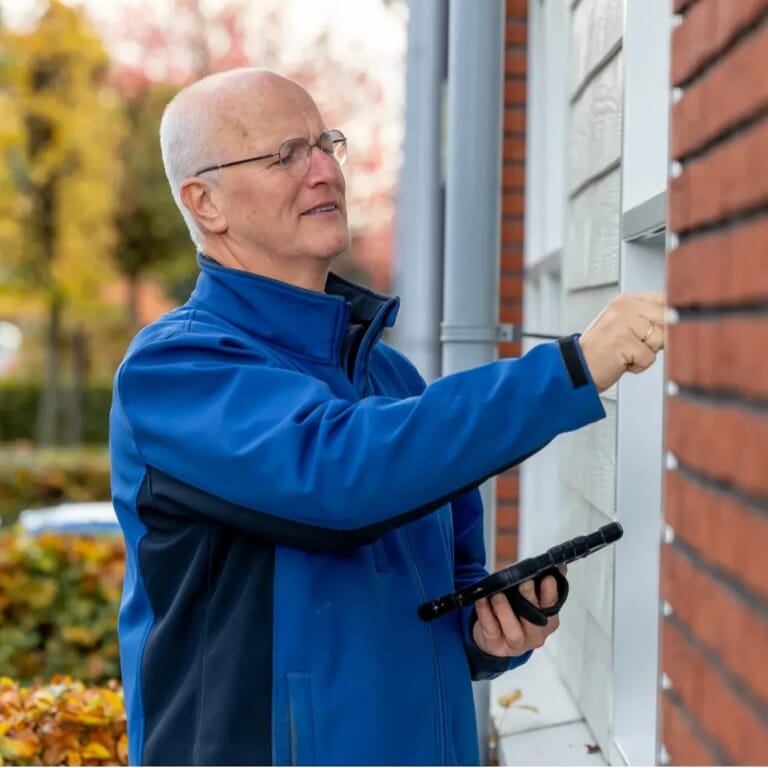
In case of leaks, it's crucial to address the problem quickly. If you wait too long, significant moisture damage can occur to your home. Unfortunately, as with this new-build home, it's not always easy to determine the cause. Sometimes, it requires a thorough investigation. In any case, always check the flashing. This is located where the roof meets the vertical wall. The flashing is a metal structure that prevents water from seeping into the roof structure. There's also a flashing along the edge of chimneys and dormers.

Also check for damage

Pay attention not only to the way the lead has been applied, but also to any damage such as rust spots or holes. Important: never use a caulking gun to repair damage, as this causes chemical reactions that can corrode the lead.

Would you like to make an appointment for a building inspection?

The cost of a building inspection (up to 250 m²) is only €489 including VAT. We'll conduct a comprehensive building inspection and you'll receive a building report. Do you have any questions? We're happy to help and can schedule an appointment with an expert inspector right away if you wish!

Recent articles

Man sluit zijn autodeur
blog
20 March 2026
Important news for appraisers!
As of April 1, 2026, the new Residential Property Valuation Report model will be introduced. In this updated report, the assessment of foundations will play a significantly larger role.
funderingsproblemen
blog
05 March 2026
Homekeur introduces the Foundation Risk Assessment (Phase 0)
Foundation problems can turn a dream home into a financial nightmare. Because the condition of the foundation is often difficult to assess from the outside, Homekeur introduces the Foundation Risk Assessment (Phase 0). This quick, non-destructive scan provides immediate clarity about the stability of your home, without the need to dig a hole in the ground.
Een vrouw wijst naar een tablet die een man vasthoudt en een andere man kijkt mee
blog
13 February 2026
Hidden defects in a home
Hidden defects are not uncommon, especially in existing homes. They are often not immediately visible, but can have significant consequences for comfort, safety, and costs. This article explains how hidden defects are assessed and the role of investigation and inspection.