
Japanese knotweed: A major risk to your home
Nature can be beautiful, but sometimes a great danger lurks behind a green facade. Japanese knotweed is a notorious example. This seemingly harmless plant can cause enormous problems to homes, businesses, and infrastructure. Damage can run into tens of thousands of euros and impact the value and marketability of real estate.
In this article, we explain why Japanese knotweed is so dangerous, how to recognize it, and why a building inspection is essential to prevent problems.
What is Japanese knotweed?
Japanese knotweed ( Fallopia japonica ) is an invasive plant species that was introduced to Europe in the mid-19th century as an ornamental. Unknown to the people at the time, this plant has virtually no natural enemies under ideal conditions—such as in the Netherlands. Knotweed grows rapidly, up to 10 centimeters per day during the growing season. Its root system (rhizomes) can extend meters beneath and alongside the plant.
Once established, the plant is extremely difficult to eradicate. Small fragments of roots or stems can regrow into entire plants, making traditional removal often ineffective.
Why does Japanese knotweed pose such a big risk?
The strength of Japanese knotweed lies in its roots. These roots:
Penetrate through cracks and weak spots in concrete, masonry and asphalt.
Can damage foundations, walls, patios, sewers and pipes.
Cause structural instability to buildings.
Pose major risks to the value and insurability of homes.
Mortgage lenders are now asking critical questions about the presence of Japanese knotweed. In some cases, it can even lead to financing denials or significant restrictions.
In short: it is not just about aesthetic damage, but about actual structural threats.
The role of a building inspection
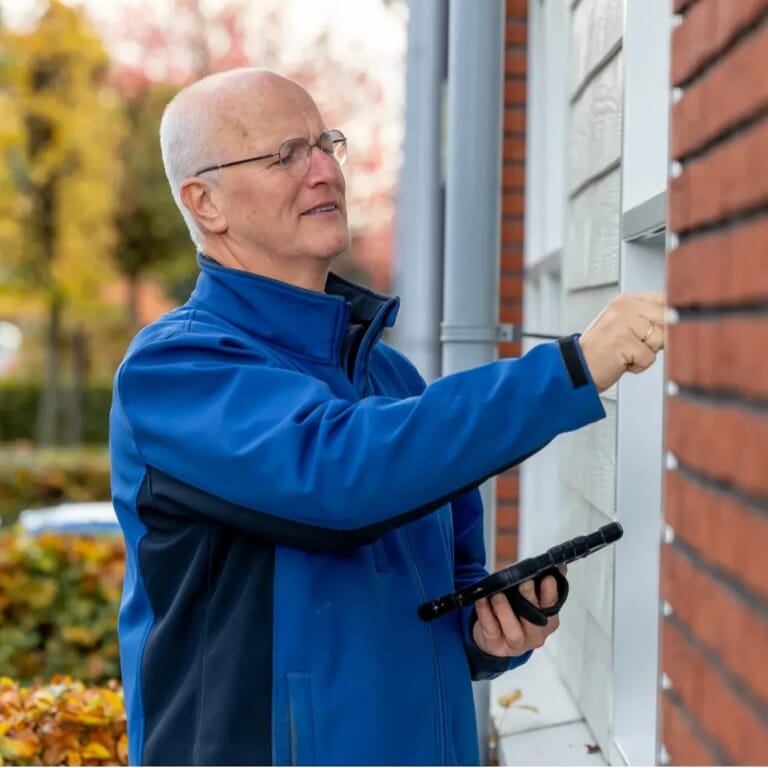
A building inspection plays a crucial role in the early detection of risks such as Japanese knotweed. During an inspection, an experienced inspector not only examines the condition of the home (such as foundations, facades, roofs, and installations), but also looks for risk factors around the house, such as problematic vegetation.
How do you recognize Japanese knotweed?
Note these features:
- Leaves : Heart- to triangular-shaped, with a smooth edge and pointed tip.
- Stems : Hollow and bamboo-like, with distinct nodes (similar to bamboo).
- Flowering : Small white flowers in panicles, mainly visible in August and September.
- Growth habit : Fast, dense growth; plants can reach 2-3 metres tall.
Are you unsure whether you see Japanese knotweed? A professional building inspection is highly recommended.
Are you looking for a home? Or do you want to make sure your current home isn't at risk from Japanese knotweed?
Then choose certainty and have a professional building inspection carried out by Homekeur BV
👉 Schedule your building inspection directly with Homekeur BV
Visit our website or contact us for more information!
Would you like to make an appointment for a building inspection?
The cost of a building inspection (up to 250 m²) is only €489 including VAT. We'll conduct a comprehensive building inspection and you'll receive a building report. Do you have any questions? We're happy to help and can schedule an appointment with an expert inspector right away if you wish!
Recent articles