
What to note about a wooden roof structure
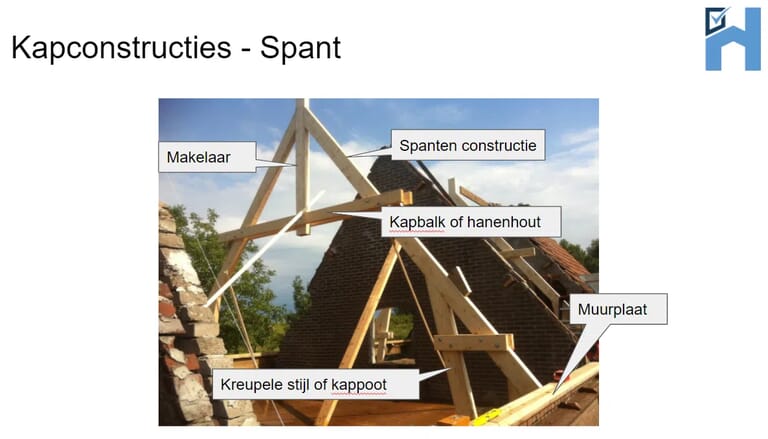
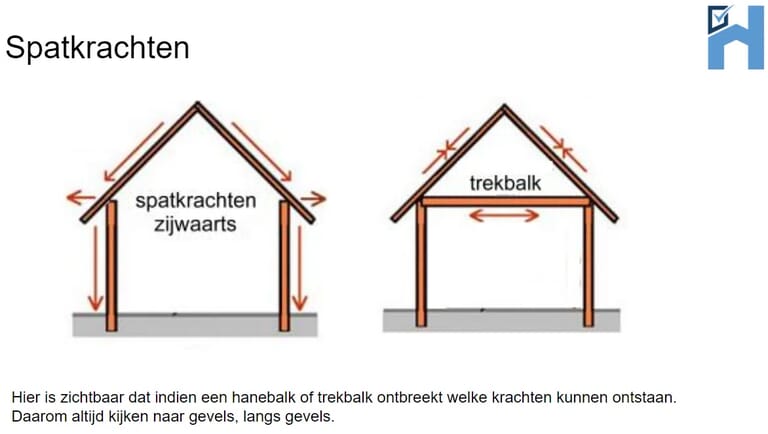
Pay attention to the structure. Are these still intact or have they been modified? Focus on the main lines. Important terms to remember are trusses, purlins, rafters, and tie beams.
The roof, purlins, and truss structure isn't always fully visible from the inside, so a thorough inspection isn't always possible. Visually, the entire structure can be inspected for soundness and structural safety, to the extent possible. This allows for a partial search for features, deviations, and changes that could lead to or indicate deviations or defects behind the finishes and/or paneling.
Structural assessment of the roof structure
Changes may have been made to the structure. These changes may not have been carried out professionally, meaning the structure can no longer be considered sound. For structural changes or improvements, it's best to engage a qualified contractor.
Traces of woodworm in the roof and/or truss construction?
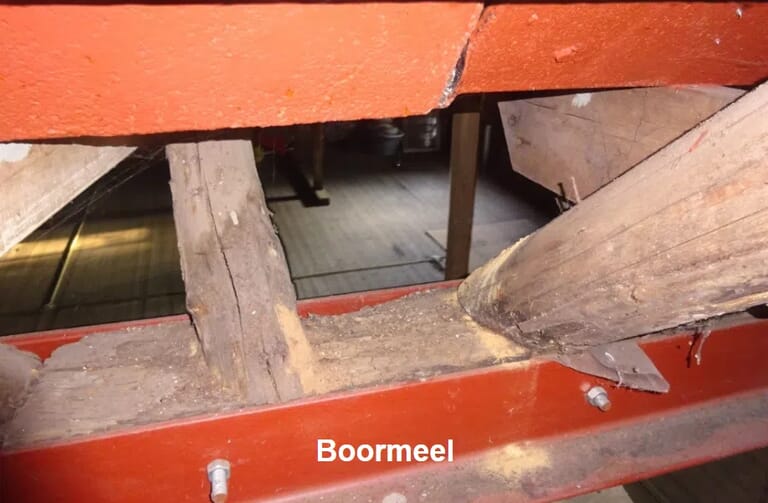
Traces of active woodworm may be found in the roof structure. Woodworm can further damage the beams and even weaken the structure at some point. Treatment requires specialized work and is best left to a qualified specialist. In the case of active woodworm, we recommend taking the necessary action as soon as possible. Also, get more information about the options for (preventative) woodworm control and prevention.
Traces of inactive woodworm may have been found in the roof structure. These may no longer be active or may have already been treated in the past. It's also possible that the woodworm has left "naturally" due to changed conditions in the space. Further steps are not immediately necessary with inactive woodworm. Recognizing active or inactive woodworm is simple: if you see yellowish sludge in the holes, the woodworm is often active; if you see dried-out black holes, the woodworm is likely inactive.
- Woodworm is a name for various insect larvae that live in wood.
- If woodworm has been noticed, it cannot be ruled out that other wood-destroying insects (such as a longhorn beetle) are also present, although these are less visible.
- If woodworm has been noticed, it cannot be ruled out that it is also present (to a greater or lesser extent) in other wooden parts elsewhere in the house.
- Woodworm eggs can hatch and become active up to seven years after being laid! Therefore, vigilance is always advised.
- If complete certainty is required, it can be considered to involve an expert exterminator for a full inventory.
- If you suspect wood-destroying pests in your home, are aware of any risks, or would like more information or certainty, please contact us for a full inspection .
Woodworm in the roof and/or truss construction?
If you notice signs of an active longhorn beetle in the roof structure, you should be extra vigilant. The danger of longhorn beetles in wood is that they attack the wood to the core, so controlling this wood-destroying pest is always necessary. We recommend a follow-up inspection and control by a specialist company.
- Woodworm can cause significant damage to wooden objects, from your wooden furniture to the wooden floor or even the roof structure of your home.
- Combating longhorn beetles isn't easy, so it's best left to an experienced pest controller. This ensures that the eggs, larvae, and longhorn beetles present are effectively controlled.
- If a longhorn beetle has been noticed, it cannot be ruled out that the longhorn beetle is also present (to a greater or lesser extent) in other untreated wooden parts elsewhere in the house.
Other comments, defects or deviations that may be noticed
- If active leaks are detected, you likely have a roof defect, which requires further investigation. The cause of an active leak must be resolved.
- If (also) inactive signs of leakage are present: Defects on the roof have likely already been resolved in the past. Leakage signs on beams remain visible for a very long time; the Homekeur inspector can use their moisture meter to accurately determine whether a damp spot is active or not.
- The beams can sag (become saddled). While not a major problem in itself, it is a point to consider for the future. If the sagging continues, a profile can be installed to support the beams, or the existing beams can be thickened to achieve sufficient strength again.
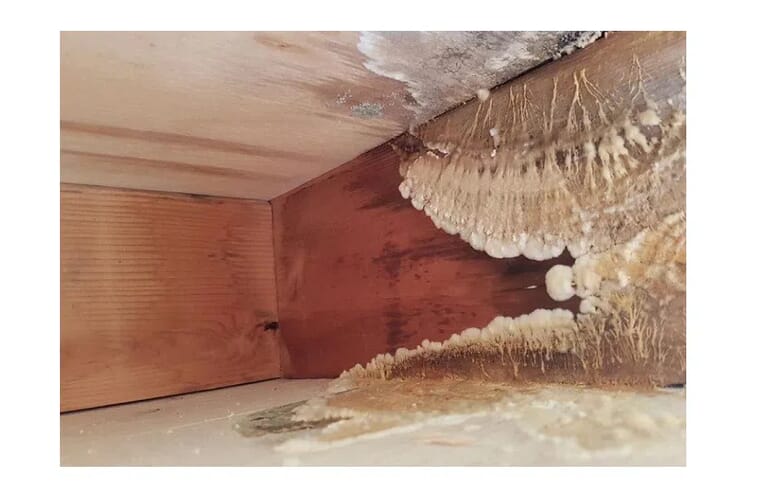
Fungus (dry rot) in the roof, roof or truss construction?
Dry rot is the only fungus that doesn't grow naturally. Dry rot requires a constant temperature and high relative humidity, and in many cases, the crawl space is the perfect location to germinate. However, in some cases, the fungus has been found in the roof structure and/or roof sheathing. If not treated promptly, a fungus can theoretically damage the entire structure of a house. The fungus grows in the cavity wall, behind wallpaper, and plaster, and destroys the house. It's difficult to accurately estimate the extent of the fungus's spread; this will become apparent during the treatment process. The costs can be modest or disproportionate.
- We always recommend follow-up investigation and treatment of this condition.
- Dry rot can also have negative consequences for health.
Would you like to make an appointment for a building inspection?
The cost of a building inspection (up to 250 m²) is only €489 including VAT. We'll conduct a comprehensive building inspection and you'll receive a building report. Do you have any questions? We're happy to help and can schedule an appointment with an expert inspector right away if you wish!
Recent articles