

Make an appointment Call now

Buyer&
39;s costs when purchasing a home: 6 tips

Navigating the hidden expenses of home buying can be daunting, with costs extending well beyond the purchase price. Understanding and planning for these additional expenses, such as notary fees, property appraisals, and transfer taxes, is crucial to avoid unpleasant surprises and ensure a smooth home-buying experience. Discover how Homekeur can guide you through these financial intricacies and help safeguard your investment with essential services like building inspections.

Buying a home these days involves more costs than a few years ago. It used to be possible to finance almost all additional costs within the mortgage. This is no longer permitted, meaning the additional costs must be paid from your own resources. You can avoid certain costs. For example, you can have a building inspection performed to prevent unforeseen costs for repairs and maintenance.

A building inspection report will give you a much better understanding of the condition of your house or apartment. This will save you a lot of unexpected costs. However, there will always be certain additional costs associated with buying a house. We call these the KK (Buyer's Costs). These are not always clear to many buyers. Homekeur therefore provides insight into the six most important additional costs when buying an existing home. The costs for new construction are different. Read more about the costs of a building inspection here.

1. Costs for mortgage advice and brokerage

In the vast majority of cases, you'll need a (partial) mortgage to purchase a home. You'll then be charged advisory and brokerage fees. These are often fixed amounts that are disproportionate to the property 's price. You should budget for an amount of €1,500 to €2,500.

2. Costs for the purchasing agent

You can choose to hire a buyer's agent. They can handle the negotiations on your behalf and have their own portfolio of properties for sale (privately or otherwise). The buyer's agent fee can be fixed in advance, or you can choose to charge a percentage of the purchase price. This means the higher the price of the property, the higher the fee.

3. Costs for the valuation of the property

Having your home appraised is often required to finalize a mortgage with the bank. In some cases, a property appraisal is sufficient. This is an estimate of the property's value, without a report, and is prepared by a real estate agent . However, if you hire a valuer because you need a report for the bank, you should expect to pay an average of around €400.

4. Additional costs for an NHG mortgage

The NHG, or National Mortgage Guarantee, is only available for homes with a value of up to €325,000 (as of 2021). If you're looking to buy a more expensive home, you won't be able to get a mortgage with an NHG, so you won't incur any costs. The NHG costs are proportional to the property price. If you buy a home for €150,000, you'll pay €1,650 in NHG costs. This amount increases to €2,611 for a home price of €245,000. Having an NHG mortgage has advantages, but you should discuss this thoroughly with your mortgage advisor.

5. The costs for the notary

Notary fees are among the fixed costs for every property. They are therefore not proportional to the property price , but they should certainly not be overlooked. You will always face these costs. The property must be transferred, a deed of sale must be drawn up, and your information must be correctly registered with the Land Registry. You should expect to pay around €1,500.

Tip: Compare notary fees online. This can save you a lot of money!

6. Transfer tax costs

Finally, there's the transfer tax , which does increase as the property becomes more expensive. This was abolished for first-time buyers as of January 1, 2021, but increased again for investors. For example, on a home worth €150,000, you pay 2% tax on €3,000 in transfer tax. If you buy a home worth €450,000, this amount increases to €9,000. If the home is even more expensive, such as €550,000, you pay €11,000 in transfer tax.

Prevent additional costs with a building inspection

As you can see, you'll be faced with quite a few additional costs that can quickly add up. For an affordable home, priced at €150,000, these additional costs can reach almost €12,000. For more expensive homes, priced at €500,000 or more, they can reach €18,000 to €20,000. It goes without saying that you don't want to be faced with unforeseen costs for hidden defects in or on your home. You can prevent this by having a building inspection performed.

Would you like to make an appointment for a building inspection?

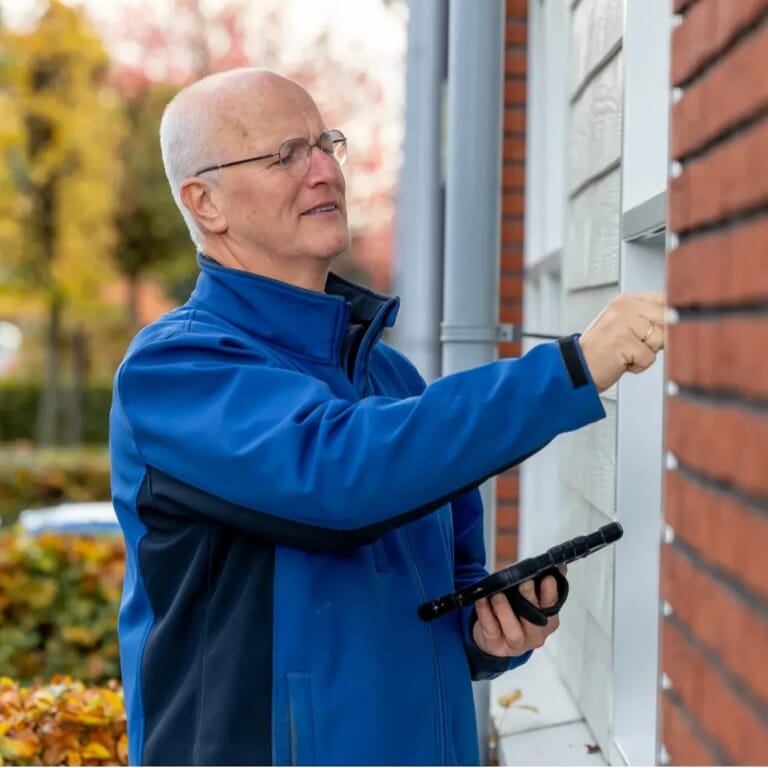
The cost of a building inspection (up to 250 m²) is only €489 including VAT. We'll conduct a comprehensive building inspection and you'll receive a building report. Do you have any questions? We're happy to help and can schedule an appointment with an expert inspector right away if you wish!

Recent articles

Een stel met een man die kijken naar een tablet
blog
30 September 2026
Why a structural inspection at Homekeur costs €549 starting October 1st
As of October 1, 2026, the price of a building inspection at Homekeur will be €549, including VAT. This is a deliberate choice, as we do not want to compete on the lowest price, but on quality. A good building inspection requires time, expertise, and attention. That is why we continue to invest in our inspectors, quality controls, and even better reports. In this article, we explain why we are choosing this course.
homekeur_funderingsrisico_onderzoek_
blog
03 September 2026
NTA 8060: the basis for a professional building inspection
What is NTA 8060 and why is this technical standard important for a structural inspection? NTA 8060 describes a uniform methodology for assessing the structural condition of homes. Homekeur uses this methodology as an important basis for its structural inspections and is also actively involved in the revision of NTA 8060. In this article, we explain what NTA 8060 entails, what you as a home buyer will notice, and why the methodology is currently being updated.
Een vrouw achter een laptop
blog
02 September 2026
Energy labels cause price differences in home values ​​in 2026
In 2026, the energy label will have an increasing influence on the value of a home. Energy-efficient homes are more attractive to buyers, have lower monthly costs, and can be more favorable for the maximum mortgage amount. As a result, the price difference between homes with a good and a poor energy label can be significant. How significant is the influence of the energy label on home value, and which improvements can increase the value of your home?