
Make an appointment Call now

Glazing: what types are there?

Understanding the nuances of different glass types in your home can significantly impact energy efficiency and comfort. Whether dealing with the potential pitfalls of older double glazing or the aesthetic considerations of stained glass, ensuring your windows are up to date can prevent issues like condensation and wood rot, offering long-term savings and enhancing living quality. Discover how a professional building inspection can help you identify and address these concerns, ensuring your home remains both beautiful and efficient.

A home can be equipped with various types of glass: HR+, HR++, or any other type of insulating glass. Insulating glass (HR++), also commonly called double glazing, is currently the most commonly used type of glass in residential and commercial buildings.

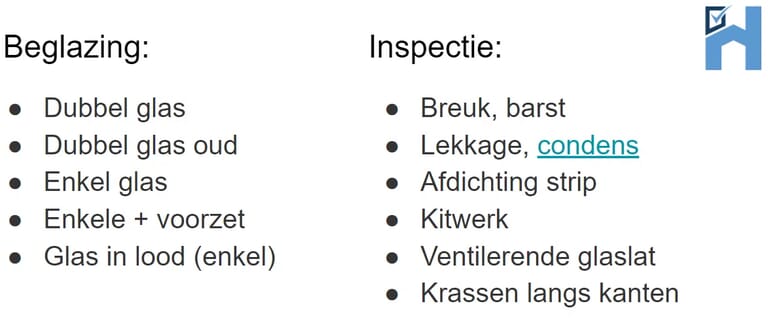
  • Scratches can occur in this glazing due to sanding or painting work.
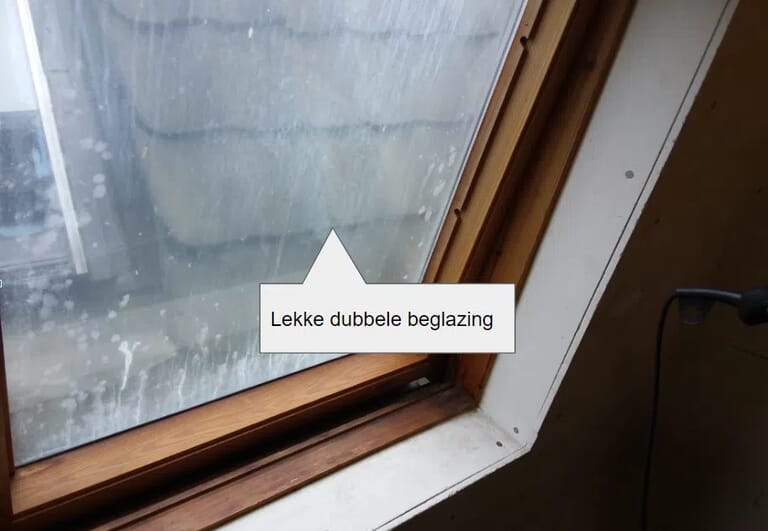
  • Leaking double glazing may not be immediately visible. Only under certain conditions does condensation form in the cavity between the panes. If condensation becomes visible, the insulated glazing is leaking.
  • Check double glazing extra for leaks
aandachtspunten-beglazing.png

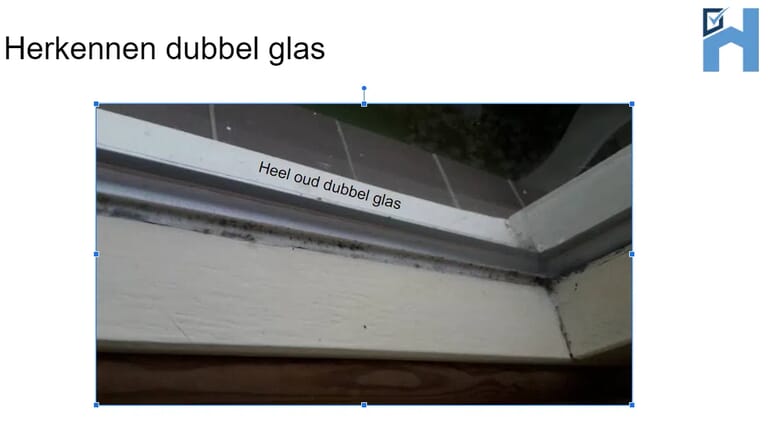
A home may be (partially) equipped with older insulating glazing (also commonly called double glazing). This is therefore not high-efficiency, HR+ or HR++. The risk with such older double glazing is the bonded strip or edge seal that is installed around the glass. This bonding will eventually come loose spontaneously, and/or other defects may develop, causing the glazing to leak and potentially cause condensation on the inside.

oud-dubbel-glas.png

Double glazing leaking?

  • Condensation isn't always immediately noticeable, and neither is leaking double glazing! This depends on factors such as weather conditions.
  • With such older double glazing, you can count on it having to be replaced within a short or long period of time!

A home may have (partial) single-pane windows . This can potentially improve comfort and energy efficiency. Insulated glass reduces condensation and keeps the house warmer. Living comfort will be significantly improved with high-efficiency glazing.

  • Secondary glazing does have an insulating effect, compared to single glazing this has an effect of at least 50%.
  • Secondary glazing cannot be compared with insulating glazing (for example hr++).
  • Externally mounted secondary glazing requires additional maintenance, such as cleaning.
  • Secondary glazing, if mounted on the outside, also poses a risk of wood rot at the fixings.
  • Secondary glazing is certainly no longer recommended in a new or changed situation.

A home can also have single-pane glass (stained glass) . Stained glass is a window frame consisting of pieces of glass set in lead frames. In a simpler version, the lead frames form a rectangular frame in which pieces of clear or colored window glass are set.

  • It is possible to install stained glass in double glazing, but some of the appearance will be lost.
  • However, it is better to place the stained glass in a frame on the inside against insulating glazing.
  • Stained glass prices are based on an average glass studio and for a simple stained glass window with straight glazing.
Homekeur-lekke-dubbele-beglazing.png

Would you like to make an appointment for a building inspection?

The cost of a building inspection (up to 250 m²) is only €489 including VAT. We'll conduct a comprehensive building inspection and you'll receive a building report. Do you have any questions? We're happy to help and can schedule an appointment with an expert inspector right away if you wish!

Recent articles

Een vrouw wijst naar een tablet die een man vasthoudt en een andere man kijkt mee
blog
13 February 2026
Hidden defects in a home
Hidden defects are not uncommon, especially in existing homes. They are often not immediately visible, but can have significant consequences for comfort, safety, and costs. This article explains how hidden defects are assessed and the role of investigation and inspection.
blazen plooien bitumen dak
video
13 February 2026
Common roof detail mistakes: what an inspection reveals
During roof inspections, problems often turn out to be not in the roofing itself, but in the details. In this practical case study, we demonstrate which installation errors are frequently encountered and why these, in particular, pose an increased risk of leaks and damage.
WhatsApp Image 2026-02-12 at 08.51.37
video
12 February 2026
Three Roof Eave Mistakes That Cause Leaks (And Are Often Overlooked)
Roof problems rarely arise suddenly. They usually start with a minor issue. In this inspection, we see how a torn lead flashing, improper installation, and a loose joint can all pose a serious risk. What should you look for—and how can you prevent them?