
Make an appointment Call now

Gas installation: Inspection and Safety

Ensuring the safety of your home's gas and electrical systems is crucial, especially when dealing with potentially hidden defects in gas meters and pipelines. Discover why regular inspections, professional installations, and adhering to safety regulations are essential to prevent risks like leaks or system failures, and learn how to safeguard your household effectively.

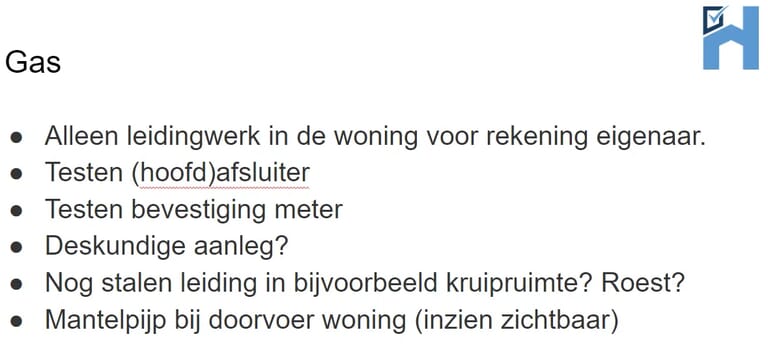
If your home is connected to gas, there will be a gas meter and a gas pipeline network. Neither you as the consumer nor we as building inspectors can visually inspect the gas meter and gas installation. During an installation inspection, gas pipes are pressure-tested.

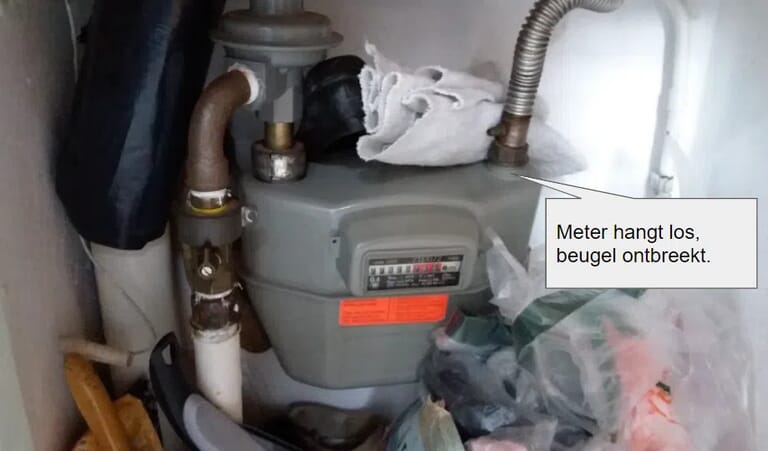
If there are any defects in the main shut-off valve, this is absolutely unsafe! The system must be able to be completely shut off at all times. In that case, the defect must be repaired by the grid operator. We recommend contacting your grid operator regarding the gas meter. The gas meter's wall mounting must also be in good condition; otherwise, it must be repaired. The meter must be secured to the wall so that it cannot move or be moved. Extensive movement of the meter can cause loose connections, posing a risk of leaks.

  • Improving the meter's mounting is the responsibility of the grid operator. Therefore, please contact your grid operator to discuss this further.
Homekeur-gasmeter-hangt-los-1.png

Gas installation piping

Older, rusting pipes may be found in the basement/crawlspace. If this is the case, we recommend an installation inspection, including pressure testing of the gas system. A local plumber can usually assist you with this. In the worst-case scenario, the pipe can be taken out of service and replaced quite easily and quickly with a plastic gas pipe (yellow pipe).

If the gas pipeline system in your home was (partially) installed unprofessionally, you can't be completely confident that it will function properly and long-term. In that case, we recommend a safety inspection for the installations. With such unprofessional installation, no risks can be taken.

Gas-checks.png

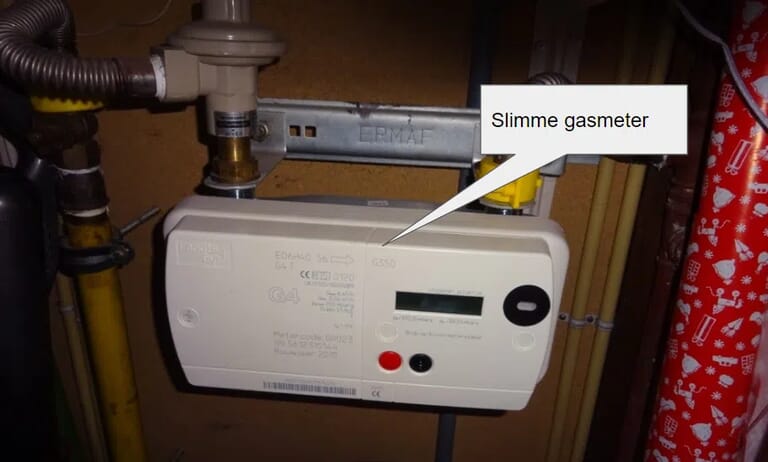
Correctly connecting your gas and electrical system is essential for your own safety and that of others. Therefore, requirements apply to the location and layout of your meter room and the inlet facilities, among other things. A gas pipe must always be routed to the gas meter in a protective conduit; this is unsafe and unprofessional.

Homekeur-slimme-gasmeter-1.png
  • The gas connection pipe (yellow colour) must have a diameter of 63 millimetres and a wall thickness of 3.0 millimetres.
  • In the meter room, the conduits for gas, electricity and other utilities must protrude at least 20 millimeters above the finished floor.
  • The NEN2768 specifies in detail the requirements and regulations for protective conduits and meter cabinets.
  • During a building inspection , the inspector will check some basic functionalities.

Would you like to make an appointment for a building inspection?

The cost of a building inspection (up to 250 m²) is only €489 including VAT. We'll conduct a comprehensive building inspection and you'll receive a building report. Do you have any questions? We're happy to help and can schedule an appointment with an expert inspector right away if you wish!

Recent articles

Een vrouw wijst naar een tablet die een man vasthoudt en een andere man kijkt mee
blog
13 February 2026
Hidden defects in a home
Hidden defects are not uncommon, especially in existing homes. They are often not immediately visible, but can have significant consequences for comfort, safety, and costs. This article explains how hidden defects are assessed and the role of investigation and inspection.
blazen plooien bitumen dak
video
13 February 2026
Common roof detail mistakes: what an inspection reveals
During roof inspections, problems often turn out to be not in the roofing itself, but in the details. In this practical case study, we demonstrate which installation errors are frequently encountered and why these, in particular, pose an increased risk of leaks and damage.
WhatsApp Image 2026-02-12 at 08.51.37
video
12 February 2026
Three Roof Eave Mistakes That Cause Leaks (And Are Often Overlooked)
Roof problems rarely arise suddenly. They usually start with a minor issue. In this inspection, we see how a torn lead flashing, improper installation, and a loose joint can all pose a serious risk. What should you look for—and how can you prevent them?