Woodworm in the house: small beetle, major damage
During building inspections at Homekeur BV, we regularly encounter woodworm infestation . These seemingly harmless holes in wooden beams or furniture can have serious consequences for the structural safety of a home. But what exactly is woodworm, how does it develop, and – more importantly – what can you do about it?
What is woodworm?
Woodworm is the collective name for the larvae of various types of beetles that feed on wood. The most common culprit is the common woodworm beetle (Anobium punctatum), but the house longhorn beetle and the large woodworm beetle can also cause significant damage.
The larvae of these beetles bore tunnels in wood and sometimes live there for several years before emerging as beetles. What remains is a weakened wooden object full of holes and wood dust.
How does woodworm develop?
The life cycle of the woodworm beetle is as follows:
Eggs : The beetle lays its eggs in cracks, crevices or existing holes in wood.
Larval stage : After hatching, the larvae immediately burrow into the wood. This stage lasts an average of 2 to 5 years.
Pupation : The larva pupates just below the wood surface.
Emergence : The adult beetle bores a hole out and leaves the wood, after which the cycle can start again.
Woodworm thrives best in damp, untreated wood at temperatures between 20 and 25 degrees Celsius.
Consequences of woodworm infestation
Woodworm seems harmless, but can cause serious problems in the long term:
Weakened beams and floor structures
Structural damage to roof trusses, roof structures or wooden stairs
Depreciation of the property
Difficult to sell real estate if the damage is not addressed
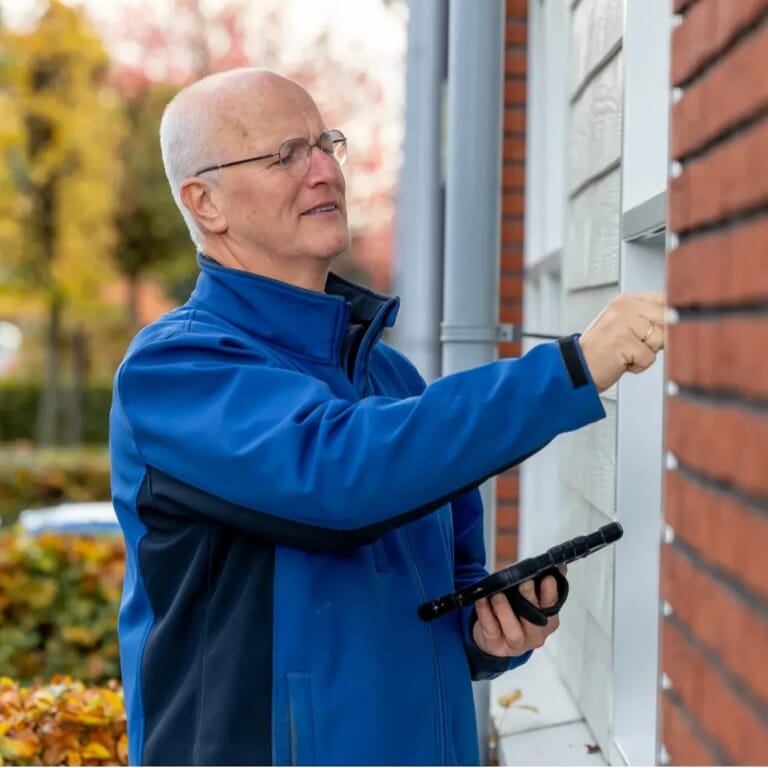
During an inspection, we look for exit holes, drill dust and hollow-sounding wood as indications of active infestation.
Woodworm treatment
Fortunately, woodworm is easily treated – provided you catch it early. The most common treatment methods are:
1. Professional pest control
A certified pest control company will apply a poison to or within the wood. This kills the larvae and prevents re-infestation. Often, the wood is opened first to determine the extent of the infestation.
2. Inject
In case of severe or deep-seated infestation, the wood is injected with a pesticide so that larvae deep in the wood are also reached.
3. Constructive repair
If the damage is structural, the affected wood must be partially or completely replaced. This often occurs with load-bearing components such as floor joists or roof trusses.
4. Preventive treatment
During renovation or new construction, wood can be treated preventively to prevent woodworm and other wood-destroying pests from developing.
What can you do yourself?
Pay attention to drill holes (round, 1-2 mm) in beams, furniture or floors.
Check for drill dust (fine sawdust) under or on wood.
If in doubt, have an inspection carried out , especially for older homes or listed buildings.
Advice from Homekeur BV
Our building inspections focus not only on visible defects but also on hidden risks such as woodworm. If active wood decay is detected, we'll provide you with clear advice on treatment or repair.
Want to be sure about the condition of the wood in your home? Have a building inspection performed by Homekeur BV. Our experts are ready to help you prevent damage and keep your home safe and stable. Visit www.homekeur.nl for more information or to schedule an appointment.
Would you like to make an appointment for a building inspection?
The cost of a building inspection (up to 250 m²) is only €489 including VAT. We'll conduct a comprehensive building inspection and you'll receive a building report. Do you have any questions? We're happy to help and can schedule an appointment with an expert inspector right away if you wish!
Recent articles