
Make an appointment Call now

5 Types of Cladding Besides Brick

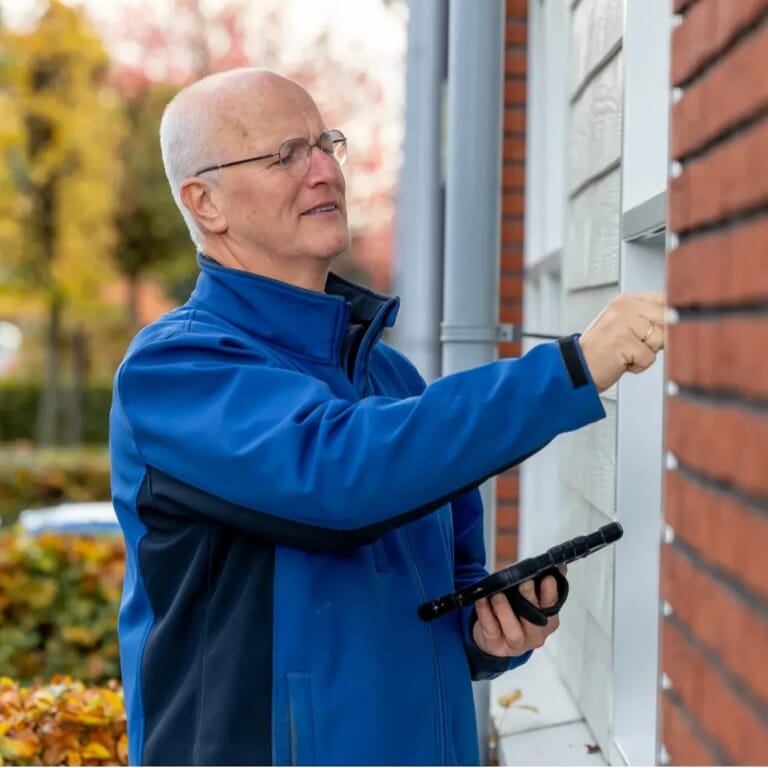
When we think of facade cladding, we often immediately think of brick. However, there are many other types of cladding that we regularly see in the Netherlands. It's important to thoroughly check the quality of the cladding. Homekeur professionally inspects the cladding. If there's anything wrong with the cladding, we'll let you know.

Have a building inspection carried out

Homekeur specializes in conducting building inspections. Are you planning to buy a home? Then a building inspection is always recommended. This prevents unexpected costs, for example, due to hidden defects. We also inspect all types of cladding. We provide insights into 5 types of cladding, in addition to brick.

1. Slates and artificial slates

We don't see real slates every day, but artificial slates are still relatively common in our country. Slates are available in a wide variety of colors, from red and orange to anthracite and gray. The slates can be laid in specific ways, such as in open joints, a classic checkerboard pattern, or a stretcher bond. In principle, the slates can be replaced relatively easily, but it's important to pay close attention to the presence of cracks in the (artificial) slates.

2. Wood

Wooden cladding is particularly attractive and is therefore becoming increasingly common. Wood creates a warm appearance that adds charm to a home. Various types of wood are suitable for cladding, such as afzelia, padouk, cedar, larch, and pine. The wooden cladding can be installed both vertically and horizontally. With wooden cladding, it's important to ensure there are no moisture problems. Wood is not easy to maintain, especially if you want to prevent it from turning gray.

3. PVC

PVC cladding is extremely durable and easy to maintain. Because it's available in numerous colors and designs, it's easy to adapt to the surrounding environment. In most cases, the PVC panels are installed directly onto the existing cladding. Good insulation is crucial, especially because PVC panels are very thin. Therefore, it's important to have the insulation thoroughly inspected when installing PVC cladding.

4. Crepi

Crepi is also known as facade plaster and is very common. The smooth finish provides a modern look. There are many options in the world of crepi, including scratch-off plasters, elastic silicone plasters, and mineral plasters. In most cases, a reinforcement mesh is used for good adhesion to the facade. With crepi cladding, it is important to ensure sufficient overhang. Lateral water runoff onto the window sill is not possible.

5. Metals

Metal facade cladding is available in various forms, such as aluminum, steel, and zinc. These forms are more commonly used, in specific shapes. For example, copper tongue-and-groove panels, embossed aluminum panels, and zinc cassettes are more popular. In all cases, it's important to have the metal facade cladding thoroughly inspected for corrosion.

Have the facade cladding inspected

Cladding can be beautiful, but is it still of good quality? It's important to determine this before you buy the property. Homekeur is happy to perform a building inspection, including the cladding itself. This gives you immediate clarity. 

Would you like to make an appointment for a building inspection?

The cost of a building inspection (up to 250 m²) is only €489 including VAT. We'll conduct a comprehensive building inspection and you'll receive a building report. Do you have any questions? We're happy to help and can schedule an appointment with an expert inspector right away if you wish!

Recent articles

Een vrouw wijst naar een tablet die een man vasthoudt en een andere man kijkt mee
blog
13 February 2026
Hidden defects in a home
Hidden defects are not uncommon, especially in existing homes. They are often not immediately visible, but can have significant consequences for comfort, safety, and costs. This article explains how hidden defects are assessed and the role of investigation and inspection.
blazen plooien bitumen dak
video
13 February 2026
Common roof detail mistakes: what an inspection reveals
During roof inspections, problems often turn out to be not in the roofing itself, but in the details. In this practical case study, we demonstrate which installation errors are frequently encountered and why these, in particular, pose an increased risk of leaks and damage.
WhatsApp Image 2026-02-12 at 08.51.37
video
12 February 2026
Three Roof Eave Mistakes That Cause Leaks (And Are Often Overlooked)
Roof problems rarely arise suddenly. They usually start with a minor issue. In this inspection, we see how a torn lead flashing, improper installation, and a loose joint can all pose a serious risk. What should you look for—and how can you prevent them?