The heat pump; What and why
You're hearing more and more about them: heat pumps. But why are more and more people enthusiastic about them? We'll briefly explain the different types of heat pumps and list four advantages of a heat pump. Want to know what energy-saving measures can be improved in your home? Then have one of our advisors perform an energy label assessment!
What is a heat pump?
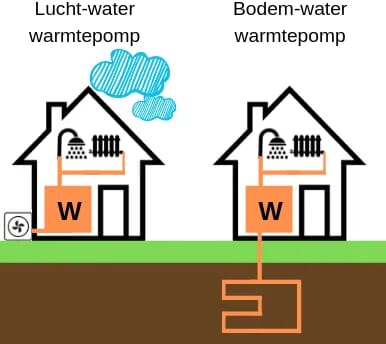
A heat pump is an electrically powered heat generator that intelligently utilizes the heat already present in a specific source. This heat is then used to generate even more heat. There are three types:
- Air/water
Even when it's freezing outside, heat can be extracted from the outside air. Almost all heat pumps function perfectly down to -20 degrees Celsius. An air-to-water heat pump always has an outdoor and indoor unit. The outdoor unit draws energy from the outside air, heating the refrigerant in the heat pump. The refrigerant transports the heat (or cools it in summer), and indoors, the heat is transferred to water via a heat exchanger. This water can then heat radiators or underfloor heating. A buffer tank containing water can also be heated, which can be used in the kitchen or bathroom.
- Water/water
The water-to-water heat pump uses geothermal energy or a water source (either underground or not). This heats water that can be used for radiators, underfloor heating, and/or hot tap water. This is often more difficult to implement for private individuals. It is also considerably more expensive because pipes need to be drilled.
- Air/air
The air-to-air heat pump uses the outside air as a source and blows warm or cold air into the room. The indoor units can be air conditioning units mounted in or under the ceiling, on the wall, or completely concealed. It operates the same as the air-to-water heat pump, but the heat and cooling output differs: it's delivered through the air, not through radiators.

4 advantages of a heat pump:
1. You use less energy
For an average four-person household, you can save approximately €650 on heating costs annually. A heat pump does consume a relatively large amount of electricity, so you could consider generating your own power, for example, with solar panels! If you're unsure whether your roof is strong enough to support solar panels, we recommend having a building inspection performed. This will give you a good idea of the roof's condition.
2. Value-enhancing
Installing a heat pump in your home increases its value. We're moving toward a gas-free future. A house that still uses gas will then become outdated and lose value.
3. No more gas
In light of the above point, it's obviously a major advantage that your home is now gas-free. It's now clear that gas supplies are limited and we need to transition to sustainable energy. Installing a heat pump prepares you for the future.
4. Easy to install
Especially when considering air-to-water heat pumps, it's often very easy to install them in your home. You can usually continue using your existing pipes, radiators, and/or underfloor heating.
Looking for even more reasons to make your home more sustainable? Then check out our blog with reasons to make your home more sustainable.
Easily request an energy label for your home
The cost of an energy label (up to 190 m²) is only €349 including VAT. A certified energy advisor will visit you, inspect the property, and officially register the energy label in EP-online. If the property is larger than 190 m², we charge €0.65 per additional square meter. Do you have any questions? We're happy to help and, if desired, can schedule an appointment with a certified advisor right away!
Recent articles