
Make an appointment Call now

Incorrectly attached lead flashing often causes leakage

Leakage can, of course, be caused by several factors. In practice, we often see that incorrectly attached lead flashings are the cause of leaks. Lead flashings are designed to seal two parts of a house to create a watertight seal. If these lead flashings are not properly attached, the seal will not be watertight and leaks will occur. Have you found a nice house and want to be sure the lead flashings are properly attached? Then have a building inspection carried out by Homekeur. After the inspection, you will receive a detailed building report from us.

Where do we encounter lead flashing?

Lead flashing is also known as lead flashing. It's primarily used to seal two adjacent parts of a house. Lead flashing is found in various places, such as under ridge tiles, near window frames, near chimneys, around stove pipes, and around dormers. Where gaps can occur, lead flashing is applied to prevent moisture from penetrating between the two parts. Lead flashing is also used to insulate a house. By properly sealing cracks and crevices, heat can no longer escape, resulting in better insulation. Of course, it's important that the lead flashing is properly secured.

When lead flashing is incorrectly attached

Lead flashing must be properly secured. If this isn't the case, problems quickly arise. In practice, we often see that the lead is installed incorrectly, causing the bed joint to come loose. This results in a suboptimal covering. Once lead flashing is damaged, it can sometimes be repaired. Repairs with batu tape are more common.

Replace the lead flashing in time

Damaged lead flashing no longer provides a watertight seal and must be replaced. If the lead flashing is incorrectly installed, this can quickly happen. If the lead flashing is properly installed, the lead won't need replacing for a long time. Lead has a very long lifespan, but it will eventually crack due to age. This is a sign that it's time to replace the lead. Both incorrectly installed and outdated, worn-out lead flashing are more likely to cause leaks.

Thorough inspection of the lead flashing

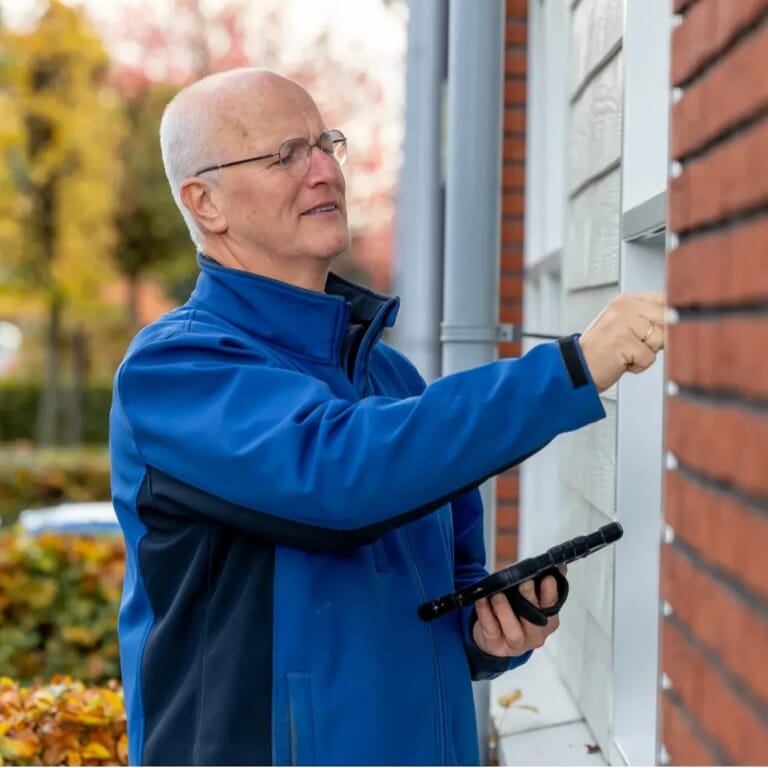
The lead flashing should be in good condition. If not, it's wise to replace it soon. This will, of course, incur additional costs. Therefore, it's helpful for you to know the condition of a property's lead flashing when you're interested. Homekeur is happy to determine this for you. During a building inspection, we also thoroughly inspect the lead flashing. We share all our findings and recommendations in the building inspection report . Schedule your appointment online or contact us for more information and advice.

Would you like to make an appointment for a building inspection?

The cost of a building inspection (up to 250 m²) is only €489 including VAT. We'll conduct a comprehensive building inspection and you'll receive a building report. Do you have any questions? We're happy to help and can schedule an appointment with an expert inspector right away if you wish!

Recent articles

Een vrouw wijst naar een tablet die een man vasthoudt en een andere man kijkt mee
blog
13 February 2026
Hidden defects in a home
Hidden defects are not uncommon, especially in existing homes. They are often not immediately visible, but can have significant consequences for comfort, safety, and costs. This article explains how hidden defects are assessed and the role of investigation and inspection.
blazen plooien bitumen dak
video
13 February 2026
Common roof detail mistakes: what an inspection reveals
During roof inspections, problems often turn out to be not in the roofing itself, but in the details. In this practical case study, we demonstrate which installation errors are frequently encountered and why these, in particular, pose an increased risk of leaks and damage.
WhatsApp Image 2026-02-12 at 08.51.37
video
12 February 2026
Three Roof Eave Mistakes That Cause Leaks (And Are Often Overlooked)
Roof problems rarely arise suddenly. They usually start with a minor issue. In this inspection, we see how a torn lead flashing, improper installation, and a loose joint can all pose a serious risk. What should you look for—and how can you prevent them?