
Make an appointment Call now

Can I withdraw an impulsive offer on a house?

Navigating the complexities of retracting an offer on a house can be daunting, especially if driven by impulsive decisions. Understanding the legal and financial implications, and how contingencies can provide a safety net, is crucial for anyone seeking to backtrack on a housing bid without incurring hefty penalties.

Retracting an offer on a house can be desirable in several situations. For example, people sometimes have to withdraw an offer because they can't secure financing or because the results of the building inspection are very disappointing. But what happens if you've made an impulsive offer on a house? Are you allowed to retract your offer in that case?

Is withdrawing a bid after the building inspection different?

The main question is to what extent these circumstances apply when withdrawing an offer on a house. Withdrawing an offer after receiving the results of the building inspection can be logical, especially if the outcome is significantly disappointing. The results of the building inspection are often included as a condition precedent in the preliminary purchase agreement, especially for older homes. Can you also withdraw an offer if you discover you were simply too impulsive? We'd be happy to tell you more about this.

Making an impulsive offer is more common

Many people who impulsively make an offer on a house think they're the only ones. This is certainly not true. Making an impulsive offer on a house is common. Enthusiasm about the house can play a significant role, but the feeling that a house would otherwise be missed also plays a role. It's never wise to make an impulsive offer, especially since buying a house represents a major investment in the future. Can you go back once you've made an offer? In practice, a contract is formed when an offer is made and accepted by the seller.

An impulsive bid can lead to costs

If you discover you've been too impulsive with an offer, you can discuss this with the seller. They might agree to withdraw the purchase, for example, because several parties are interested in the property. Unfortunately, it's more common for a withdrawal of the offer to be rejected. In this case, the seller has the right to claim compensation. This compensation can be quite expensive, often equaling 10 percent of the purchase price.

Dissolving conditions in the preliminary purchase contract

After submitting an offer, a preliminary purchase contract is signed. The term is somewhat misleading, as this contract is certainly not without obligation. You cannot simply withdraw your offer on the property once this contract has been signed. Therefore, always include contingencies in the preliminary purchase contract. These can include the results of the building inspection, whether or not the NHG (National Mortgage Guarantee) is obtained, and, for example, whether or not the necessary financing is secured. If you include these contingencies and the results of the building inspection are disappointing or you cannot secure financing, you can withdraw from the purchase of the property.

Include a building inspection as a condition of termination

Having a building inspection performed is always recommended when you're considering buying a home. Therefore, it's always wise to include the results of the building inspection as a condition precedent in the preliminary purchase agreement. 

Would you like to make an appointment for a building inspection?

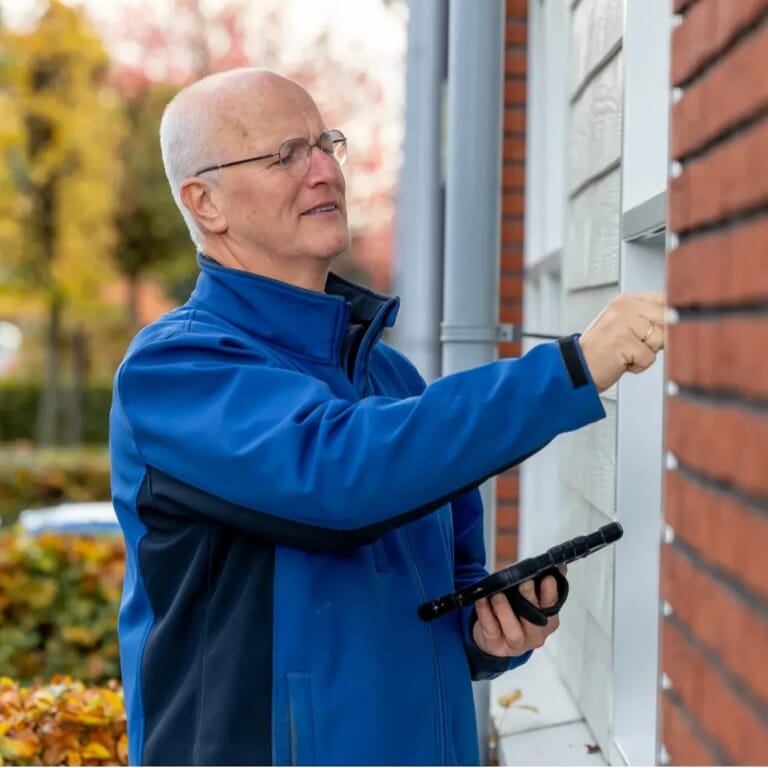
The cost of a building inspection (up to 250 m²) is only €489 including VAT. We'll conduct a comprehensive building inspection and you'll receive a building report. Do you have any questions? We're happy to help and can schedule an appointment with an expert inspector right away if you wish!

Recent articles

Een vrouw wijst naar een tablet die een man vasthoudt en een andere man kijkt mee
blog
13 February 2026
Hidden defects in a home
Hidden defects are not uncommon, especially in existing homes. They are often not immediately visible, but can have significant consequences for comfort, safety, and costs. This article explains how hidden defects are assessed and the role of investigation and inspection.
blazen plooien bitumen dak
video
13 February 2026
Common roof detail mistakes: what an inspection reveals
During roof inspections, problems often turn out to be not in the roofing itself, but in the details. In this practical case study, we demonstrate which installation errors are frequently encountered and why these, in particular, pose an increased risk of leaks and damage.
WhatsApp Image 2026-02-12 at 08.51.37
video
12 February 2026
Three Roof Eave Mistakes That Cause Leaks (And Are Often Overlooked)
Roof problems rarely arise suddenly. They usually start with a minor issue. In this inspection, we see how a torn lead flashing, improper installation, and a loose joint can all pose a serious risk. What should you look for—and how can you prevent them?