
Make an appointment Call now

How to make your home mold-free: 7 ways

Mold in your home can indicate a disrupted indoor environment. If it's just one or two small spots in the shower area, it might not be that bad. But other factors could be causing the mold. Cleaning the spots isn't the solution; addressing the root cause of the problem is.

Consequences of mold in the house

Sometimes, simply increasing ventilation is enough to regulate the moisture level in the home. Structural solutions may also be necessary to combat the source of mold. For this, you always need a specialist. It's important to combat the mold itself , as persistent mold can cause physical problems.

How do you get rid of mold?

The method for mold removal depends on the cause of the mold. Therefore, this must first be investigated. Mold caused by condensation can often be resolved by installing a proper ventilation system . Condensation can also occur from cooking, showering, or drying laundry. Double glazing can also help prevent mold. Single glazing simply fogs up faster.

Mold due to rising damp

If mold is caused by penetrating damp, this could be related to the moisture management of the facade. This makes the interior walls a prime breeding ground for mold. In such a situation, the facade should be impregnated. Insulating the exterior facade or applying decorative plaster to the exterior wall could also be a solution. Rising damp is common in older homes, where a properly functioning damp-proof membrane is often lacking. In such cases, the walls must be injected or the wall undercut.

Expert advice

A specialist will need to determine the best solution for the home. Expert advice is especially necessary when it comes to undercutting. This drastic method is only used if other solutions fail to provide sufficient results.

Easily prevent mold

Good ventilation can be achieved through ventilation grilles or a fan in the bathroom. This can prevent many problems, as can keeping wet areas clean. Mildew-resistant paint helps prevent mold. Grout and plaster also require inspection and maintenance. Ensure smooth walls (e.g., tiles) in wet areas as much as possible, as mold doesn't like smooth surfaces.

Healthy and safe living environment

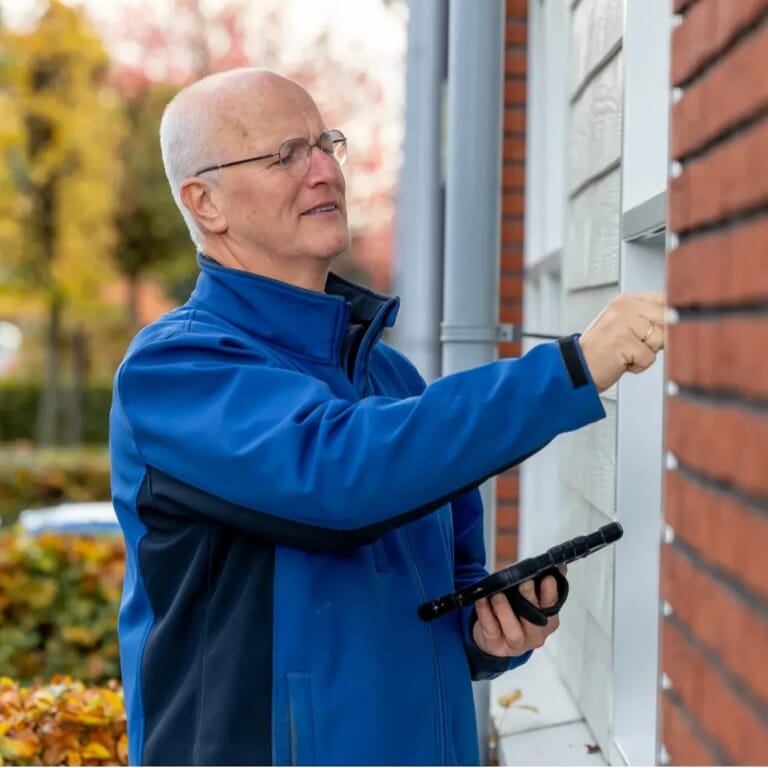
When buying a house, a building inspection is important. The report specifies exactly what maintenance is needed and the condition of the house. Therefore, always request an inspection when purchasing a house, so you can enjoy a healthy and safe living environment. Even if you have any doubts about the condition of your current home, it's advisable to request an inspection.

Would you like to make an appointment for a building inspection?

The cost of a building inspection (up to 250 m²) is only €489 including VAT. We'll conduct a comprehensive building inspection and you'll receive a building report. Do you have any questions? We're happy to help and can schedule an appointment with an expert inspector right away if you wish!

Recent articles

Een vrouw wijst naar een tablet die een man vasthoudt en een andere man kijkt mee
blog
13 February 2026
Hidden defects in a home
Hidden defects are not uncommon, especially in existing homes. They are often not immediately visible, but can have significant consequences for comfort, safety, and costs. This article explains how hidden defects are assessed and the role of investigation and inspection.
blazen plooien bitumen dak
video
13 February 2026
Common roof detail mistakes: what an inspection reveals
During roof inspections, problems often turn out to be not in the roofing itself, but in the details. In this practical case study, we demonstrate which installation errors are frequently encountered and why these, in particular, pose an increased risk of leaks and damage.
WhatsApp Image 2026-02-12 at 08.51.37
video
12 February 2026
Three Roof Eave Mistakes That Cause Leaks (And Are Often Overlooked)
Roof problems rarely arise suddenly. They usually start with a minor issue. In this inspection, we see how a torn lead flashing, improper installation, and a loose joint can all pose a serious risk. What should you look for—and how can you prevent them?