
Make an appointment Call now

Home buyers extra alert to insulation

Navigating the complexities of home insulation can significantly impact your energy bills and overall comfort, yet determining the quality of insulation isn't always straightforward. With a professional building inspection from Homekeur, you gain invaluable insights into your home's insulation status, empowering you to make informed decisions and optimize your living space for efficiency and savings.

A home's insulation is a determining factor in your monthly costs. The worse the insulation, the higher the energy bill. It's no wonder, then, that more and more homebuyers are paying extra attention to their home's insulation. Unfortunately, it's not always easy to see whether a home is properly insulated. A building inspection can determine the state of your home's insulation.

Mapping home insulation

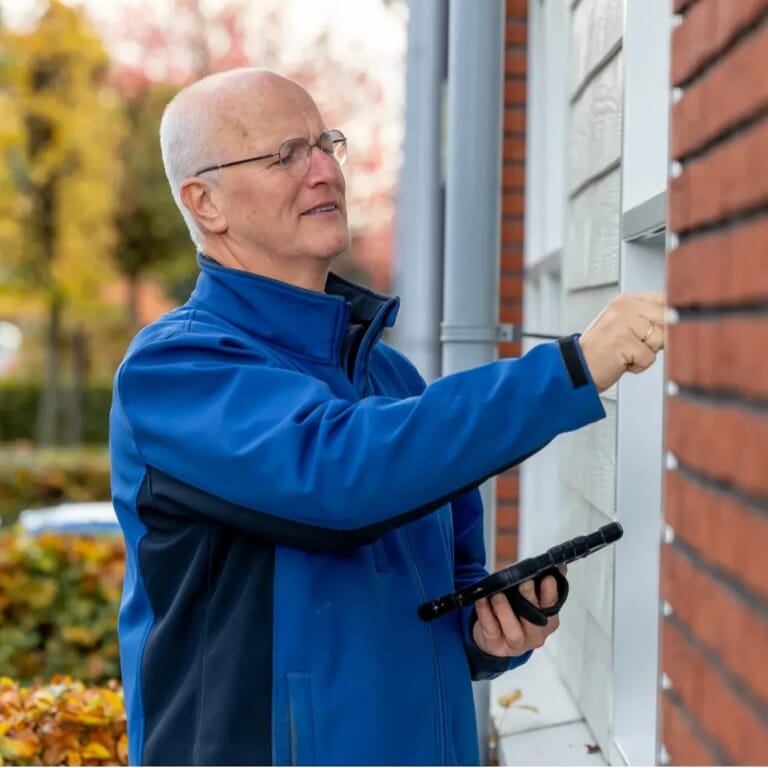
It goes without saying that you want to know how your home's insulation is doing. You want to keep your monthly costs as low as possible. A poorly insulated home can significantly increase your energy costs. You can have Homekeur perform a building inspection , which will also thoroughly examine your home's insulation.

After the building inspection, you'll receive a report from us detailing the insulation and other important details. This gives you a complete overview of the home's structural condition and the costs involved in optimizing it.

Checking the home insulation yourself

Of course, you can also check for visible insulation yourself. For example, you can consult the glass code to see how insulated the windows are. You can also check the crawl space to see if there is any underfloor insulation.

Are there any drill holes? Then you have cavity wall insulation, and you can see roof insulation by sliding up a roof tile. Visible insulation, unfortunately, doesn't necessarily mean it's good. A building inspection is therefore still recommended.

Look at the year the house was built

The year a house was built can also tell you something about its insulation. For example, homes built after 1991 are usually relatively well insulated. These houses often have double glazing. However, it's important to ensure that the glass has a glass code. If it doesn't, then it's not insulated.

Homes built between 1983 and 1991 are insulated. This insulation is of poor quality, so this is definitely something to consider. Homes built between 1976 and 1982 have poor-quality cavity wall and roof insulation, and homes built before 1976 are often not insulated.

Would you like to make an appointment for a building inspection?

The cost of a building inspection (up to 250 m²) is only €489 including VAT. We'll conduct a comprehensive building inspection and you'll receive a building report. Do you have any questions? We're happy to help and can schedule an appointment with an expert inspector right away if you wish!

Recent articles

Een vrouw wijst naar een tablet die een man vasthoudt en een andere man kijkt mee
blog
13 February 2026
Hidden defects in a home
Hidden defects are not uncommon, especially in existing homes. They are often not immediately visible, but can have significant consequences for comfort, safety, and costs. This article explains how hidden defects are assessed and the role of investigation and inspection.
blazen plooien bitumen dak
video
13 February 2026
Common roof detail mistakes: what an inspection reveals
During roof inspections, problems often turn out to be not in the roofing itself, but in the details. In this practical case study, we demonstrate which installation errors are frequently encountered and why these, in particular, pose an increased risk of leaks and damage.
WhatsApp Image 2026-02-12 at 08.51.37
video
12 February 2026
Three Roof Eave Mistakes That Cause Leaks (And Are Often Overlooked)
Roof problems rarely arise suddenly. They usually start with a minor issue. In this inspection, we see how a torn lead flashing, improper installation, and a loose joint can all pose a serious risk. What should you look for—and how can you prevent them?