

Make an appointment Call now

5 Facts about ventilation in your home

Ensuring proper home ventilation is essential for maintaining good health and preventing issues like mold and respiratory problems. This guide explores the importance of ventilation, the difference between natural and mechanical systems, and how regular building inspections can help you maintain a healthy living environment. Discover why effective ventilation is more than just opening a window and how it can save you from unexpected costs and health issues.

When you're considering buying a home, it's important to know exactly how well it's ventilated. You can get this assurance by having a building inspection performed. You can, of course, contact Homekeur for this.

There are several ways to ventilate a home or room. This can be done naturally, but also, for example, through the use of a ventilation system. We're happy to provide you with more information about home ventilation using the 5 points below.

1. The importance of good ventilation in a home

Ventilation is important for many reasons, but the most important is its effect on your health. When there is good ventilation , moisture and dust are removed from the home. This doesn't happen when ventilation is inadequate. If this is the case, you may experience unpleasant health problems, such as respiratory problems. Poor ventilation also retains a lot of moisture in the home. Silverfish, mold, and dust mites love this, and they will therefore be present in the home more often.

2. Extra ventilation at certain times

Daily ventilation is important, but there are also times during the day or week when additional ventilation is necessary. Regular ventilation is often insufficient in these situations. This is the case when you're cooking, showering, or drying your laundry indoors on a line or rack. In these situations, temporary moisture buildup occurs, and this extra moisture must be addressed with additional ventilation.

3. Proper use of mechanical ventilation

Approximately 30 percent of Dutch homes are equipped with mechanical ventilation. This includes a large proportion of homes built after 1975. These homes have multiple valves, for example, in the bathroom, toilet, and kitchen. The ventilation level can be adjusted using a control knob. In most cases, there are three settings. If maximum ventilation is required, choose setting 3. For regular ventilation when you are at home, set the control knob to setting 2. You can use setting 1 for ventilation when you are away.

4. What if there is no mechanical ventilation?

The majority of Dutch homes are not (yet) equipped with mechanical ventilation. In this case, natural ventilation is necessary. These homes are equipped with vents in several places. It is recommended to keep these open at all times. When you are home, you can leave tilt-and-turn windows slightly open for the necessary ventilation. For good airflow, it is important that doors have vents or that there is a gap of at least 1.5 centimeters under the doors.

5. Ventilating is not the same as 'just airing out'

Many people say they ventilate their homes well. When pressed, they say they open their bedroom window for half an hour every morning to "just air it out." This isn't the same as ventilation. Ventilating a room is really meant to let in some fresh air and let stale air escape. Then the window is closed, and the ventilation process ends. Ventilation continues 24/7, every day of the year.

Check ventilation during building inspection

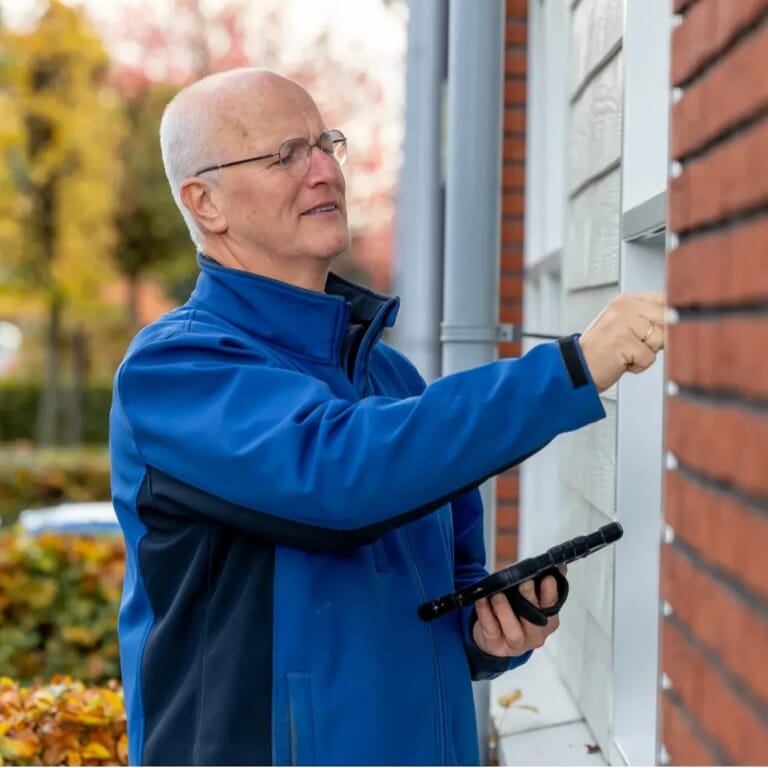
Good ventilation is crucial for several reasons. During a building inspection, the ventilation system in your home is carefully examined. Naturally, the inspection also includes a check for moisture and mold, among other things. You'll receive a building inspection report with all findings and recommendations. This ensures clarity and prevents unexpected costs later on. Homekeur conducts these inspections professionally. Would you like more information, advice, or are you interested in scheduling an appointment? Please contact us. We're happy to assist you.

Would you like to make an appointment for a building inspection?

The cost of a building inspection (up to 250 m²) is only €489 including VAT. We'll conduct a comprehensive building inspection and you'll receive a building report. Do you have any questions? We're happy to help and can schedule an appointment with an expert inspector right away if you wish!

Recent articles

Een stel met een man die kijken naar een tablet
blog
30 September 2026
Why a structural inspection at Homekeur costs €549 starting October 1st
As of October 1, 2026, the price of a building inspection at Homekeur will be €549, including VAT. This is a deliberate choice, as we do not want to compete on the lowest price, but on quality. A good building inspection requires time, expertise, and attention. That is why we continue to invest in our inspectors, quality controls, and even better reports. In this article, we explain why we are choosing this course.
homekeur_funderingsrisico_onderzoek_
blog
03 September 2026
NTA 8060: the basis for a professional building inspection
What is NTA 8060 and why is this technical standard important for a structural inspection? NTA 8060 describes a uniform methodology for assessing the structural condition of homes. Homekeur uses this methodology as an important basis for its structural inspections and is also actively involved in the revision of NTA 8060. In this article, we explain what NTA 8060 entails, what you as a home buyer will notice, and why the methodology is currently being updated.
Een vrouw achter een laptop
blog
02 September 2026
Energy labels cause price differences in home values ​​in 2026
In 2026, the energy label will have an increasing influence on the value of a home. Energy-efficient homes are more attractive to buyers, have lower monthly costs, and can be more favorable for the maximum mortgage amount. As a result, the price difference between homes with a good and a poor energy label can be significant. How significant is the influence of the energy label on home value, and which improvements can increase the value of your home?