Make an appointment Call now

Other defects in window frames

Windows and doors that don't function smoothly may be showing early signs of moisture-related issues, such as wood rot, which can be difficult to detect before becoming severe. By understanding and addressing the causes, such as poor ventilation and capillary action, homeowners can prevent costly repairs and ensure the longevity of their fixtures.

If windows and/or doors are stuck or cannot be used and closed properly and smoothly: In most cases, windows and doors that do not close properly can be adjusted.

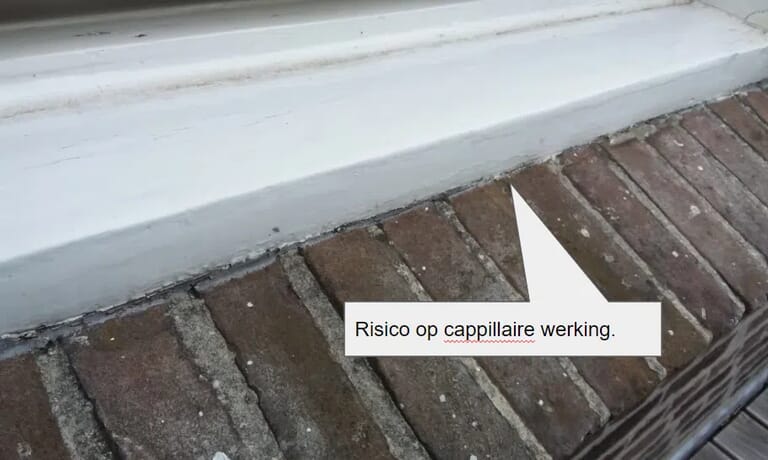
Capillary action can cause moisture to rise higher than normal in constrictions or narrow spaces, particularly in tight connections where air is trapped. This mutual action can draw liquid (usually rainwater) upwards, downwards, and in horizontal paths. This therefore poses a risk in such cases! This could lead to wood rot (from the inside out), a moisture problem, or other defects. Such defects are barely visible or localizable; sometimes they develop, and sometimes they resolve without any problems. In such cases, a defect is advanced before it becomes visible. A gap of 5mm to 7mm between materials is generally considered large enough to prevent capillary action.

Homekeur-kozijn-risico-cappilaire-werking.png

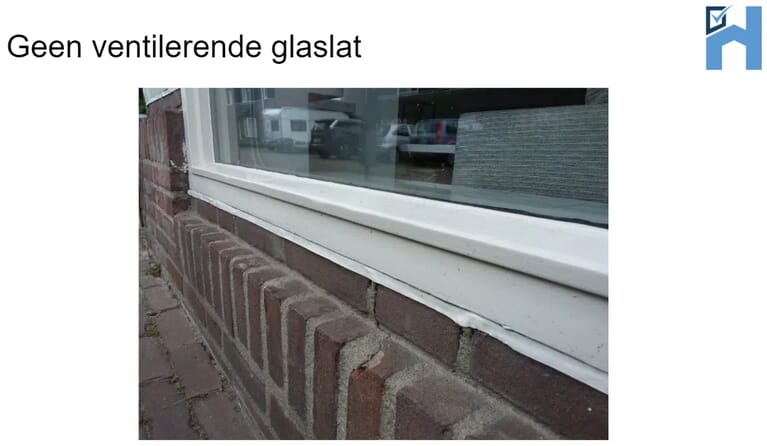
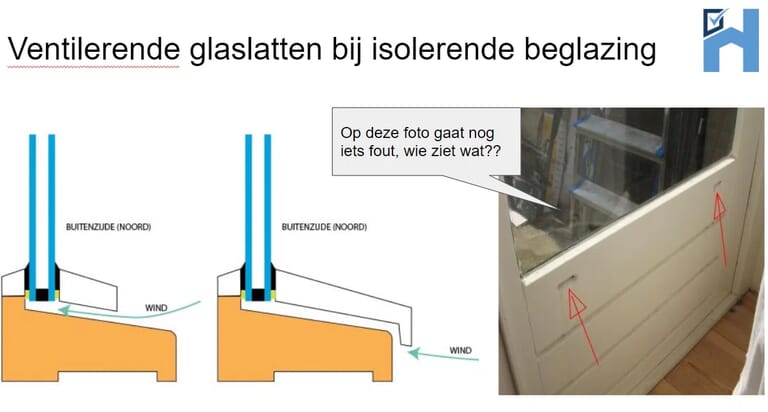
If double glazing is present: regular glazing beads may have been used. These glazing beads cause moisture and dirt to accumulate in the space between the frame and the pane. This prevents ventilation! We still recommend installing a ventilating glazing bead. The downside is that the paintwork will also need to be repaired afterward. This improvement is best done during the next regular paint job. If older double glazing is also present, it may be better to wait until it also needs replacing.

  • As for moisture build-up, there is now a high risk of wood rot (from within).
  • Wood rot often only becomes visible when it is in an advanced stage.
  • Even better is to install a nose strip (only for frames with a rebate)! Because this extends over the entire sill, water ingress is prevented. It is also mounted a few millimeters above the wooden sill using plastic or rubber blocks. The result is a well-ventilated, dirt- and water-free solution.
geen-ventilerende-glaslat.png
ventilerende-glaslatten-definitie.png

Frame parts in detail

If the sill of the frame components is not clear of ground level: Water, vegetation, and the like will now put pressure on the (untreated) woodwork. This can accelerate wood rot! In most cases, the extent of any wood rot only becomes apparent once soil, contaminated gravel, or paving has been removed and the frame components have been completely cleared. We recommend making (terrain) adjustments so that the frame components are free from persistent moisture, tiling, gravel, or soil.

  • Frame parts must be visible and treatable!
  • Frame components should not be in contact with continuous moisture, tiling, fine gravel or soil.

If a draft excluder along the window frames and their connections to the facade is not in optimal condition, or if any defects are found, these defects should be repaired or improved. This can be achieved by applying a sealant along the outside of the frame. Consider using a caulking joint or, if possible (and even better), compression tape .

  • Compression tape (swelling tape/compritape) is often used as a rainproof seal in the window and facade industry. For example, between steel, aluminum, and uPVC window frames. It is also used in precast concrete and expansion joints in masonry. Swelling tape/compritape is aging-resistant and has a long service life.

A lead flashing must be present above the frame to allow for drainage of facade water. If this lead flashing (or similar provision) is missing and/or defects are noted, it is recommended that this drainage system or lead flashing above the frame be completely replaced.

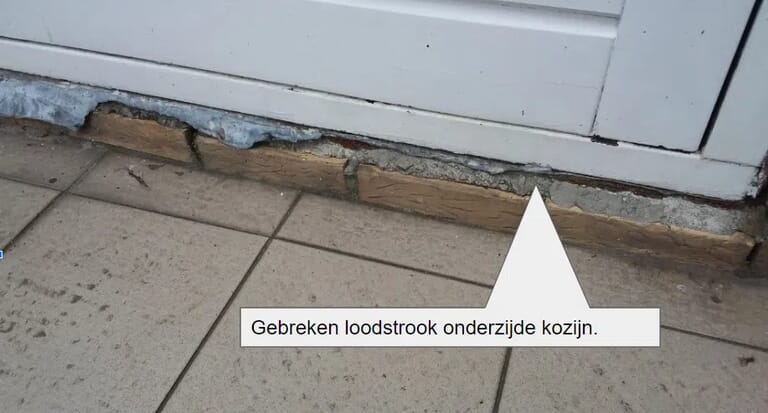
Lead strips may be present at the bottom of a window frame for drainage purposes. If any defects are found in these strips (e.g., cracks in the lead), possible repair or maintenance should be considered. Replacing these lead strips is not really an option, as they are mounted on the bottom of the frame. Therefore, repairing this lead must be sufficient until the frames are replaced.

Homekeur-kozijn-loodstrook-onderzijde-gebreken.png
  • Lead strip repair kits are available to repair cracks in lead. Various adhesive tapes and bitumen adhesive materials are also available.
  • If lead strips are damaged, there is a risk of water ingress (and leakage). Ensure that any defects are repaired promptly.

The lead strips on the frame can be too long in one piece: lead strips may have an average maximum length of 1 meter and must overlap by at least 8 cm. The materials are subject to weathering. If they are too long, there is insufficient space to accommodate the shrinking or expanding effects. This causes the material to crack more quickly, leading to defects. Once the lead is applied in this way, there's little you can do other than accept it. This shortens the material's lifespan, and the lead will need to be replaced sooner than usual.

Double-glazed casement windows. Especially if double glazing was installed later in existing windows (which weren't designed to handle the weight), the weight of the glazing can cause the windows to sag, causing them to jam in their frames. This problem is difficult or impossible to repair; with frequent use, the sagging will increase, and the entire unit will gradually become less effective and less tight. At some point, the window will need to be replaced. This can also happen with doors.

  • The defects mentioned often occur in windows where the glazing is mounted in rubber and not sealed.

Would you like to make an appointment for a building inspection?

The cost of a building inspection (up to 250 m²) is only €489 including VAT. We'll conduct a comprehensive building inspection and you'll receive a building report. Do you have any questions? We're happy to help and can schedule an appointment with an expert inspector right away if you wish!

Recent articles

Een vrouw wijst naar een tablet die een man vasthoudt en een andere man kijkt mee
blog
13 February 2026
Hidden defects in a home
Hidden defects are not uncommon, especially in existing homes. They are often not immediately visible, but can have significant consequences for comfort, safety, and costs. This article explains how hidden defects are assessed and the role of investigation and inspection.
blazen plooien bitumen dak
video
13 February 2026
Common roof detail mistakes: what an inspection reveals
During roof inspections, problems often turn out to be not in the roofing itself, but in the details. In this practical case study, we demonstrate which installation errors are frequently encountered and why these, in particular, pose an increased risk of leaks and damage.
WhatsApp Image 2026-02-12 at 08.51.37
video
12 February 2026
Three Roof Eave Mistakes That Cause Leaks (And Are Often Overlooked)
Roof problems rarely arise suddenly. They usually start with a minor issue. In this inspection, we see how a torn lead flashing, improper installation, and a loose joint can all pose a serious risk. What should you look for—and how can you prevent them?