

Concrete Rot: Risks and Prevention
There are 2 types of concrete rot
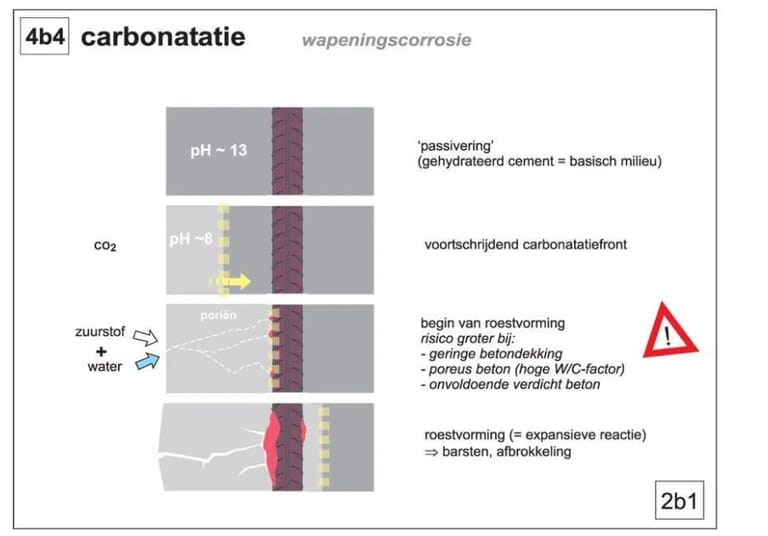
- Carbonation (PH of the concrete drops below 9 PH, it becomes more acidic)
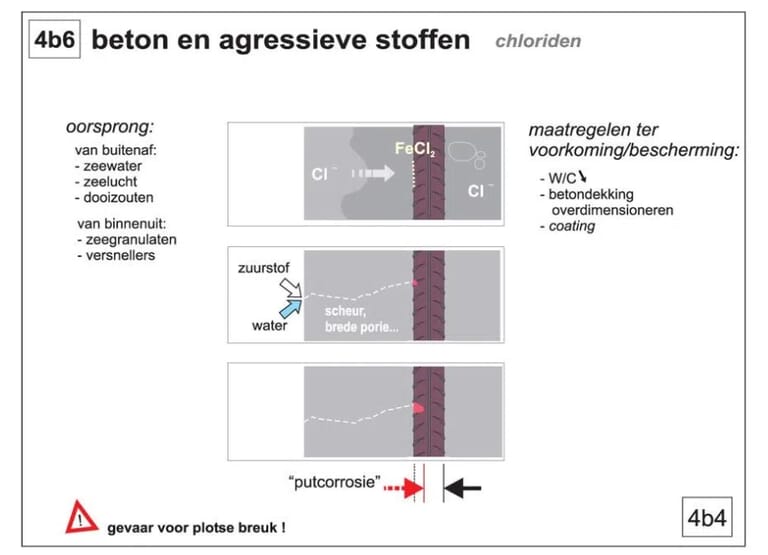
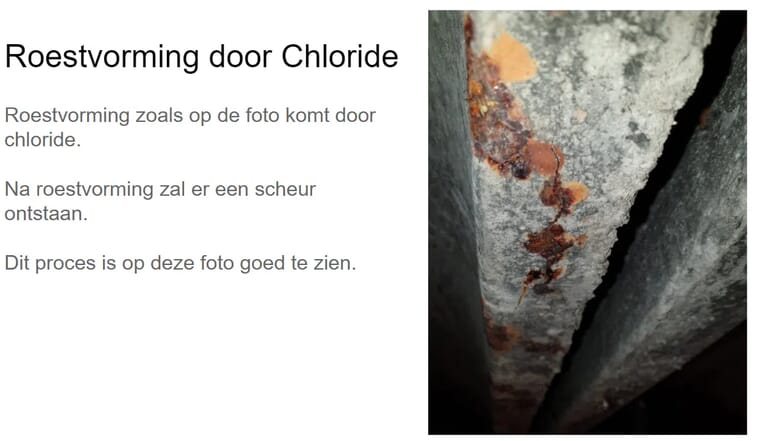
- Chloride (chloride-initiated reinforcement corrosion)
We also see damage in the form of:
- Mechanical damage (damage due to drilling, chopping or laying on, etc.)
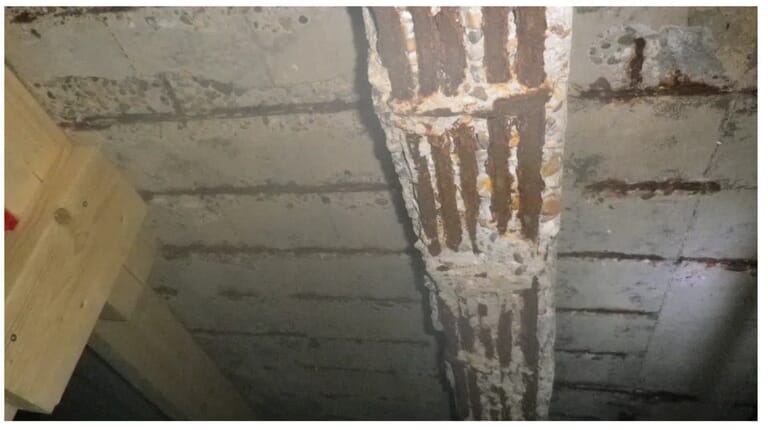
- Low concrete cover (reinforcement in the concrete surface)
Concrete damage due to carbonation
In civil engineering, carbonation occurs naturally in concrete. During the hardening of the concrete, calcium hydroxide (from cement) is formed, which reacts with atmospheric carbon dioxide. Calcium hydroxide creates the alkaline environment in the concrete, thus protecting the reinforcement.
The carbonation reaction eventually causes the pH value to drop below 8 to 9, which makes corrosion of the reinforcement (concrete rot) possible.
Carbonation occurs over the entire concrete surface, so if damage occurs, we can assume that the process manifests itself over the entire surface.
Concrete damage due to chloride
Chloride can occur in concrete as a result of:
- Addition in the form of calcium chloride to accelerate hardening.
- Penetration of chloride by de-icing salts, seawater, etc.
When the chloride content is above the critical limit (>0.4 mass% based on the cement weight), there is a risk of chloride-initiated reinforcement corrosion.
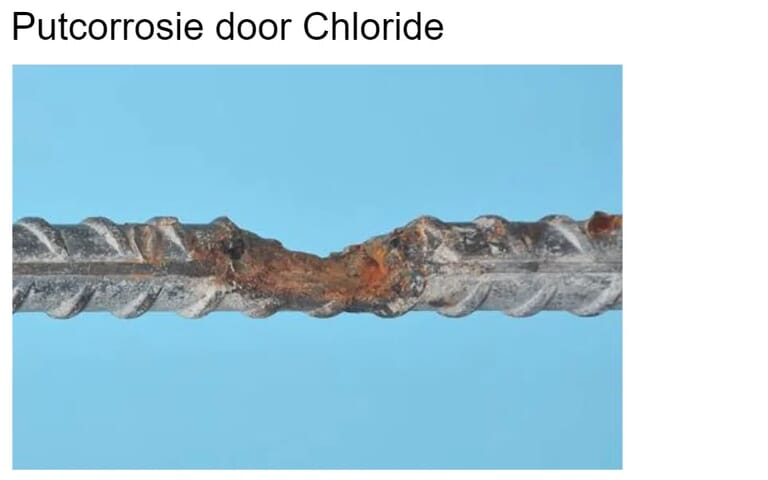
- Calcium chloride causes pitting corrosion
- In some places a reinforcing bar can rust completely through.
Would you like to make an appointment for a building inspection?
The cost of a building inspection (up to 250 m²) is only €489 including VAT. We'll conduct a comprehensive building inspection and you'll receive a building report. Do you have any questions? We're happy to help and can schedule an appointment with an expert inspector right away if you wish!
Recent articles