
Make an appointment Call now

Asbestos in homes: who is liable?

Asbestos, a once-popular building material, poses serious health risks when present in homes, particularly in its loose form, leading to diseases like mesothelioma and lung cancer. Understanding the potential liability in real estate transactions and the importance of professional inspections can safeguard your investment and health, making it crucial to explore who bears the responsibility when asbestos is discovered in a newly purchased property.

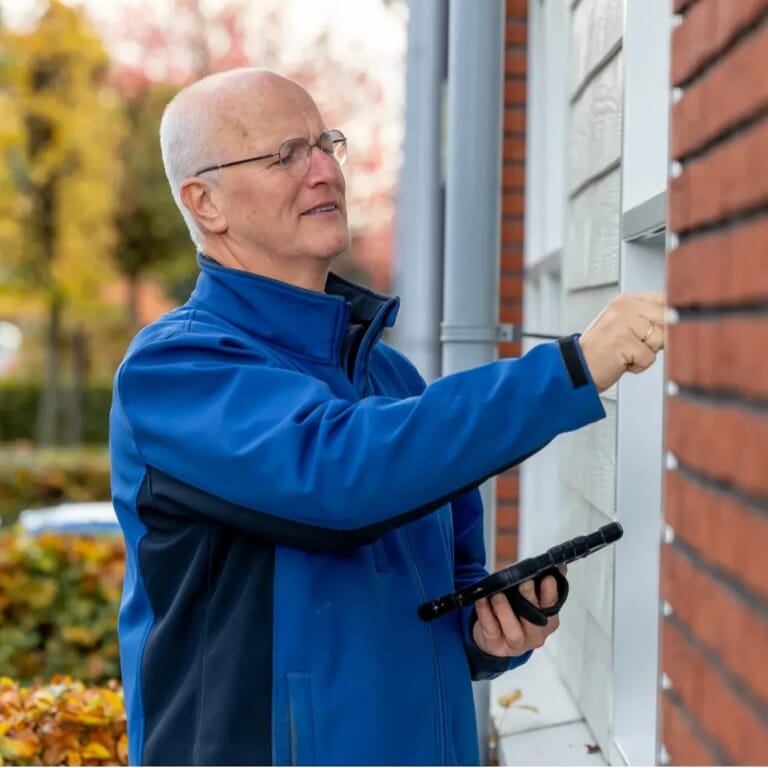
Asbestos fibers can be very dangerous and pose significant health risks. The last thing you want is a home with asbestos. If you want to be absolutely sure there's no asbestos in your home, it's a good idea to have a building inspection performed. This inspection will provide you with a clear overview of all findings.

The building inspection report may also recommend further asbestos testing. Homekeur also conducts asbestos surveys. If you've purchased a home and discover asbestos is present, the question naturally arises as to who is liable. Homekeur is happy to explain this often complex topic.

What is asbestos and why is it dangerous?

Asbestos is a collective term for naturally occurring minerals. These are minerals composed of microscopic fibers. Asbestos can be present in a home in two ways: in a bound state and as loose fibers. If asbestos is bound, there are no health risks. If loose asbestos fibers are present in the home, then there is a danger. These small asbestos particles can easily be inhaled, after which they penetrate deep into the lungs. Several serious diseases can develop as a result, including mesothelioma, asbestosis, and lung cancer. Cancer caused by asbestos is incurable.

More than 30 years of use of asbestos in homes

The presence of asbestos in homes, in its loose form, therefore has very serious consequences. A significant number of homes do contain asbestos. Why is this? It is primarily due to the choice of asbestos as a wear-resistant, insulating, and fire-resistant material in home construction. This occurred primarily between 1960 and 1993. This means that for more than 30 years, asbestos was preferred. As a result, we often see asbestos in stove seals, chimneys, sewer pipes, and roofing, among other things. Asbestos was also used in spray form, meaning it could also be present in/on walls.

When is the selling party liable?

Have you bought a house and discovered it contains asbestos? You'll want to hold the seller liable for the damage. You'll face a reduction in the property's value and will have to pay remediation costs. Can you hold the seller liable? A judge will consider this matter, but they won't always rule in your favor.

Is the asbestos blue or brown, loose (non-bonded) asbestos, or asbestos present in multiple locations within the house? Then the seller is more likely to be held liable than if the asbestos is bonded, white, or in a single location. Several factors play a significant role in determining liability.

Prevent problems with asbestos in the home

You don't want asbestos in your home. That goes without saying. Homekeur doesn't just perform professional building inspections . You can schedule an appointment directly online. Would you like to learn more? Feel free to contact us without obligation. We're happy to provide you with information and advice.

Would you like to make an appointment for a building inspection?

The cost of a building inspection (up to 250 m²) is only €489 including VAT. We'll conduct a comprehensive building inspection and you'll receive a building report. Do you have any questions? We're happy to help and can schedule an appointment with an expert inspector right away if you wish!

Recent articles

Een vrouw wijst naar een tablet die een man vasthoudt en een andere man kijkt mee
blog
13 February 2026
Hidden defects in a home
Hidden defects are not uncommon, especially in existing homes. They are often not immediately visible, but can have significant consequences for comfort, safety, and costs. This article explains how hidden defects are assessed and the role of investigation and inspection.
blazen plooien bitumen dak
video
13 February 2026
Common roof detail mistakes: what an inspection reveals
During roof inspections, problems often turn out to be not in the roofing itself, but in the details. In this practical case study, we demonstrate which installation errors are frequently encountered and why these, in particular, pose an increased risk of leaks and damage.
WhatsApp Image 2026-02-12 at 08.51.37
video
12 February 2026
Three Roof Eave Mistakes That Cause Leaks (And Are Often Overlooked)
Roof problems rarely arise suddenly. They usually start with a minor issue. In this inspection, we see how a torn lead flashing, improper installation, and a loose joint can all pose a serious risk. What should you look for—and how can you prevent them?