Make an appointment Call now

10 Facts About Asbestos You Should Know!

Despite the ban on asbestos sales since 1994, this hazardous material still lurks in many older homes, posing serious health risks if disturbed. Understanding how to identify and safely manage asbestos in your home is crucial to protecting yourself and ensuring peace of mind, especially if you’re considering purchasing a property that predates the 1980s.
Since 1994, the sale of asbestos has been prohibited by law. However, this doesn't mean you can't still encounter this material in older homes. What you should know about asbestos

1. What is asbestos?

Asbestos is a collective name for minerals with a fibrous structure. There are several types of asbestos . The three most common types in the Netherlands are: brown asbestos (amosite), white asbestos (chrysotile), and blue asbestos (crocidolite).

2. Where do I find asbestos?

Approximately 80% of asbestos is used in construction, primarily in asbestos cement products. Asbestos in homes can be found in corrugated sheeting, roofing, gas and water pipes, and stoves, among other things.

3. Asbestos and your health

Asbestos is especially harmful if loose fibers are inhaled. Therefore, you should not cut, break, or tear the material. Released fibers can cause lung cancer or mesothelioma (pleural or peritoneal cancer) in the long term (20-40 years).

4. How big is the risk?

The risk depends on the level of exposure to asbestos fibers. Small amounts in the open air are relatively harmless. The risk is greater when large amounts of asbestos fibers are inhaled consistently in enclosed spaces.

5. Can I remove asbestos myself?

Private individuals are permitted to remove up to 35m² of asbestos per address. This includes corrugated sheets, tarpaulin, or loose products that are not weathered or damaged. The material must be removed in one piece and must not be damaged.

6. What is the best way to remove asbestos?

Prevent the product from becoming damaged at all times. Thoroughly wet the asbestos-containing material beforehand. Ensure double, airtight packaging, which you can collect free of charge from your local recycling center.

7. When should I hire a certified company?

For corrugated sheets larger than 35m², severely weathered or damaged sheets, or when removing Novilon, contact a professional company.

8. Where can I find the addresses of certified companies?

You can find the addresses of professional asbestos removal companies on the website www.ascert.nl. You can also call your local municipality.

9. Can I recognize asbestos myself?

Recognizing asbestos isn't always easy. Corrugated sheeting or roofing with the code AT contains asbestos. Code LT refers to asbestos-free materials. If a code isn't available, only laboratory testing can provide clarity.

10. What can I do if I suspect asbestos?

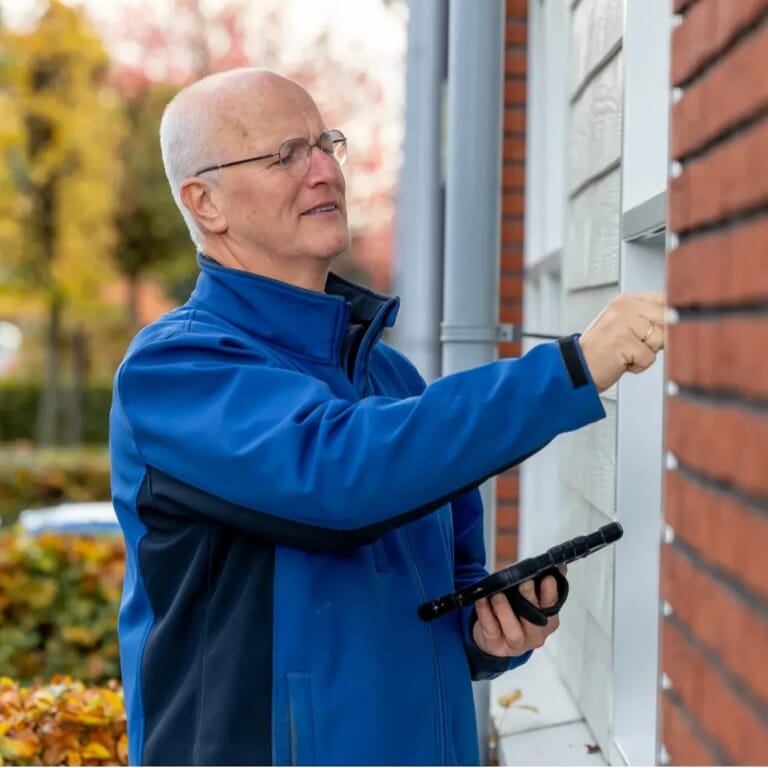
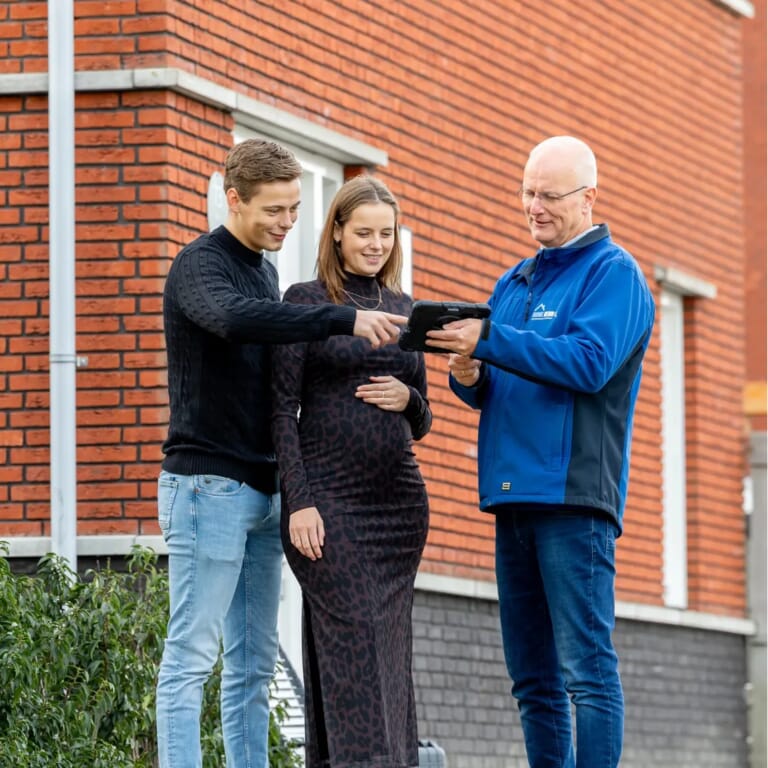
Are you considering buying a house built before the 1980s? A building inspection can clarify whether asbestos is present in your chosen property. For peace of mind, choose an asbestos inventory! This will prevent any unpleasant surprises after you've purchased the property.

Would you like to make an appointment for a building inspection?

The cost of a building inspection (up to 250 m²) is only €489 including VAT. We'll conduct a comprehensive building inspection and you'll receive a building report. Do you have any questions? We're happy to help and can schedule an appointment with an expert inspector right away if you wish!

Recent articles

Een vrouw wijst naar een tablet die een man vasthoudt en een andere man kijkt mee
blog
13 February 2026
Hidden defects in a home
Hidden defects are not uncommon, especially in existing homes. They are often not immediately visible, but can have significant consequences for comfort, safety, and costs. This article explains how hidden defects are assessed and the role of investigation and inspection.
blazen plooien bitumen dak
video
13 February 2026
Common roof detail mistakes: what an inspection reveals
During roof inspections, problems often turn out to be not in the roofing itself, but in the details. In this practical case study, we demonstrate which installation errors are frequently encountered and why these, in particular, pose an increased risk of leaks and damage.
WhatsApp Image 2026-02-12 at 08.51.37
video
12 February 2026
Three Roof Eave Mistakes That Cause Leaks (And Are Often Overlooked)
Roof problems rarely arise suddenly. They usually start with a minor issue. In this inspection, we see how a torn lead flashing, improper installation, and a loose joint can all pose a serious risk. What should you look for—and how can you prevent them?